Written by Anneri Fourie | Crises Control Executive
Your organisation’s reputation took decades to build. A single incident can threaten to destroy it in minutes. Whether it’s a data breach, regulatory violation, product recall, or employee misconduct, the way you respond determines whether your reputation emerges stronger or suffers irreparable damage.
Reputation isn’t merely an intangible asset. Studies show that up to 63% of a company’s market value stems from its reputation. When that reputation comes under threat, the financial consequences ripple through every aspect of your organisation: customer loyalty erodes, investor confidence plummets, regulatory scrutiny intensifies, and employee morale suffers.
This blog examines the fundamentals of protecting your organisation’s reputation through strategic planning, rapid response capabilities, and intelligent use of technology.
Understanding the Scope of Reputational Risk Management
Reputational risk management encompasses far more than public relations damage control. It requires a comprehensive approach that identifies potential threats, establishes clear response protocols, and ensures your organisation can communicate effectively with all stakeholders during critical moments.
Modern organisations face reputational threats from multiple directions:
- Cybersecurity incidents expose customer data
- Supply chain disruptions reveal operational weaknesses
- Social media amplifies customer complaints within hours
- Regulatory investigations attract unwanted media attention
Each scenario demands a different response, but all share common requirements: speed, accuracy, transparency, and coordination.
Consider the anatomy of a typical reputational crisis. An incident occurs, often outside standard business hours. Key personnel need immediate notification. Multiple teams must coordinate their response. Regulatory bodies require timely reporting. Customers, investors, and media demand information. Each delay or miscommunication compounds the reputational damage.
Effective protection requires three foundational elements:
- Early warning systems that detect potential issues before they escalate
- Documented procedures that guide response teams through complex scenarios
- Communication platforms that ensure the right people receive the right information at the right time
Building Your Response Framework
The foundation of effective reputation protection rests on preparation, not reaction. Organisations that successfully navigate crises have already invested in comprehensive planning that anticipates various scenarios and establishes clear response protocols.
Start by conducting a thorough risk assessment specific to your industry and operational context. Financial services firms face different reputational threats than healthcare providers or manufacturing companies. Your assessment should identify scenarios most likely to impact your organisation, from data breaches and product defects to environmental incidents and workplace safety issues.
Once you’ve mapped potential risks, develop response plans for each scenario. These plans should specify:
- Who needs to be notified immediately
- What actions each team member must take
- How information flows between teams and external stakeholders
- Which decision trees help responders navigate complex situations
Documentation alone proves insufficient. Your response framework requires regular testing through simulations and exercises. These drills reveal gaps in your plans, identify communication bottlenecks, and familiarise team members with their roles before actual pressure situations arise. Organisations that conduct quarterly simulations respond to real incidents with greater confidence and coordination.
The Technology Foundation for Crisis Response
Manual crisis response processes introduce delays and errors that amplify reputational damage. Modern organisations require technology platforms that automate routine tasks, facilitate rapid communication, and maintain comprehensive records for post-incident analysis.
Selecting Crisis Management Software for Regulated Industries
For organisations operating in regulated sectors, technology selection carries specific considerations. Financial services, healthcare, energy, and telecommunications providers must demonstrate compliance with industry-specific requirements whilst responding to incidents.
Selecting the best crisis management software for your organisation means evaluating solutions that balance rapid response capabilities with regulatory compliance. When assessing incident management software, look for these critical capabilities:
Communication & Alerts:
- Multi-channel notification systems (SMS, email, voice calls, push notifications)
- Intelligent escalation when primary contacts don’t respond
- Mass notification software functionality for reaching large populations rapidly
- Geographic targeting to notify affected regions precisely
Security & Compliance:
- End-to-end encryption for sensitive information
- Role-based access controls
- Comprehensive audit trails for regulatory reviews
- ISO 27001, ISO 22301, and SOC 2 certifications
Integration & Access:
- Active Directory and Azure AD connectivity
- API access for automated incident creation
- Single sign-on capabilities
- Mobile-first design for remote access
Response Management:
- Pre-defined response protocols for common scenarios
- Command centre dashboards for leadership visibility
- Two-way communication for real-time updates
- Task assignment and tracking
Cloud-based crisis management platforms provide the infrastructure needed to coordinate complex responses across geographically dispersed teams without requiring on-premises hardware maintenance.
Incident Response Platform for Reputational Risk
When an incident threatens your reputation, your response platform becomes the central nervous system coordinating all activities. The platform should eliminate confusion about who needs to do what, ensure critical information reaches decision-makers, and maintain visibility across all response activities.
Effective platforms provide several core functions beyond basic notifications. Response coordination requires two-way communication so teams can share real-time updates, request resources, and confirm task completion. This bidirectional flow keeps everyone informed whilst maintaining clear records of all communications for subsequent review.
Predefined response protocols embedded within your platform guide teams through complex scenarios. Rather than searching for procedure documents during high-pressure situations, responders access step-by-step guidance directly through the platform. These protocols can include contact details for external specialists, regulatory reporting requirements, and communication templates approved for different stakeholder groups.
The platform should also support command centre operations. During significant incidents, response coordination moves to a central location where leadership monitors the situation, makes strategic decisions, and allocates resources. Your platform needs to provide comprehensive visibility into response activities, including which teams have been notified, which tasks remain incomplete, and what information has been shared with external stakeholders.
Leveraging AI Crisis Management Assistant Technology
Artificial intelligence introduces new capabilities that enhance crisis response without replacing human judgement. AI systems analyse large volumes of information rapidly, suggest relevant response protocols based on incident characteristics, and provide 24/7 access to guidance that helps responders navigate unfamiliar situations.
What happens when a crisis erupts at 2 AM and your most experienced personnel aren’t available? Modern AI crisis management assistants serve as always-available resources for response teams. When incidents occur outside standard business hours, responders can query the AI for guidance on procedures, contact information, and communication templates. This capability proves particularly valuable for organisations with limited after-hours staff who may face situations beyond their normal responsibilities.
Natural language processing capabilities allow AI assistants to help draft communications appropriate for different stakeholders. Rather than starting from blank pages during high-pressure situations, responders receive suggested content based on the incident type and target audience. Human reviewers maintain final approval, but the AI dramatically reduces the time required to produce high-quality communications.
Real-Time Communication During Crisis Events
Speed and accuracy define successful crisis communication. Stakeholders make decisions based on the information they receive. Delays create information vacuums that speculation and misinformation quickly fill.
Your communication strategy must address multiple audiences simultaneously. Employees need clear direction. Customers want to know how the incident affects them. Investors assess financial implications. Regulators require formal notification. The media shapes public perception.
Each audience demands different information delivered through appropriate channels. Mass notification software enables you to reach large populations quickly whilst maintaining message consistency. Rather than crafting individual communications during time-sensitive situations, you can deploy pre-approved message templates tailored to different scenarios and stakeholder groups.
But how do you know your message actually reached its intended recipients? Your notification system should track delivery and engagement. Knowing that a message was sent proves insufficient. You need confirmation that recipients received and read the communication.
This visibility allows you to identify individuals who haven’t acknowledged critical notifications. You can then deploy alternative communication methods to reach them. Research shows that organisations using multi-channel notification systems achieve 96% improvement in engaging incident responders compared to single-channel approaches.
The best incident management software includes functionality for managing external communications alongside internal coordination. Media enquiries are logged. Responses are tracked. Consistency is maintained across all external statements. This centralised approach prevents conflicting messages that undermine credibility during sensitive periods.
How Crises Control Supports Reputation Protection
Organisations across multiple sectors trust Crises Control to provide the infrastructure needed for effective reputation protection. The platform combines comprehensive incident management capabilities with an intelligent notification system and compliance support that addresses requirements specific to regulated industries.
Key Platform Capabilities
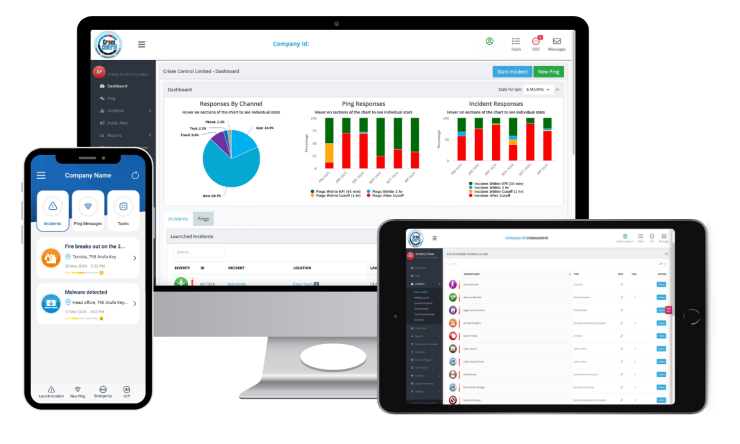
Crises Control’s mobile-first design ensures response teams can access critical information and coordinate activities regardless of their location. CRAiG, Crises Control’s AI crisis management assistant, provides intelligent support throughout the incident lifecycle. Available 24/7 through the mobile app and desktop portal, CRAiG helps responders access relevant procedures, answers questions about response protocols, and guides teams through unfamiliar scenarios.
The multi-channel notification system reaches stakeholders via SMS, email, voice calls, push notifications, and Microsoft Teams integration. Intelligent escalation ensures backup contacts receive alerts if primary recipients don’t respond within defined timeframes.
For organisations operating in regulated industries, Crises Control maintains ISO 27001 and ISO 9001 certifications and provides features that support compliance with frameworks including ISO 22301, SEC requirements, DORA, and FCA reporting obligations. The platform’s comprehensive audit trails document all response activities, providing the evidence needed for regulatory reviews and post-incident analysis.
Crises Control’s incident library contains over 200 categorised incident types, each with customisable response protocols. These pre-defined procedures accelerate response times by providing teams with clear guidance tailored to specific scenarios. Organisations can modify standard protocols or create custom procedures that reflect their unique requirements.
Integration capabilities enable Crises Control to work within existing technology environments. Active Directory and Azure AD integration streamlines user onboarding, whilst API connectivity supports automated incident creation from monitoring systems. The platform’s 24/7 support ensures assistance is available whenever incidents occur.
Measuring and Improving Response Effectiveness
Reputation protection requires continuous improvement informed by objective performance data. Your crisis management approach should include mechanisms for capturing metrics, analysing response effectiveness, and implementing improvements based on lessons learned.
Key performance indicators for reputation protection include:
- Time to first notification
- Percentage of personnel acknowledging alerts within target timeframes
- Time to achieve full response team mobilisation
- Duration until initial stakeholder communications are deployed
Post-incident reviews represent opportunities to identify strengths and weaknesses in your response. These reviews should examine what worked well, what created difficulties, and what changes would improve future responses. Involve participants from all response teams to capture different perspectives and ensure the full picture emerges.
Your crisis management platform should provide analytics capabilities that facilitate this continuous improvement. Look for reporting features that track notification delivery rates, acknowledgement times, task completion metrics, and user engagement. These built-in analytics eliminate manual data collection whilst providing insights that inform strategic decisions.
Regular simulation exercises serve dual purposes: training and evaluation. These exercises expose gaps in procedures, identify personnel who need additional training, and reveal technology limitations before actual incidents occur.
The Path Forward
Protecting your organisation’s reputation requires more than good intentions and crisis communication plans stored in desk drawers. It demands comprehensive preparation, proven technology infrastructure, and ongoing commitment to improvement.
The organisations that best protect their reputations share common characteristics: they invest in preparation before crises occur, they leverage technology to coordinate complex responses, they maintain clear communication with all stakeholders, and they learn from each incident to strengthen their capabilities.
Your reputation represents an asset built over years through consistent delivery of value to customers, ethical business practices, and positive relationships with stakeholders. That asset deserves protection through thoughtful planning and appropriate technology investment.
Modern crisis management platforms provide the infrastructure needed to coordinate effective responses that minimise reputational damage. These systems ensure the right people receive the right information at the right time, maintain comprehensive records that satisfy regulatory requirements, and enable continuous improvement through detailed analytics.
The question isn’t whether your organisation will face situations that threaten its reputation – it’s when these situations will occur and how effectively you’ll respond. Preparation determines outcomes.
Take Action to Protect Your Reputation
Don’t wait until crisis strikes to discover gaps in your preparation. Organisations that protect their reputations most effectively invest in proper planning and proven technology before incidents occur.
Crises Control offers the comprehensive platform your organisation needs to coordinate effective responses that minimise reputational damage. Our solution combines rapid notification capabilities, intelligent AI assistance, mobile-first design, and compliance support specifically engineered for organisations operating in regulated industries.
Contact us today to schedule your free demo and discover how Crises Control can strengthen your reputation protection capabilities. Our team will assess your specific requirements, demonstrate relevant platform capabilities, and provide guidance on building a crisis management programme appropriate for your organisation’s unique needs.
Your reputation is too valuable to leave to chance. Take the next step towards comprehensive protection by requesting your demonstration now.
Request a FREE Demo