Government and public sector organisations are increasingly operating in environments where disruption is both unpredictable and high impact. Severe weather events, infrastructure failures, transport disruption and public safety incidents can escalate rapidly, requiring immediate and coordinated response across multiple agencies.
In these situations, the ability to communicate clearly and act quickly is essential. However, many organisations still rely on fragmented communication methods such as phone calls, emails and manual reporting systems. These approaches can slow down decision making and create inconsistencies in how information is shared during critical events.
Emergency Response Management Software has emerged as a key capability in addressing these challenges. It provides a structured digital environment for managing incidents, coordinating response activities and maintaining situational awareness in real time.
What is Emergency Response Management Software?
Emergency Response Management Software is a category of digital platforms designed to support organisations through all stages of incident and crisis management.
It brings together communication, coordination and operational oversight into a single system. This allows teams to manage emergencies in real time with shared visibility across departments and agencies.
Rather than relying on disconnected tools, organisations can centralise incident data, communication and response activities. This creates a unified operational picture that supports faster and more informed decision making.
The software typically supports the full emergency lifecycle, including preparedness, response, recovery and review.
Why It Matters for Government and Public Sector Organisations
Public sector organisations face unique challenges when managing emergencies due to their scale, complexity and accountability requirements.
One of the most significant challenges is coordination across multiple agencies. During a single incident, local authorities, emergency services, transport operators and national bodies may all be involved.
Common challenges include:
- Fragmented communication between agencies
- Delays in sharing critical information
- Lack of real time visibility during incidents
- Inconsistent data across teams
- Difficulty coordinating multi-agency response efforts
When these issues occur, response times can increase and operational effectiveness can decrease.
Emergency Response Management Software addresses these challenges by creating a single source of truth. All stakeholders work from the same real time information, reducing confusion and improving coordination.
Core Features of Emergency Response Management Software
Mass Notification and Alerting
A key function of these systems is the ability to distribute information quickly and reliably during emergencies using mass notifications.
Messages can be sent through SMS, email, voice calls and mobile alerts. This ensures that both internal teams and external stakeholders receive timely updates.
This capability is particularly important during events such as severe weather warnings, evacuations or public safety incidents where rapid communication is essential.
Incident Management and Tracking
Incident management tools allow organisations to record, track and manage incidents from initial report through to resolution.
Each incident can be assigned, updated and monitored in real time. This improves accountability and ensures that actions are clearly documented throughout the response process.
It also allows decision makers to understand the current status of multiple incidents simultaneously.
Real-Time Communication and Coordination
Effective emergency response depends on accurate and timely communication.
These platforms enable secure real time communication between teams, departments and external agencies. This reduces reliance on informal communication channels and ensures that all stakeholders are working with the same information.
Situational Awareness and Live Dashboards
Situational awareness is critical during emergencies.
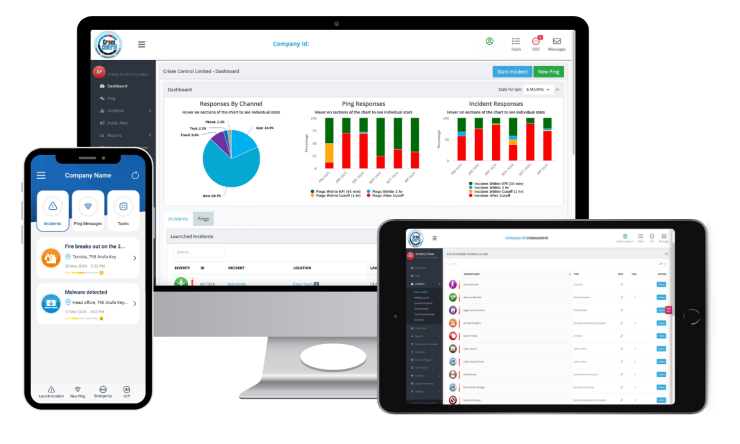
Live dashboards provide an overview of ongoing incidents, resource allocation and updates from the field. This helps decision makers understand the scale and impact of an event as it unfolds.
Improved visibility supports faster and more informed decision making.
Task and Resource Management
During emergencies, multiple actions must be coordinated simultaneously.
Task management tools allow responsibilities to be assigned, tracked and completed within a structured workflow. This ensures clarity across teams and reduces the risk of duplication or missed actions.
Resource management also helps ensure that personnel and assets are deployed effectively.
Reporting and Post Incident Analysis
After an incident, organisations must review performance and identify areas for improvement.
Reporting tools provide insights into communication timelines, response efficiency and operational outcomes. These insights support learning and help refine future emergency plans.
Post incident analysis is a key part of building long term resilience.
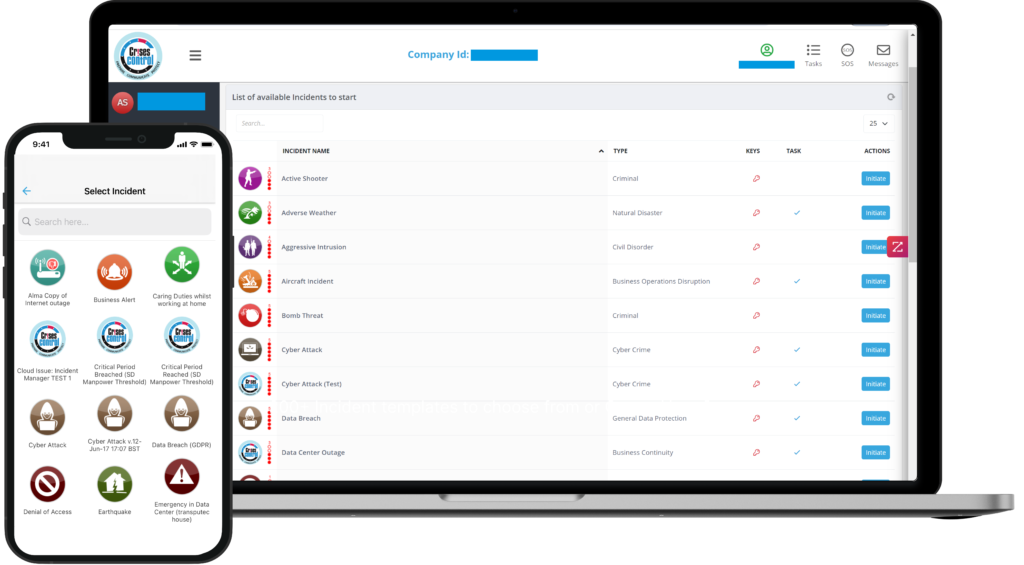
Interested in our Incident Management Software?
Flexible Incident Management Software to keep you connected and in control.
Use Cases in the UK Public Sector
These systems are widely used across a range of public sector scenarios, including:
Severe Weather Events
Flooding, storms and heatwaves often require coordinated responses between multiple agencies.
Transport Disruption
Rail failures, road closures and infrastructure issues require real time communication and public updates.
Public Safety Incidents
Large scale events or security incidents require rapid coordination between emergency services and government bodies.
Infrastructure Failures
Power outages and utility disruptions require immediate response and cross agency coordination.
Public Health Events
Health emergencies require coordinated communication between NHS bodies, local authorities and government departments.
Key Benefits for Public Sector Organisations
Emergency Response Management Software provides several important benefits:
- Faster response times during critical incidents
- Improved coordination across multiple agencies
- Greater visibility of ongoing situations
- Reduced communication delays
- Improved consistency of public messaging
- Enhanced reporting and accountability
These improvements contribute to stronger operational resilience and more effective crisis management.
Challenges in Traditional Emergency Response Approaches
Without a centralised system, organisations often experience:
- Communication breakdowns during high pressure events
- Delayed decision making due to fragmented information
- Lack of shared situational awareness
- Inefficient coordination between teams
- Increased operational risk during complex incidents
These challenges highlight the need for more structured and integrated approaches to emergency management.
Conclusion
Emergency Response Management Software has become an essential capability for modern government and public sector organisations. It enables faster communication, improved coordination and stronger situational awareness during critical incidents.
As emergencies become more complex and interconnected, the need for reliable and centralised response systems continues to grow.
Platforms such as Crises Control provide organisations with the tools required to manage incidents effectively across the full emergency lifecycle, from preparedness through to recovery and review.
By bringing communication, coordination and incident management into a single environment, organisations can improve response times, reduce risk and strengthen resilience when it matters most.
Book a free demo with Crises Control to see how Emergency Response Management Software can strengthen your organisation’s emergency response capability.
FAQs
1. What is Emergency Response Management Software?
Emergency Response Management Software is a digital platform that enables organisations to prepare for, respond to and recover from emergencies by coordinating communication, managing incidents and improving operational visibility.
2. Why is multi-agency coordination important during critical events?
Critical events often involve several organisations with different responsibilities. Effective coordination ensures information is shared quickly, resources are allocated efficiently and response efforts remain aligned.
3. Which organisations benefit from Emergency Response Management Software?
Government departments, local authorities, emergency services, healthcare organisations, transport operators, utilities and other public sector organisations all benefit from improved coordination and communication.
4. How does Emergency Response Management Software improve crisis communication?
The software enables organisations to send real-time alerts, share incident updates, assign tasks and maintain a single source of accurate information throughout an emergency.
5. Can Emergency Response Management Software improve emergency preparedness?
Yes. It supports planning, training, exercises and post-incident reviews, helping organisations strengthen resilience and continuously improve their emergency response capabilities.