
Written by Dr Shalen Sehgal | Crises Control CEO
A healthcare rapid response platform is not a notification system with better marketing. The distinction matters more than most procurement teams realise, and it becomes obvious the first time a real incident goes wrong despite a technically successful alert.
The alert fired. The message reached every device on the floor. The delivery confirmation was logged. And three minutes later, nobody could say with certainty who had picked up the crash cart, whether the respiratory therapist was responding, or what the incident coordinator was looking at on her screen.
That is a notification system doing its job. It is not a rapid response platform.
This post identifies the 5 capabilities that make a genuine healthcare rapid response platform, the ones that actually close the gap between the alert landing and the first coordinated action beginning. For context on why that gap consistently appears, see hospital incident response coordination and how hospital emergency response phases unfold in real life.
Why the Distinction Between Notification and Coordination Matters in Healthcare
Every serious platform in this market sends alerts fast and confirms delivery. That is a baseline capability, not a differentiator. What separates platforms is what happens after. The alert is sent in the window between delivery confirmation and the first coordinated action.
In healthcare, that window is rarely empty. It is filled with ambiguity. Who is responsible? Is anyone moving? Has the crash cart team acknowledged? Is the on-call physician available or in surgery? Is the charge nurse coordinating or still waiting for confirmations herself?
The organisations that respond fastest in healthcare emergencies are not the ones with the fastest notification systems. They are the ones whose platforms convert the alert into structured, accountable action within seconds of delivery. That is what a genuine healthcare rapid response platform does.
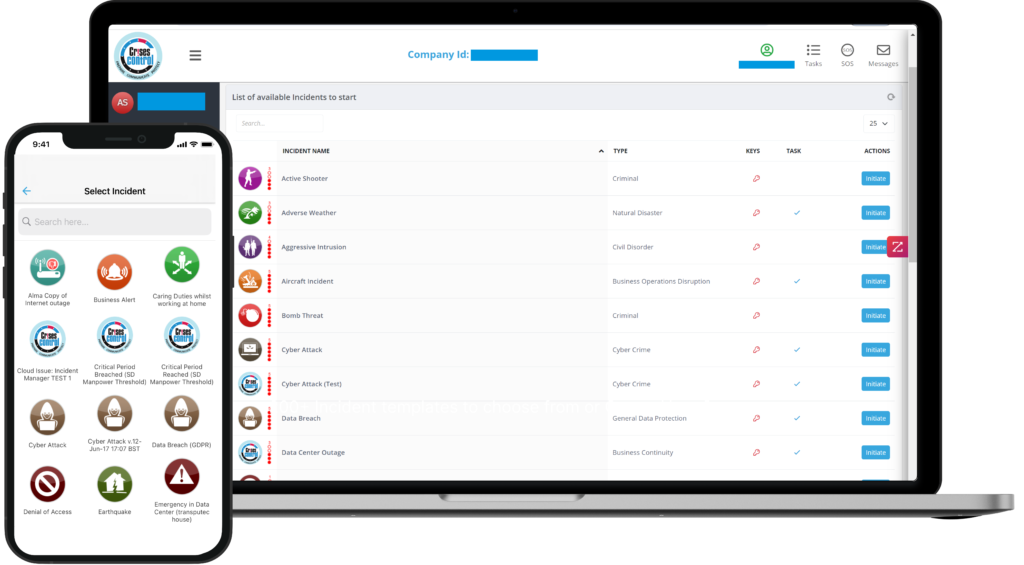
Interested in our Incident Management Software?
Flexible Incident Management Software to keep you connected and in control.
Here are the 5 capabilities that define the difference.
Capability 1: Role-Based Task Assignment on the Current Shift
The first thing a healthcare rapid response platform must do when an alert fires is assign specific tasks to specific people, not broadcast a message to a group. Broadcasting to a group creates diffusion of responsibility. Every recipient assumes someone else is handling it.
Role-based task assignment means the crash cart task goes to whoever holds the crash cart role on the active shift right now, not to a named individual who may have rotated off six hours ago. The PING notification system delivers these role-specific tasks simultaneously across SMS, voice, push, and email. If the primary role holder does not acknowledge within the configured window, the platform escalates automatically to the backup for that role.
No phone calls. No checking a rota spreadsheet. No discovering mid-incident that the plan named someone who left at 6 PM.
Capability 2: Individual Acknowledgement Tracking
A delivered tick means the notification reached a device. It tells you nothing about whether the person saw it, is available, is moving, or understands what they are supposed to do. In a healthcare rapid response, the difference between those states is measured in patient outcomes.
Individual acknowledgement tracking means the incident coordinator can see, in real time, exactly who has confirmed their specific task and who has not. Not aggregate delivery stats. Individual confirmation by role. The incident management platform shows every open task alongside its current status: unacknowledged, acknowledged, in progress, completed. The coordinator does not have to chase anyone. The platform does it automatically.
Research at the University of Maryland Medical System found that improving code blue response coordination improved survival to discharge from 17 percent to 25 percent. The improvement was not from faster alerts. It was from knowing, in real time, who had received and acknowledged their role in the response.
Capability 3: Automated Escalation Without Human Intervention
Escalation in most hospital emergency responses is a human-speed process. Someone notices a task is not being picked up. Someone decides to follow up. Someone finds the backup contact and reaches them. In that sequence, two to four minutes can pass before the gap is filled.
A genuine healthcare rapid response platform removes the human from that sequence entirely. When a task is not acknowledged within the window you have configured, the platform automatically routes it to the designated backup for that role. The incident coordinator is not interrupted. Nobody has to notice the gap. The automated escalation fires the moment the window closes.
This is particularly critical during shift changes, when named contacts may be unavailable and informal knowledge of who is on has not yet reached everyone who needs it.
Capability 4: A Live Shared Operational Picture
The most consistent finding in healthcare incident post-mortems is not that staff lacked capability. It is that decision-makers were working from different, partially outdated pictures of the same situation.
The clinical team at the bedside had the most current view. The charge nurse coordinating had what she had been told two minutes ago. The department head had a summary that passed through three people. The administrator was still waiting for a callback.
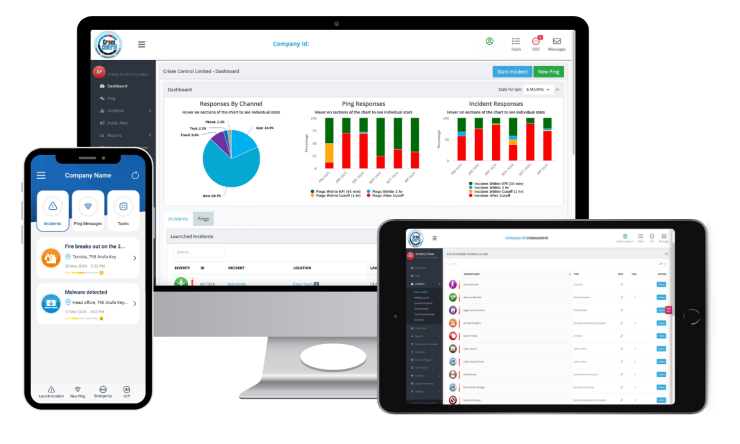
A healthcare rapid response platform provides every decision-maker with the same live view simultaneously: which tasks are assigned, which are complete, which are stalled, where the gaps are. On any device. Updated in real time. The dashboard does not require anyone to update it. It reflects the actual state of the response as it develops.
When the administrator asks what is happening right now, the answer is already on the screen in front of her. Nobody has to brief her. Nobody has to interrupt the coordinator to produce a summary.
Capability 5: Automatic Documentation Throughout the Response
Post-incident compliance documentation in most healthcare facilities is assembled after the event from memory, scattered notes, and whatever the system happened to capture. It is incomplete, and it is the record that survives for CMS surveys, Joint Commission inspections, and legal reviews.
A genuine healthcare rapid response platform builds the documentation record automatically as the incident unfolds. Every notification sent, every acknowledgement received, every escalation triggered, every task completed: logged with a timestamp in real time. By the time the incident closes, the incident management platform has produced a complete, accurate, chronological account of the response. No reconstruction. No gaps. No inaccuracies from exhausted recollection.
When the Joint Commission surveyor asks to see your communication records from last month’s Code Blue, you produce them in under a minute.
Most platforms on the market deliver Capability 1 partially: they send role-targeted alerts but do not track individual acknowledgement. Very few deliver all five. If a vendor demonstration does not show you acknowledgement tracking, automatic escalation, a live shared dashboard, and automatic documentation in action during the demo, the platform likely does not have these capabilities.
How Crises Control Delivers All 5 Capabilities
Crises Control is built as a healthcare rapid response platform: purpose-built for clinical environments with 24/7 shift patterns, rotating staff, multi-site complexity, and regulatory documentation requirements that remain in force long after the incident itself.
When an incident is declared, PING delivers role-specific tasks across SMS, voice, push, and email simultaneously. Each person receives their specific action. Acknowledgements are tracked individually. Non-responses escalate to backup roles automatically.
The incident management platform gives every decision-maker the same live operational picture on a single dashboard. Every action is logged automatically throughout the incident. The CMS and Joint Commission compliance record is complete when the incident closes.
The platform runs on its own cloud infrastructure, independent of hospital IT systems. When internal networks are affected, the rapid response platform keeps running.
To see all 5 capabilities working against your facility’s real incident scenarios, request a personalised demo.
FAQs
1. What is a healthcare rapid response platform?
A healthcare rapid response platform is a system that manages the structured response to a clinical emergency or other critical event, from the moment the alert fires to the point where the incident is documented and closed. It differs from a notification system in that it assigns specific tasks to active shift roles, tracks individual acknowledgements, escalates automatically when responses are not received, provides a live shared operational picture to all decision-makers, and produces complete compliance documentation automatically. The notification is the first three seconds. The platform coordinates everything after it.
2. Why is role-based task assignment important in hospital rapid response?
Role-based task assignment matters because hospital staff rotate every eight to twelve hours. A platform that assigns tasks to named individuals will route them to people who may have left the building hours earlier. Role-based assignment draws from whoever currently holds each relevant role on the active shift, in real time. When the primary holder does not respond, the task escalates automatically to the backup for that role. This removes the two most common failure points in hospital rapid response: the outdated contact list and the manual escalation bottleneck.
3.What is the difference between a healthcare rapid response platform and a mass notification system?
A mass notification system broadcasts alerts to groups and confirms delivery. A healthcare rapid response platform assigns tasks to specific active shift roles, tracks individual acknowledgements, escalates automatically when responses are not received, gives every decision-maker a shared live view of the response, and produces a complete compliance record automatically. In healthcare, both are part of the response infrastructure. The notification system triggers the response. The rapid response platform coordinates it.
4.How does automatic escalation work in a rapid response platform?
When a task is assigned to a role and that person does not acknowledge within the window you have configured, the platform automatically routes the task to the designated backup for that role. This happens without any human intervention. The incident coordinator does not need to notice the gap, decide to follow up, or locate and contact the backup manually. The escalation fires the moment the acknowledgement window closes. In a clinical emergency, this removes minutes from the gap between a task going unacknowledged and a qualified person picking it up.
5.What compliance documentation does a healthcare rapid response platform produce?
A fully capable healthcare rapid response platform automatically logs every notification sent, every acknowledgement received, every escalation triggered, and every task completed throughout the incident, each with a precise timestamp. By the time the incident closes, this record exists as a complete, accurate, chronological account of the response. It satisfies CMS Conditions of Participation documentation requirements, Joint Commission audit standards, and HIPAA notification timeline records without any additional effort from the team that was managing the live incident.