Every day, transportation networks operate under constant pressure to keep people and goods moving safely and on time.
Passengers expect trains and buses to run predictably, often with little awareness of the complex coordination happening behind the scenes. Freight operators rely on precise scheduling and handovers. Airport and rail networks depend on tightly aligned teams working across operations, engineering, customer service, and external partners.
Most of the time, these systems function as intended.
But when disruption occurs, the reality inside control rooms changes quickly.
A signalling failure starts affecting multiple routes. Stations begin to experience congestion as passengers wait for updates. Replacement transport needs to be organised. Train crews are repositioned. Customer service teams face a surge in demand for accurate information. External agencies may need to be engaged depending on the severity of the incident.
At this point, the challenge is no longer just the operational issue itself.
It is coordination.
How do you ensure every team, system, and stakeholder is working from the same information, making aligned decisions, and responding at the right speed?
This is where Incident Coordination Software becomes essential.
What Is Incident Coordination Software?
Incident Coordination Software is a platform that helps organisations manage communication, decisions, tasks, and people during a disruption.
Unlike tools that only detect incidents or send alerts, Incident Coordination Software provides a structured environment for managing the full organisational response in real time.
It allows transportation organisations to:
- Centralise incident communication across teams
- Assign and track response tasks
- Coordinate decisions across operations, engineering, and leadership
- Maintain a shared real-time view of incident status
- Escalate issues automatically when required
- Record actions for compliance and review
In transportation environments, this structure is critical because incidents rarely sit within a single department. A rail disruption may involve control centres, station staff, field engineers, communications teams, and external agencies all at once.
Without coordination, information becomes fragmented and response efforts lose alignment.
Why Coordination Breaks Down in Transportation Networks
Transportation systems are highly interconnected. A single disruption can cascade across multiple services, locations, and teams.
Common examples include:
- Signalling failures affecting multiple routes
- Severe weather disrupting infrastructure and staffing
- Cybersecurity incidents impacting operational systems
- Power outages affecting stations, signalling, and communications
- Security incidents requiring rapid multi-agency response
Each scenario introduces both operational and coordination challenges.
The issue is not only how to fix the problem, but how to keep everyone aligned while it is being fixed.
In many incidents, teams operate in parallel rather than in sync. Control rooms may have updated operational data, while station staff rely on on-the-ground observations. Communications teams may be issuing public updates based on partial information. Engineering teams may be focused on technical recovery timelines.
Without a shared coordination system, these perspectives can diverge quickly.
Incident Coordination Software addresses this by creating a single operational layer where updates, decisions, and tasks are shared in real time across all teams.
The Real-World Impact of Poor Coordination
When coordination breaks down during a transport incident, the impact is felt quickly across the entire network.
Passengers receive inconsistent or delayed information, which increases confusion and frustration. Station staff may be left without clear instructions while managing crowding and service uncertainty. Replacement transport can be dispatched without full visibility of station conditions or crew availability. Operational leaders may lack a complete view of the situation, slowing decision-making.
In these moments, the challenge is rarely a lack of effort. It is a lack of shared structure.
This is where Incident Coordination Software plays a critical role. It ensures that everyone involved in the response is working from the same live information, with clear ownership of tasks and consistent communication across all channels.
The result is faster alignment, fewer misunderstandings, and more controlled recovery.
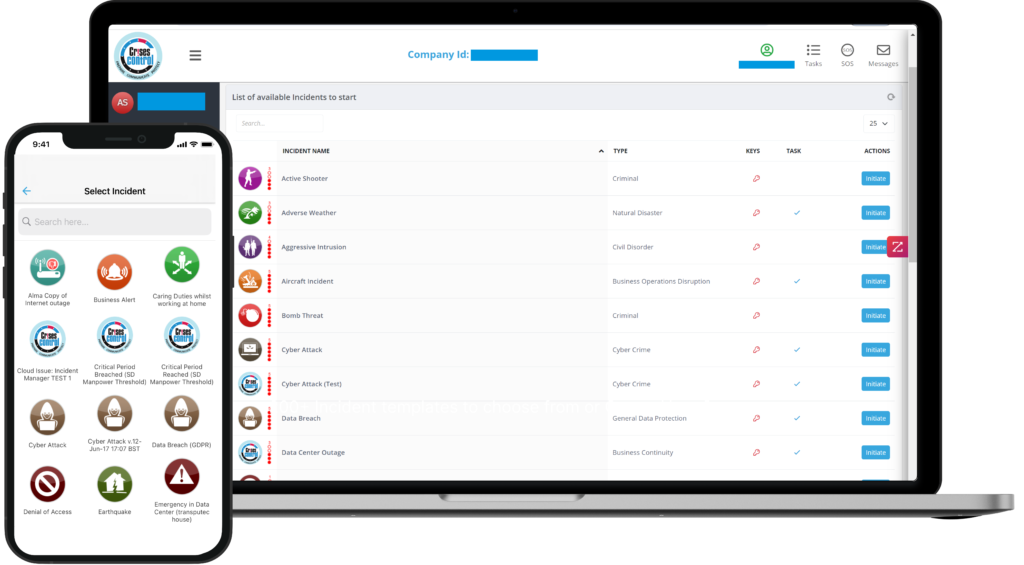
Interested in our Incident Management Software?
Flexible Incident Management Software to keep you connected and in control.
The Passenger and Operational Pressure During Incidents
From a passenger perspective, disruption is often experienced as delays or cancellations.
From an operational perspective, it is a fast-moving coordination problem involving multiple teams and competing priorities.
Control centres must assess impact and determine recovery strategies. Station teams must manage passenger flow and communicate updates in real time. Train crews may be awaiting routing instructions that affect entire service patterns. Logistics teams may need to coordinate replacement transport across constrained infrastructure.
At the same time, leadership teams are expected to maintain oversight and make decisions based on evolving information.
Incident Coordination Software supports this environment by ensuring that updates, actions, and decisions are visible across all teams in real time. This reduces uncertainty and helps organisations respond in a more structured and predictable way.
Lessons from the Bedford Railway Incident
The Bedford railway incident in June 2026 highlights how quickly coordination complexity can escalate during a major rail disruption.
In situations like this, multiple organisations must operate together, including rail operators, emergency services, communications teams, and infrastructure partners.
Each group has a specific role, but all depend on shared situational awareness.
Key coordination questions typically arise during events of this nature:
- What is the current operational status across the network
- Are all teams working from the same updated information
- How are passenger communications being aligned with operational decisions
- Are resources such as crews and replacement transport being allocated effectively
- Do escalation paths remain clear as conditions change
Incident Coordination Software helps address these challenges by providing a centralised environment where information is shared, tasks are assigned, and updates are visible to all stakeholders in real time.
This reduces the risk of misalignment and helps maintain control during complex, multi-agency responses.
How Incident Coordination Software Improves Response and Recovery
When implemented effectively, Incident Coordination Software improves both the speed and quality of incident response in transportation networks.
It helps organisations:
- Align teams across operations, engineering, and communications
- Improve decision-making through shared real-time information
- Reduce delays caused by fragmented communication
- Coordinate resources such as crews, vehicles, and station support more effectively
- Maintain clearer passenger communication during disruption
- Accelerate recovery by keeping all actions visible and tracked
The focus is not just on managing the incident, but on maintaining control throughout the entire response lifecycle.
Incident Coordination Software and Operational Resilience
Operational resilience in transportation is not defined by the absence of disruption.
It is defined by how effectively an organisation can respond when disruption occurs.
Passengers expect reliable information even during delays. Regulators expect evidence of structured response processes. Stakeholders expect transparency and accountability.
Incident Coordination Software supports resilience by providing the structure needed to:
- Maintain visibility during disruption
- Coordinate decision-making across teams
- Improve communication consistency
- Reduce operational uncertainty
- Strengthen post-incident learning through audit trails
This allows transportation organisations to move from reactive response to coordinated recovery.
Final Thoughts
Disruption is an unavoidable part of running rail and transportation networks.
Signals fail. Weather conditions change. Infrastructure is tested. External events create unexpected pressure on systems that are designed to run continuously.
What separates resilient transport organisations from those that struggle is not the absence of incidents, but the quality of coordination during them.
When coordination is strong, teams stay aligned, passengers receive clearer information, and services recover more quickly. When it is weak, even minor incidents can escalate into widespread operational disruption.
This is why many transport organisations are now placing greater emphasis on structured incident coordination as part of their wider operational resilience strategy.
Solutions such as Crises Control support this approach by helping organisations bring communication, task management, and escalation into a single structured environment. Rather than replacing existing response processes, the focus is on improving visibility, alignment, and speed of coordination across teams when incidents occur.
In an increasingly complex transport environment, the ability to coordinate effectively during disruption is becoming a core operational capability rather than an optional enhancement.
Book a free demo today and discover how Crises Control can help your organisation maintain reliable and uninterrupted transportation operations.
FAQs
1. What is incident coordination software?
Incident coordination software is a platform that helps organisations manage communications, tasks, decisions, and response activities during an incident. It enables teams to coordinate actions, share information, escalate issues, and maintain visibility throughout the incident lifecycle, helping organisations respond more effectively to disruptions.
2. How does incident coordination software help rail operators?
It centralises incident reporting, communication, and response across rail operations. Teams receive real-time alerts, enabling faster coordination during disruptions like signalling failures or delays. It improves response times, supports passenger communication, and ensures clear accountability with a full audit trail for compliance and operational resilience.
3. What is the difference between incident coordination software and incident response software?
Incident response software typically focuses on managing and resolving the technical aspects of an incident, such as cybersecurity events or IT outages. Incident coordination software focuses on the broader organisational response, helping people, teams, and stakeholders communicate, collaborate, and make informed decisions throughout the incident.
4. Why is incident coordination important in transportation networks?
Transportation incidents often affect multiple organisations and services simultaneously. Effective coordination helps ensure the right people receive the right information at the right time, reducing confusion, improving decision-making, accelerating recovery efforts, and minimising disruption to passengers and operations.
5. How does incident coordination software support operational resilience?
Incident coordination software supports operational resilience by improving communication, situational awareness, accountability, and response times during disruptions. By helping organisations coordinate effectively and recover faster, it enables them to maintain critical services and minimise the impact of incidents on customers and operations.