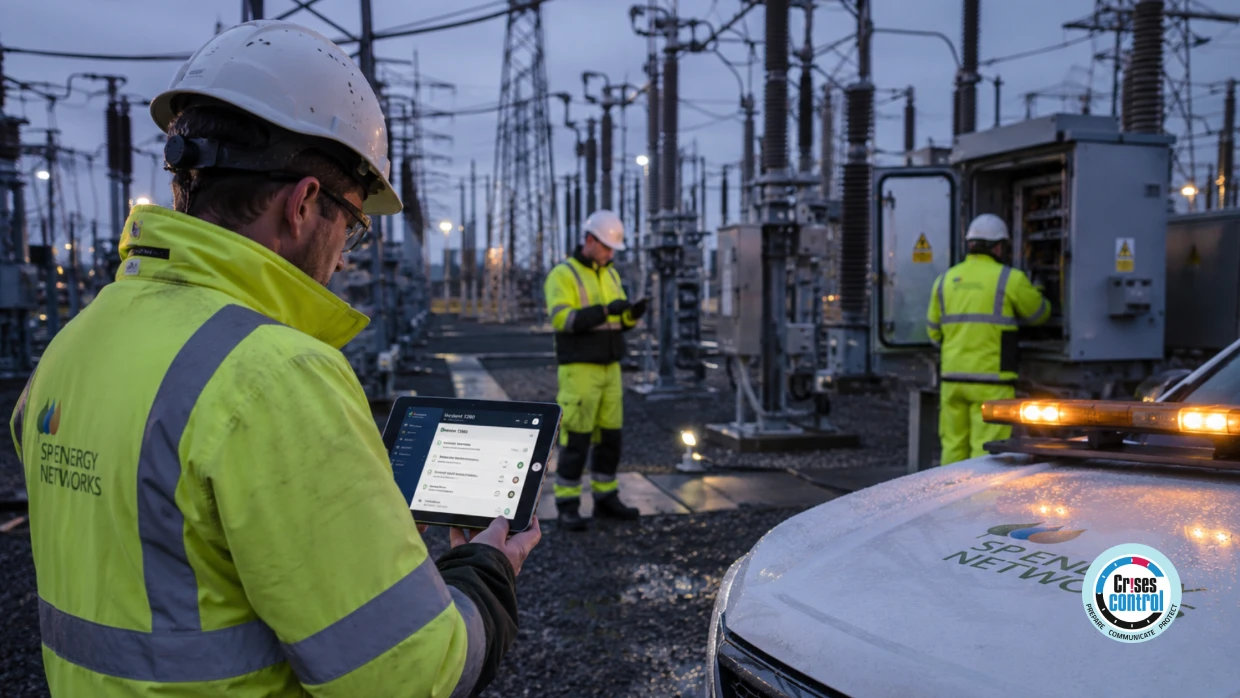
Incident coordination software for utilities is a dedicated platform that connects distributed operations teams, field engineers and control room staff into a single, structured response during live infrastructure incidents. It bridges the communication gap between the moment a fault is detected and the moment every relevant person is tasked, tracked and documented, across every site and every shift. The coordination layer is what most utilities organisations are missing: not the ability to detect a problem, but the ability to move every part of the organisation in the right direction at the same time.
Picture a water utility responding to a burst main during a winter storm. The network control room detects the pressure drop within seconds. The shift supervisor reaches for the phone and begins working through a contact list: field crew one, field crew two, the on-call network manager, communications. Each call takes three to five minutes. Each person receives a slightly different briefing depending on what the supervisor knew at the time of their particular call. By the time the fourth call is made, the situation has changed. The first field crew, working from the original briefing, is heading to the wrong isolation point. Nobody has told them yet because the supervisor is still on the phone to someone else.
That scenario is not a failure of competence. The supervisor knew the network. The field crews were experienced. The fault was detected quickly. The failure was a coordination failure: the absence of a mechanism to simultaneously brief, task and track all relevant people from a single point of truth.
Coordination failures in utilities incidents are rarely dramatic. They accumulate quietly, in the gap between detection and organised response. A three-minute delay here, a missed task there, a secondary crew working from outdated information. The aggregate effect on outage duration, field crew safety and regulatory performance is significant.
Why Distributed Teams Create Unique Coordination Challenges
Energy, water and gas utilities operate across geography in a way that very few other industries match. A single distribution network operator may have field crews active across dozens of locations simultaneously, supported by a central network control function, a customer operations team, a safety and compliance team and, in major incidents, a senior management crisis team. These groups do not share an office. They do not share a communication channel. They often do not share a common understanding of what is happening at the moment an incident begins.
This distributed structure is not a design flaw. It reflects the physical reality of infrastructure that serves thousands of square kilometres. The coordination challenge it creates, however, is real and consequential. When an incident occurs at a remote substation, a gas pressure fault develops across a rural distribution zone, or a pumping station trips unexpectedly, the response must span multiple teams, multiple locations and multiple communication channels simultaneously. The person in the control room needs to know, in real time, what every part of that response is doing.
What most utilities currently have for this purpose is a combination of phone calls, radio systems, email chains and group messaging applications. These tools can reach people. They cannot coordinate them. They can transmit information. They cannot verify that the information has been acted upon. They can log individual messages. They cannot produce a coherent timeline of a distributed response.
The coordination gap in utilities incident response is fundamentally a structural problem. Distributed teams operate from different information sets without a mechanism to align around a single operational picture. Incident coordination software for utilities provides that mechanism.
Interested in our Incident Management Software?
Flexible Incident Management Software to keep you connected and in control.
The 5 Coordination Gaps That Cost Utilities Most
The failure modes that appear when utilities organisations attempt to coordinate distributed teams without purpose-built incident coordination software are consistent. They appear regardless of team size, network complexity or the experience of the individuals involved. Understanding them is the first step to addressing them.
Gap 1: The Briefing Gap
When an incident begins and coordination depends on telephone calls, each team member receives their briefing at a different moment, from a person who may know something different from what they knew when they called the previous person. By the time six teams have been briefed over twenty minutes, the operational picture each team is working from may differ significantly. Actions are taken on the basis of information that is already out of date. Duplication and contradiction follow.
Gap 2: The Acknowledgement Gap
In a busy incident, calls are missed. Messages arrive in group channels that not every relevant person monitors. Escalation paths work informally: the supervisor assumes the field engineer has received the instruction because the call connected. The field engineer is in a no-signal area and has not received anything. Neither party knows the other’s status. The task sits unstarted while the incident commander assumes it is in hand.
Gap 3: The Task Completion Gap
Even where briefings reach the right people, the mechanism for confirming task completion is typically a callback. In a fast-moving incident involving multiple parallel workstreams, the incident commander cannot be simultaneously making outbound calls and managing the situation. Callbacks are missed. Tasks are assumed complete because the field crew went quiet, which is taken as an absence of problems rather than an absence of a signal. Critical steps, including isolation procedures, safety checks and regulatory notifications, can sit incomplete without anyone being aware.
Gap 4: The Escalation Gap
When an incident develops beyond initial expectations, escalation to senior management or specialist teams needs to happen quickly. In organisations relying on informal communication, the decision to escalate is often delayed because the supervisor managing the initial response is occupied. Escalation paths that exist on paper, in emergency plans and site procedures, require manual activation. The person who should trigger them is the person least available to do so at the moment the trigger is needed.
Gap 5: The Documentation Gap
After an incident, utilities operators in the UK face regulatory enquiries from Ofgem on Customer Interruptions and Customer Minutes Lost, potential RIDDOR reporting obligations to the HSE, and in some cases requirements from the Environment Agency. These enquiries demand a detailed account of what happened, in what order, and who made which decisions. An account reconstructed from call logs, individual notes and informal recollections rarely satisfies that standard. It contains gaps, disputed sequences and inconsistencies that create sustained regulatory and legal exposure.
Extended outages can have both regulatory and financial consequences under Ofgem’s quality of service incentives. Effective incident coordination also supports worker safety and helps organisations maintain a clear, defensible record of their response.
What Incident Coordination Software for Utilities Looks Like in Practice
Effective incident coordination software for utilities provides a connected operational environment that activates the moment an incident is detected and maintains a single operational picture until the incident is resolved and documented.
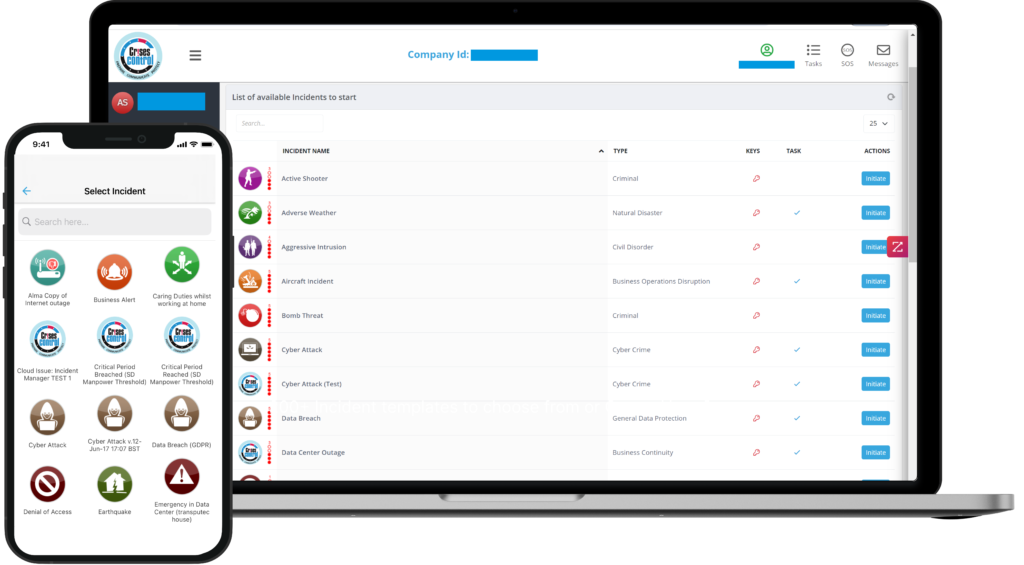
Activation reaches every relevant team member simultaneously, regardless of location. Field engineers, network control staff, safety officers, communications leads and senior management all receive notification through their preferred channel: SMS, voice call, email, push notification or in-app alert. The incident commander sees immediately who has acknowledged and who has not. Non-responses trigger automatic escalation without manual intervention.
From the moment of activation, the platform creates a structured coordination environment. Roles are assigned. Tasks are created with named owners, clear descriptions and expected completion times. As each task is updated or completed, the platform records the action automatically. Every team member, from the field engineer isolated on a remote site to the Head of Operations monitoring the Control Centre dashboard, operates from the same information in real time.
When the incident is resolved, the platform generates a complete audit trail: every notification, every acknowledgement, every task update, every decision recorded at the time it was made. This is the documentation that satisfies the post-incident review, the regulatory enquiry and the insurance audit. It is a natural by-product of the coordination process, not a retrospective exercise.
How Crises Control Delivers Incident Coordination for Utilities
Most competitors either notify people or document plans. Crises Control executes the response. Built for real incidents, not demos.
Alerting platforms do the first part well: reaching people across channels and confirming receipt. What they do not provide is the operational layer that follows. Enterprise resilience platforms offer broad functionality but are often sized and priced for organisations with large dedicated crisis management functions rather than operational utilities teams who need the capability immediately, under pressure, without specialist support.
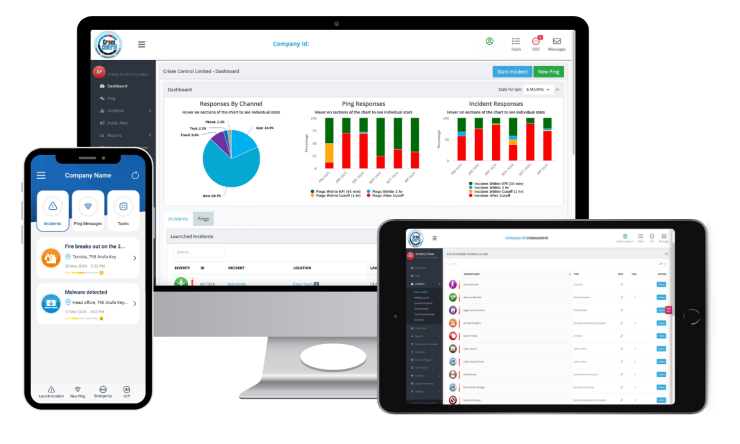
Crises Control is built specifically for the coordination layer. Ping handles the simultaneous multi-channel alerting and response confirmation. Incident Manager provides structured incident coordination, role assignment and the live incident timeline. Task Manager tracks every field action to verified completion. Control Centre gives leadership the real-time operational picture. Audit and Reporting generates the post-incident record automatically.
For utilities organisations managing distributed teams across large geographic areas, this means a coordination capability that activates in seconds, maintains a single operational picture across every team and every location, and produces the documentation that Ofgem, the HSE and leadership subsequently require. The related article on operational incident management software provides broader context on the category.
The organisations that respond most effectively aren’t necessarily those that detect incidents first. They’re the ones that coordinate people, information and decisions most effectively once the incident begins. Request a free demo of Crises Control to understand how it applies to utilities operations.
FAQs
1. What is incident coordination software for utilities?
Incident coordination software for utilities is a platform that connects distributed operations teams, field engineers and control room staff into a structured, trackable response during live infrastructure incidents. It provides simultaneous alerting, role assignment, task tracking and real-time visibility from a single operational environment. Unlike general communication tools, it is purpose-built for the specific demands of utilities operations: distributed sites, rotating shift teams, safety obligations and regulatory documentation requirements.
2. How does incident coordination software differ from a mass notification system?
A mass notification system sends alerts and confirms who has received them. Incident coordination software manages everything that happens after the alert is sent: assigning roles and tasks to named individuals, tracking those tasks to completion, maintaining a live operational picture for the incident commander and generating a post-incident record automatically. For utilities organisations, the coordination layer after the initial alert is precisely where most response failures occur.
3. What are the most common coordination failures in utilities incident response?
The most consistent failure modes are fragmented briefings across distributed teams, missed acknowledgements due to communication gaps, unverified task completion, delayed escalation to senior management and inadequate post-incident documentation. Each of these creates a direct cost, in extended outage duration, regulatory exposure, safety risk or all three. Incident coordination software addresses each failure mode by providing a structured operational environment from the moment an incident begins.
4. How quickly can incident coordination software be deployed in a utilities organisation?
Modern cloud-based platforms such as Crises Control can be configured and deployed within days. The platform is designed for operational use under pressure, without requiring specialist users or lengthy training programmes. Utilities organisations can begin with core alerting and coordination capabilities and expand to full task tracking, control centre visibility and audit reporting as the organisation builds operational maturity with the platform.
5. What regulatory requirements does incident coordination software help utilities organisations meet?
Utilities organisations in the UK are subject to Ofgem licence conditions covering Customer Interruptions and Customer Minutes Lost, HSE requirements under RIDDOR for certain incidents, and Environment Agency obligations in some cases. A purpose-built coordination platform supports these requirements by generating a timestamped, complete record of every action and decision during the response. This record is produced automatically during the incident rather than reconstructed afterwards, providing a defensible account that satisfies post-incident scrutiny from regulators and insurers.