
Written by Paul Malinda | Crises Control Marketing Assistant
Incident Management Software for the Middle East is becoming essential as disruption across the region grows more complex and interconnected. Most organisations do not lose control because of a single disruption. They lose control when their response becomes fragmented.
A logistics operation moving goods across the Middle East depends on tight coordination between warehouses, ports, transport routes, and control teams. On most days, that coordination runs smoothly.
Then disruption hits.
Port congestion builds under redirected shipments. A road incident delays a key inland route. Weather reduces visibility across multiple areas. At the same time, route instability and operational alerts begin to affect movement planning.
Within hours, delays start to cascade.
The organisation is not dealing with one incident. It is dealing with several at once.
This is where operations lose control.
Not because the disruption is too large, but because the response becomes fragmented.
Updates are scattered. Teams act on different information. Leadership lacks a clear operational view. In the Middle East, where operations are tightly connected, this fragmentation spreads quickly across sites and decisions.
This is where Incident Management Software Middle East becomes critical. The real risk is not the disruption itself. It is the lack of structured coordination once it starts to spread.
What Is Incident Management Software
Incident management software helps organisations detect, manage, and resolve incidents in a structured way. It provides a central platform for communication, task management, escalation, and visibility during live operational events.
It does not remove complexity. It helps teams manage it.
- log and assess incidents quickly
- notify the right stakeholders immediately
- assign actions to the right teams
- track progress in real time
- maintain a shared view of the situation
- document decisions and actions for review later
For organisations operating across the Middle East, where operations are often distributed across multiple sites and countries, this structure becomes essential when incidents begin affecting more than one part of the business.
Why Incident Complexity Is Increasing in The Middle East
Incident complexity is rising in the Middle East because interconnected supply chains, cross border dependencies, and digital infrastructure mean disruptions spread faster and affect more teams at the same time.
Operations across the region are becoming more connected, more time sensitive, and more difficult to manage manually.The Middle East continues to grow as a hub for logistics, aviation, energy, and infrastructure. That growth creates faster networks, but it also increases exposure to disruption. A delay in one location can quickly affect movement, timing, and decision making elsewhere.
Cross border supply chains, interconnected transport routes, and regional control structures mean incidents rarely stay contained. When one part of the network is affected, the impact spreads faster than teams can communicate.
Environmental pressure adds another layer. Heavy rainfall, reduced visibility, and transport disruption can quickly affect routes and schedules. At the same time, reliance on digital systems means outages and technical failures now create operational consequences beyond IT.
This is why structured response matters. Organisations do not just need effort. They need coordination under pressure.
The Operational Impact of Fragmented Response
Returning to the logistics scenario, the organisation quickly encounters a familiar problem.
Information is scattered across different channels. Site leaders have only partial visibility. Drivers receive inconsistent instructions. Regional teams are making decisions based on different versions of the same incident. Senior leadership knows there is a problem, but not the full scale of it.
This creates operational drag at exactly the wrong moment.
Decision making slows because information is incomplete. Teams duplicate effort because actions are not visible. Conflicting updates increase confusion. Customers receive inconsistent messaging. Small delays become wider service issues because the response is not aligned.
The organisation is not failing because the disruption is too large. It is struggling because coordination is too weak.
This is where structured response changes the outcome.
Interested in our Ping Mass Notification Software?
Efficiently alert everyone in seconds at scale with our Mass Notification Software.
Why Communication Is Central to Incident Management
In complex operations, communication is not a supporting task. It is the response system.
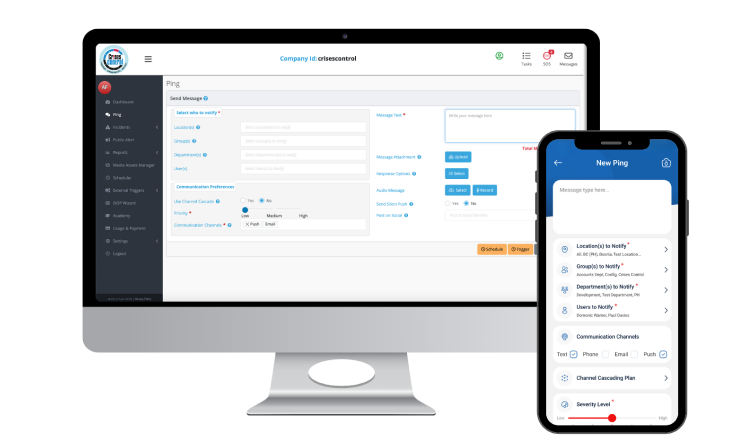
An emergency notification system in Middle East capability helps organisations deliver the right message to the right people at the right time. It allows alerts to be targeted by location, role, site, or responsibility so that teams receive information that matters to them without adding unnecessary noise.
In the logistics scenario, this means control teams can inform drivers about route changes, update site managers on operational impact, and keep leadership aware of the wider picture without forcing everyone into the same communication chain.
That matters because speed without clarity creates more confusion. Fast, targeted, role specific communication helps teams act consistently and reduces the risk of fragmented decision making.
Where Traditional Approaches Break Down
Many organisations still manage incidents using spreadsheets, static procedures, phone calls, and disconnected messaging tools.
That may be enough for isolated issues. It is not enough for fast moving, multi location disruption.
-
response plans are hard to access under pressure
-
updates are delayed or inconsistent
-
accountability becomes unclear
-
leaders lack real time visibility
-
teams lose time switching between tools
Traditional approaches break down because they depend too heavily on individuals to collect information, pass updates, interpret next steps, and keep teams aligned manually.
When response depends on individuals stitching information together under pressure, failure is not a possibility. It is a probability.
That creates gaps at exactly the point where coordination needs to be strongest.
In complex Middle East operations, these weaknesses become more visible because disruption rarely stays in one place for long.
A Structured Approach to Incident Management
A stronger response starts with a single operating structure.
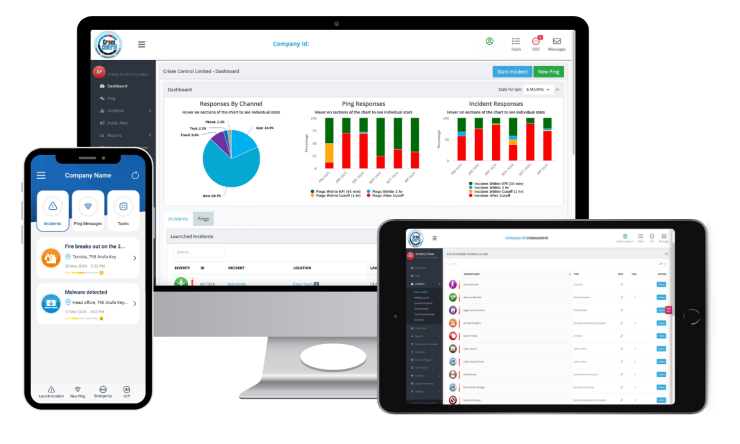
Incident management software creates a central place where incidents can be logged, assessed, escalated, and managed in real time. Teams can see what is happening, what actions are underway, and what still needs attention.
In the logistics scenario, this would allow the organisation to create one live incident record that brings together different strands of disruption. Tasks can be assigned to the relevant teams, such as rerouting vehicles, managing customer updates, coordinating with transport partners, or assessing downstream delivery risk.
As the situation changes, updates remain visible in one place. That reduces duplication, improves accountability, and helps leadership make better decisions with less delay.
The Role of Crisis Management Software in Regional Operations
While incident management focuses on live operational response, broader coordination often requires a wider resilience framework.
This is where crisis management software in the Middle East becomes relevant. It helps organisations connect communication, response planning, escalation, and leadership visibility across larger operational events.
For organisations managing multiple sites, countries, or high value operations, this matters because incidents often move beyond operational inconvenience and into wider business risk. What starts as a delay or local disruption can quickly affect service delivery, customer confidence, compliance exposure, and executive decision making.
A structured platform helps connect these layers before fragmentation takes over.
Challenging A Common Assumption
A common assumption is that incident management starts when something goes wrong.
That is too late.
Effective incident management starts before the disruption, with defined roles, tested communication paths, clear escalation logic, and usable response workflows. The organisations that handle incidents best are rarely the ones with the longest plans. They are the ones with the clearest operational structure when pressure becomes real.
That is why incident management software should not be seen as a reactive tool alone. It is a practical layer of resilience that helps teams prepare, respond, and improve over time.
How Crises Control Supports Incident Management
Crises Control is designed for real time coordination, not just incident logging. It helps organisations move from fragmented communication to a single, structured response system during live disruption.
Most platforms focus on alerts or reporting. Very few help organisations coordinate response as it unfolds.
Crises Control brings together:
- Centralised communication that replaces scattered emails, calls, and messaging apps with one controlled environment
- Targeted alerts by role, location, or responsibility, ensuring the right people receive the right information without unnecessary noise
- Task assignment and tracking so actions are visible, owned, and progressing in real time
- Built in escalation logic that ensures critical decisions reach the right level before delays create further impact
- A live operational view that allows leadership and teams to see the same situation at the same time
This is what removes fragmentation.
For organisations operating across the Middle East, where multiple sites, jurisdictions, and dependencies must be managed simultaneously, this level of coordination is critical. Disruption rarely stays in one place, and response cannot either.
Instead of switching between tools and chasing updates, teams operate from one shared system where communication, actions, and decisions are aligned.
The result is not just a faster response. It is a controlled response.
Why This Matters for Operational Resilience
As operations across the Middle East continue to grow in scale and complexity, disruption will become harder to contain through manual coordination alone.
The organisations that respond well will not necessarily be the ones with the most documentation. They will be the ones that can communicate clearly, assign actions quickly, and maintain visibility across the response as conditions change.
That is what resilience looks like in practice.
In complex regional operations, control depends on more than speed. It depends on structure.
Conclusion
The logistics scenario above reflects a wider reality across the Middle East: operations are more connected than ever, and disruption spreads fast across sites, teams, and commitments.
The real problem isn’t disruption. It’s fragmented response.
When response breaks down, delays multiply and visibility vanishes. When response is structured, organisations move faster, communicate clearly, and stay in control under pressure.
That’s the role of incident management software: turning disruption into coordinated action.
For organisations in high‑pressure, multi‑site environments, this capability is no longer optional. It’s essential.
If your response still relies on emails, calls, and manual coordination, ask yourself:
Will it hold when multiple disruptions hit at once or will it break under pressure?
Disruption is inevitable. Fragmentation is optional.
Request a FREE Demo
FAQs
1. What is incident management?
Incident management is the process of identifying, managing, and resolving incidents to reduce operational impact and maintain continuity.
2. What is the purpose of an emergency notification system?
It helps organisations send fast, targeted, and consistent communication to the right people during an incident.
3. How do compliance and data regulations affect incident management in the Middle East?
Organisations operating in the Middle East must manage incidents while meeting country specific data, communication, and reporting requirements. This includes where data is stored, how alerts are delivered, and how incidents are documented. Incident management software helps ensure compliance by providing structured audit trails, controlled communication, and the ability to align response processes with local regulations across different jurisdictions.
4. Why are incidents difficult to manage across Middle East operations?
Because operations are often spread across multiple sites, countries, and interdependent systems, which means disruption can spread quickly and communication can become fragmented.
5. How can incident management software help organisations in the Middle East?
It improves visibility, speeds up coordination, supports targeted communication, and helps teams manage incidents in a more structured and consistent way.