Airline operations rarely fail because people do not know what is happening. The real challenge appears when too many people know slightly different versions of what is happening at the same time.
Picture a winter morning at a busy international airport. Snow has slowed down runway operations, de-icing queues are building, and aircraft are stacking in holding patterns. Inside the airline operations control centre, updates are coming in from every direction. Flight dispatch has one view. Ground handlers have another. Crew planning is already adjusting rosters. Maintenance teams are trying to fit inspections into a shrinking window.
Each team is working with the information they have, but no one is working from the same live picture.
This is where disruption becomes difficult to manage. Not because the data is missing, but because communication is fragmented.
Mass Notification Software gives airlines a way to bring structure back into that environment. It connects operational teams through a single communication flow so that decisions, updates, and instructions stay aligned while conditions keep changing.
This article looks at how airlines handle disruption in practice, where communication breaks down, and how real-time incident alerts support clearer coordination across the airline operations control centre.
A disruption scenario that shows how quickly complexity builds
A major hub begins operations under poor weather conditions after overnight snowfall. At first, the impact seems manageable. A few delays, some de-icing queues, and slower turnaround times.
Within an hour, the situation shifts.
Inbound aircraft are circling longer than planned. Gate availability becomes uncertain. Crew duty limits begin to come into play. Ground teams start running low on available equipment. A small delay at the runway quickly spreads into multiple operational areas.
Inside the airline operations control centre, information is coming in continuously:
Airport operations report reduced runway throughput.
Dispatch teams adjust flight plans.
Crew control flags legality concerns.
Maintenance highlights aircraft positioning challenges.
Each update is valid on its own, but together they create a moving picture that is hard to stabilise.
The challenge is no longer about awareness. It is about making sure every team is acting on the same version of events at the same time.
Why airline disruption creates communication strain
Airlines operate on tightly connected systems. Aircraft, crew, airport infrastructure, and passenger flows are all dependent on timing. When one part of the system shifts, everything else needs to adjust.
A delayed departure does not stay isolated. It affects inbound aircraft rotation, crew scheduling, gate planning, maintenance timing, and passenger connections at the next airport.
The complexity comes from the number of teams involved. Each team has a specific responsibility, and each one needs slightly different information to do its job.
When communication is not structured, teams start working in parallel rather than in sync. That is when confusion builds.
Why do airline disruptions spread across multiple teams so quickly?
Because operational functions such as crew planning, aircraft routing, and airport handling depend on shared timing, so a delay in one area affects decisions across the entire network.
Where traditional communication methods fall short
Many airline operations still rely on familiar tools during disruption. Email updates, phone calls, spreadsheets, and messaging apps are often used to coordinate response activity.
These tools work well when conditions are stable. The difficulty appears when multiple updates need to be sent at the same time to different groups, each with different priorities.
A single operations manager may need to contact airport teams, crew controllers, maintenance engineers, customer service units, and external suppliers. Each group needs tailored information, and each update may change as new details arrive.
The result is often inconsistency. One team may act on an early update while another waits for confirmation. Instructions may be repeated, missed, or interpreted differently.
What is the main risk when communication is not structured during disruption?
Teams may make operational decisions based on outdated or incomplete information, which leads to misalignment across the recovery process.
How Mass Notification Software changes coordination
Mass Notification Software helps reduce this fragmentation by bringing communication into a structured system rather than relying on individual messaging.
Instead of sending separate updates across different channels, airlines can issue coordinated messages to defined groups based on role, location, or operational responsibility.
This means dispatch teams receive information relevant to flight planning, crew controllers receive updates related to legality and rostering, and ground teams receive instructions linked to turnaround operations.
The benefit is not just speed. It is consistency. Everyone is working from the same set of instructions at the same time.
Escalation paths also become clearer. If a message is not acknowledged or if conditions change, the system can route updates to the next level of responsibility without waiting for manual follow-up.
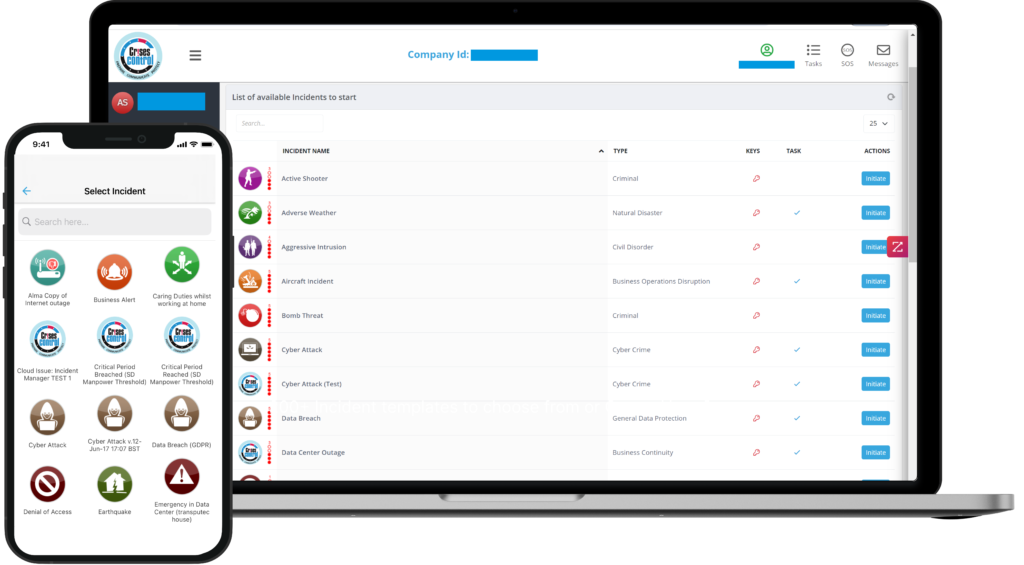
Interested in our Mass Notification Software?
Efficiently alert everyone in seconds at scale with our Mass Notification System – PING, get the message out fast and ensure rapid response and recovery.
The role of the airline operations control centre
The airline operations control centre sits at the centre of disruption management. It brings together operational data from across the network and coordinates recovery decisions.
During disruption, the OCC is responsible for understanding the current situation, prioritising actions, coordinating across departments, and maintaining visibility of recovery progress.
When communication is fragmented, the OCC spends more time chasing updates than coordinating recovery. When communication is structured, the focus shifts back to decision-making.
With real-time incident alerts, the OCC can distribute updates in a controlled way, ensuring each team receives only the information they need to act.
This helps reduce noise while improving clarity during fast-moving operational changes.
IROPS and the need for controlled communication
Irregular operations, often referred to as IROPS, introduce unpredictable changes into airline schedules. These can include severe weather, airport restrictions, technical faults, or security-related delays.
In these situations, speed alone does not solve the problem. Communication must also be accurate and consistent.
If instructions are sent too early or without full verification, teams may act on information that changes shortly after. That creates additional disruption rather than resolving it.
A structured communication approach helps ensure that updates are verified before they are distributed, reducing the risk of conflicting instructions across teams.
The assumption that more communication improves control
There is a common belief that sending more updates improves awareness during disruption. In practice, it often creates the opposite effect.
When teams receive frequent messages without clear prioritisation, important instructions become harder to identify. Staff may begin to ignore updates or delay action until clarity improves.
Effective airline communication is not about volume. It is about clarity and relevance.
Each message needs to serve a clear operational purpose, otherwise it adds noise rather than value.
Moving from static plans to live response coordination
Many airlines still rely on disruption plans stored in documents or static manuals. These are useful for preparation but often difficult to use during live operations.
When pressure builds, teams need quick access to structured steps, assigned responsibilities, and current contact details. Searching through documents slows down response and increases the risk of inconsistency.
Digital response systems allow these plans to become active workflows. Teams can follow structured steps, receive updates in real time, and track progress across departments.
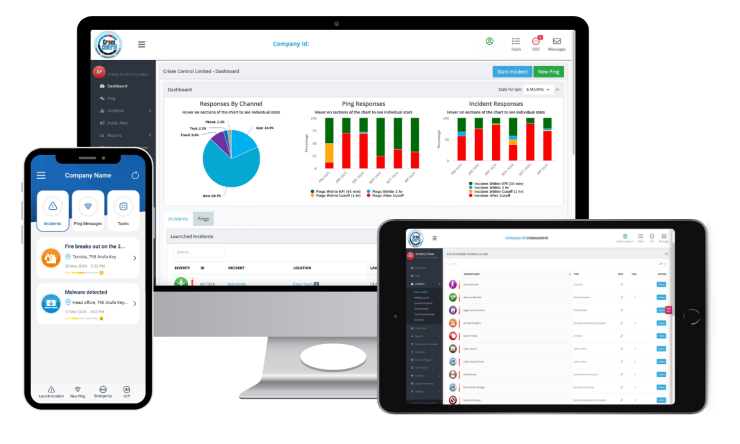
Platforms such as Crises Control support this approach by allowing airlines to digitise response plans, manage structured communication flows, and provide operational teams with access to live incident information from any location.
The value is not in replacing existing processes, but in making them easier to execute when conditions change quickly.
A practical way to think about disruption communication
Airlines that manage disruption well tend to follow a consistent flow of activity.
They identify the issue early. They assess operational impact across the network. They send targeted notifications to the right teams. They coordinate response actions across departments. They track recovery until operations stabilise.
Each step depends on communication staying aligned. If one step becomes unclear or delayed, the rest of the process slows down.
This is why communication structure matters as much as operational planning.
What strong disruption management looks like in practice
Strong performance during airline disruption is not defined by avoiding problems. It is defined by how well teams stay aligned while problems are being resolved.
The organisations that handle disruption more effectively tend to have clear escalation rules, defined communication paths, and systems that reduce reliance on manual updates.
They also ensure that operational teams are not overloaded with unnecessary information during critical periods.
This creates a working environment where decisions can be made with confidence because everyone is working from the same operational picture.
Conclusion
Airline disruption is part of daily operations. Weather, infrastructure constraints, and operational dependencies will always create pressure across networks.
The difference between controlled recovery and extended disruption often comes down to communication structure.
Mass Notification Software helps bring order to that communication by ensuring the right teams receive the right information at the right time, without relying on fragmented channels.
Crises Control supports this approach by enabling structured incident communication, digital response workflows, and cloud-based access to operational plans that can be used across airline operations teams when conditions change quickly.
FAQs
1. What is Mass Notification Software in airline operations?
Mass Notification Software is a communication system that allows airlines to send structured, real-time updates to specific operational groups during disruption. It replaces manual messaging with coordinated alerts so teams such as crew control, dispatch, and ground handling receive consistent instructions at the same time.
2. How does Mass Notification Software help during flight disruptions?
It helps by reducing delays in communication and ensuring all teams act on the same operational information. During disruption, it sends targeted updates to relevant staff, tracks acknowledgements, and supports faster coordination across the airline operations control centre.
3. Why is real-time communication important for airline operations control centres?
Airline operations control centres manage complex and fast-changing situations. Real-time communication helps ensure decisions are based on the latest information, not outdated updates. This reduces confusion between departments and supports more accurate coordination during irregular operations.
4. What problems happen when airlines rely on manual communication methods?
Manual methods like emails and phone calls can lead to delays, duplicated messages, and inconsistent instructions. Different teams may receive updates at different times, which can result in misaligned decisions and slower recovery during disruption.
5. How does Crises Control support airline disruption communication?
Crises Control provides structured incident communication, digital response plans, and role-based alerting. This helps airline teams coordinate more effectively during disruption by ensuring updates are delivered clearly, tracked in real time, and aligned across operational functions.