An effective emergency response plan does more than document procedures. It ensures critical information reaches the right people at the right time so they can take the right action. When communication breaks down during an incident, even well-designed response plans can fail.
Many organisations invest significant time developing emergency procedures but overlook the communication challenges that arise during a real-world crisis. Delayed approvals, fragmented communication channels, outdated contact lists, and unclear responsibilities often create bottlenecks that slow response efforts when every minute matters.
The ability to communicate quickly and accurately has become a defining factor in successful crisis management and emergency response. Organisations that address communication bottlenecks within their emergency planning are better positioned to protect people, maintain operations, and recover more effectively when incidents occur.
A Realistic Scenario: When Delayed Communication Becomes the Crisis
Consider a large manufacturing facility operating across multiple buildings.
On a busy weekday morning, a contractor accidentally damages a gas pipeline during maintenance work. The facility’s monitoring systems detect the issue immediately, prompting site management to initiate emergency procedures.
Although the leak is identified quickly, communication soon becomes the primary challenge.
The safety manager begins contacting building supervisors, who in turn attempt to notify their teams through phone calls and messaging applications, while senior leadership seeks confirmation before issuing broader instructions.
At the same time, contractors on site are not included in internal communication lists, creating gaps in outreach and accountability.
As information moves through different channels, employees begin sharing updates on social media before official communications have been distributed.
Within fifteen minutes, confusion spreads across the facility.
Some departments evacuate while others remain in place, and several employees receive conflicting instructions about how to respond. The gas leak itself is manageable, but the breakdown in communication creates a far greater operational risk.
This scenario reflects a common reality across industries: organisations often discover that their emergency procedures are only as effective as the communication processes that support them.
Why Communication Bottlenecks Exist in Emergency Response
Most communication bottlenecks do not emerge because organisations lack plans.
They emerge because plans are often built around ideal conditions rather than real-world operational pressures.
During an emergency, decision-makers face:
- Limited information
- High stress levels
- Multiple competing priorities
- Rapidly changing conditions
- Increased stakeholder scrutiny
At the same time, communication must reach:
- Employees
- Contractors
- Customers
- Senior leadership
- Emergency services
- Suppliers
- Regulatory bodies
The greater the number of stakeholders involved, the greater the risk of communication delays.
Without structured communication workflows, organisations often rely on manual processes that struggle to keep pace with the incident.
What Is an Emergency Response Plan in Safety?
One of the most common questions organisations ask is: What is an emergency response plan in safety?
An emergency response plan is a documented framework that outlines how an organisation prepares for, responds to, and recovers from emergencies.
Its purpose is to establish clear actions, responsibilities, and communication procedures before an incident occurs.
An effective plan typically addresses:
- Incident identification
- Escalation criteria
- Emergency roles and responsibilities
- Communication protocols
- Evacuation procedures
- Resource allocation
- Recovery activities
While many organisations focus heavily on operational procedures, communication should be treated as a core component rather than a supporting activity.
The Purpose of an Emergency Response Plan
The purpose of an emergency response plan extends beyond regulatory compliance.
Its primary objectives include:
- Protecting life and safety
- Reducing operational disruption
- Supporting effective decision-making
- Improving stakeholder confidence
- Accelerating recovery efforts
Communication directly influences each of these outcomes.
Without timely communication, decision-makers operate with incomplete information, response teams become disconnected, and stakeholders lose confidence in the organisation’s ability to manage the situation.
Which Is the First Step in Response Planning?
Another frequently asked question is: Which is the first step in response planning?
The answer is risk assessment.
Organisations must first identify:
- Potential threats
- Operational vulnerabilities
- Impact scenarios
- Critical dependencies
However, identifying risks alone is insufficient.
For every identified risk, organisations should also assess how communication will occur if that risk becomes reality.
Questions to consider include:
- Who needs to be notified?
- How quickly must communication occur?
- Which channels will be used?
- Who approves messages?
- What information will stakeholders require?
Addressing these questions early helps prevent communication bottlenecks during actual incidents.
Common Communication Bottlenecks That Undermine Response Plans
Delayed Approval Processes
Many organisations require multiple levels of approval before messages can be distributed.
While governance is important, excessive approval chains can significantly delay critical communications.
In emergencies, speed and clarity often outweigh perfect messaging.
Outdated Contact Information
Emergency contact databases quickly become ineffective when not regularly maintained.
Missing phone numbers, inactive email addresses, and incomplete stakeholder lists can prevent important messages from reaching intended recipients.
Reliance on Single Communication Channels
Organisations that depend solely on email frequently discover that emergency communications are missed, delayed, or overlooked.
Effective communication requires multiple delivery channels.
Unclear Roles and Responsibilities
When responsibility for communication is ambiguous, teams often wait for direction rather than taking action.
This creates unnecessary delays during time-sensitive incidents.
Manual Escalation Processes
Phone calls, spreadsheets, and manual notifications become increasingly difficult to manage as incidents grow in complexity.
Manual processes often introduce delays precisely when communication speed is most important.
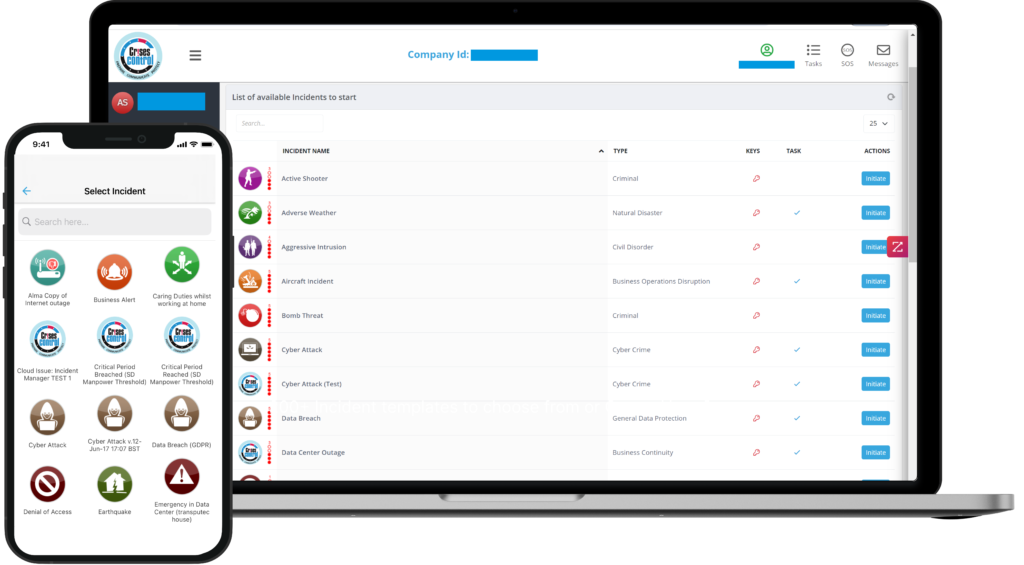
Interested in our Incident Plan Builder?
Effortlessly manage incidents with Incident Plan Builder – Simplify incident response planning and collaboration.
What Are the Elements of the Emergency Plan That Improve Communication?
When evaluating communication readiness, organisations should ensure several key elements are included within their emergency response plan.
Defined Communication Roles
Every communication activity should have an assigned owner.
Examples include:
- Incident commander
- Communications lead
- Executive spokesperson
- Stakeholder liaison
- Recovery coordinator
Pre-Approved Message Templates
Templates help teams communicate quickly while maintaining consistency.
Templates may cover:
- Evacuation notices
- Shelter-in-place instructions
- Operational disruptions
- Facility closures
- Recovery updates
Escalation Frameworks
Not every incident requires the same response.
Incident escalation frameworks help organisations determine:
- Who should be notified
- When communication should occur
- How communication should be delivered
Stakeholder Mapping
Different audiences require different information.
Communication plans should identify:
- Internal employees
- Contractors
- Customers
- Suppliers
- Emergency responders
- Regulatory stakeholders
Multi-Channel Delivery
Critical messages should be delivered across multiple channels simultaneously to maximise reach and improve response rates.
Why Traditional Communication Methods Often Fail
Many organisations still rely on communication methods designed for routine operations rather than emergency situations.
Examples include:
- Email chains
- Phone trees
- Manual call lists
- Shared spreadsheets
- Informal messaging applications
These approaches often appear adequate during planning exercises but become problematic during real incidents.
Manual communication methods create:
- Delays
- Inconsistency
- Limited visibility
- Human error
- Accountability challenges
As incidents become more complex, these weaknesses become increasingly visible.
The Role of Emergency Communication Software
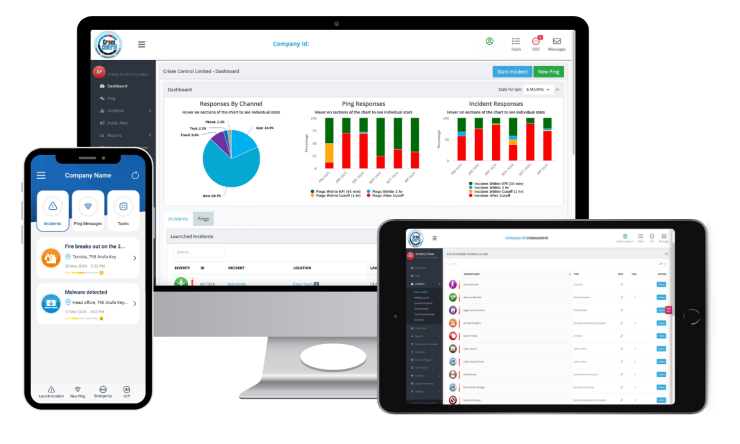
Emergency communication software helps organisations overcome many of the limitations associated with manual communication processes.
Rather than relying on disconnected tools, organisations can manage communication through a structured and centralised process.
Key capabilities often include:
- Multi-channel notifications
- Automated escalation workflows
- Role-based communication
- Delivery confirmation tracking
- Incident-specific messaging
- Real-time reporting
The objective is not simply faster messaging.
The objective is ensuring that communication remains coordinated throughout the incident lifecycle.
Challenging a Common Assumption: More Communication Is Not Always Better
A common misconception is that sending more messages automatically improves emergency response.
In reality, excessive communication can create confusion.
During emergencies, stakeholders need:
- Relevant information
- Clear instructions
- Appropriate timing
Sending frequent updates without meaningful content can overwhelm recipients and reduce message effectiveness.
The focus should be on communication quality, relevance, and actionability rather than volume.
Effective emergency response plans prioritise targeted communication over excessive communication.
Creating a Communication-Centred Response Framework
Organisations seeking to eliminate communication bottlenecks should adopt a communication-centred planning approach.
A practical framework includes:
Step 1: Assess Communication Risks
Identify potential communication failures associated with each emergency scenario.
Step 2: Define Response Roles
Ensure communication responsibilities are clearly assigned.
Step 3: Develop Communication Workflows
Map notification, escalation, and reporting processes.
Step 4: Create Standardised Messaging
Prepare templates for common incident types.
Step 5: Implement Digital Communication Tools
Reduce reliance on manual processes.
Step 6: Test and Improve
Conduct regular exercises and update plans based on lessons learned.
How Crises Control Supports Emergency Response Planning
Modern emergency response requires more than static documents.
Platforms such as Crises Control help organisations transform emergency response plans into operational workflows.
This includes:
- Digitalising emergency procedures
- Delivering role-based notifications
- Automating escalation processes
- Providing cloud-based access during incidents
- Supporting real-time communication and coordination
By integrating communication directly into response activities, organisations can reduce delays and improve overall incident management performance.
Conclusion
Communication bottlenecks remain one of the most common reasons emergency response efforts fall short of expectations. Even organisations with detailed procedures can struggle if critical information does not reach the right people at the right time.
An effective emergency response plan should place communication at the centre of preparedness efforts. By defining roles, streamlining workflows, leveraging emergency communication software, and reducing reliance on manual processes, organisations can improve response speed, strengthen coordination, and reduce operational risk.
The organisations that respond most effectively are not necessarily those with the longest plans. They are the ones that have removed the barriers preventing people from communicating and acting quickly when emergencies occur.
Learn how Crises Control can help digitalise your emergency response planning and eliminate communication bottlenecks.
FAQs
1. What is an emergency response plan?
An emergency response plan is a documented framework that outlines how an organisation prepares for, responds to, and recovers from emergencies. It defines roles, responsibilities, communication procedures, escalation processes, and response actions to help protect people, minimise disruption, and support recovery efforts.
2. Why is communication important in an emergency response plan?
Communication is essential because it ensures critical information reaches the right people at the right time. Without clear communication, organisations may experience delayed responses, conflicting instructions, reduced situational awareness, and increased operational risk during an emergency.
3. What is the first step in response planning?
The first step in response planning is conducting a risk assessment. Organisations must identify potential threats, vulnerabilities, operational impacts, and critical dependencies before developing response procedures and communication workflows.
4. What are the most common communication bottlenecks during emergencies?
Common communication bottlenecks include delayed approval processes, outdated contact information, reliance on a single communication channel, unclear roles and responsibilities, and manual escalation procedures. These issues can significantly slow response efforts when time is critical.
5. How does emergency communication software improve emergency response?
Emergency communication software helps organisations automate notifications, manage multi-channel communications, streamline escalation processes, track message delivery, and coordinate response activities in real time. This reduces communication delays and improves overall incident management effectiveness.