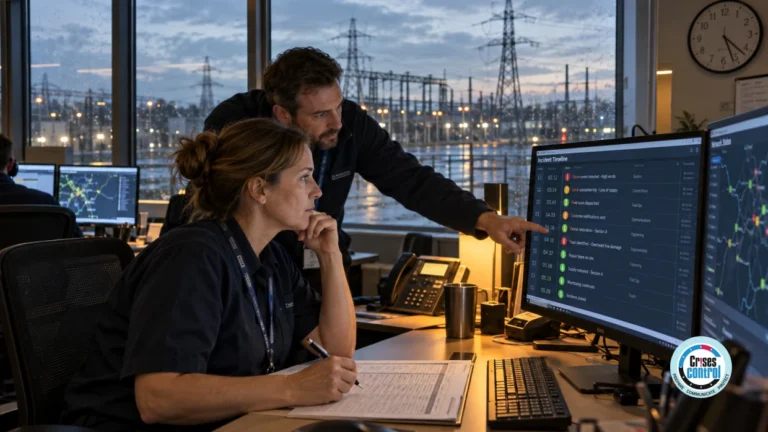
AI incident management is reshaping how organisations detect, assess, coordinate, and communicate during operational disruptions. In 2026, artificial intelligence is no longer a future capability within incident response software. It is becoming a practical tool that helps organisations process information faster, improve situational awareness, and support more effective decision-making during critical events.
However, the most important development is not that AI has replaced incident managers. It has not. The real shift is that AI is helping crisis management teams reduce delays, improve coordination, and communicate more effectively while keeping human judgement at the centre of every significant decision.
For organisations responsible for operational resilience, crisis communication, business continuity, and emergency preparedness, understanding how AI is changing incident response software has become essential.
A Scenario Many Organisations Now Face
Imagine a multinational organisation on a Friday afternoon.
Multiple monitoring systems begin generating alerts. Employees in several regions report service disruptions. Customer support teams see a sharp increase in complaints. Social media conversations begin speculating about the cause of the problem. Senior executives want updates immediately, while technical teams are still investigating.
Within minutes, the organisation faces several questions:
- Is this a cyberattack, system failure, or supplier outage?
- Which services are affected?
- Who needs to be informed?
- What should be communicated externally?
- Which response teams should be activated?
- How severe is the incident?
Traditionally, these answers would emerge through conference calls, spreadsheets, email chains, and manual investigation.
In 2026, AI is helping organisations answer these questions faster and with greater confidence.
Why AI Incident Management Has Become a Strategic Priority
Several trends have accelerated investment in AI incident management capabilities.
Modern organisations operate across increasingly complex environments. Cloud infrastructure, hybrid working models, third-party suppliers, interconnected systems, and global operations generate enormous amounts of operational data.
At the same time, stakeholder expectations continue to increase.
Customers expect immediate updates.
Employees expect clear instructions.
Executives expect accurate information within minutes.
Regulators increasingly expect documented evidence of decision-making and response activities.
The challenge is no longer a lack of information. The challenge is identifying the information that matters most.
This is where AI is creating measurable operational value.
Rather than replacing crisis management teams, AI helps them process information, identify patterns, and reduce the administrative burden that often slows response efforts during critical incidents.
How AI Is Improving Incident Detection and Assessment
One of the most significant changes in incident response software is the move from alert management to intelligent signal analysis.
Large organisations often receive hundreds or thousands of alerts during major disruptions. Infrastructure monitoring tools, security platforms, customer service systems, employee reports, and external intelligence feeds all generate information simultaneously.
The volume can quickly overwhelm response teams.
Traditionally, analysts would review alerts manually, identify correlations, determine priorities, and escalate concerns through predefined processes.
AI significantly accelerates this activity.
Modern incident management software can analyse large volumes of structured and unstructured data simultaneously. Log files, incident reports, support tickets, chat conversations, and monitoring alerts can be evaluated together to identify relationships and potential root causes.
In our scenario, AI may recognise that authentication failures, customer complaints, and infrastructure alerts are all linked to the same underlying issue.
Instead of presenting hundreds of separate alerts, the platform surfaces a smaller number of high-priority incidents for human review.
The result is faster situational awareness and more effective decision-making.
The Impact on Real-Time Crisis Communication
Communication has always been one of the most difficult aspects of incident management.
During a disruption, organisations must collect information, create updates, obtain approvals, distribute messages, monitor responses, and maintain consistency across multiple audiences.
This process often becomes a bottleneck.
AI is helping organisations streamline several communication activities without removing human oversight.
Modern platforms can assist with:
- Drafting incident updates
- Summarising technical information
- Creating audience-specific communications
- Translating messages into multiple languages
- Identifying communication gaps
- Supporting stakeholder segmentation
For organisations operating internationally, multilingual communication presents a particularly significant challenge.
An incident affecting teams in Europe, North America, the Middle East, and Asia may require rapid communication in multiple languages. Historically, this process introduced delays and increased the risk of inconsistent messaging.
AI-assisted translation can significantly reduce preparation time while maintaining human review before publication.
This distinction is critical.
The goal is not autonomous communication. The goal is faster communication supported by human judgement.
The organisations achieving the greatest value from AI crisis management are those that combine automation with clear approval processes.
AI-Assisted Workflow Orchestration Is Reducing Response Friction
Many delays during incident response are not caused by technical challenges. They are caused by coordination challenges. Response teams often spend significant time assigning responsibilities, escalating issues, tracking actions, managing approvals, updating stakeholders, and documenting decisions.
While these activities are essential, they can create operational friction at the exact moment speed and clarity are needed most.
AI-assisted workflow orchestration helps reduce this burden by streamlining routine coordination tasks. Modern incident response software can recommend actions based on the nature of the incident, previous events, organisational playbooks, and real-time context. Rather than requiring teams to manually determine every next step, the platform can surface relevant response procedures, identify key stakeholders, suggest escalation paths, recommend communication actions, and highlight tasks that require attention.
This approach helps organisations maintain consistency while reducing administrative workload during high-pressure situations.
The objective is not to replace incident managers or automate critical decisions. Instead, it is to give response teams better visibility and support so they can focus on strategic decision-making rather than administrative coordination.
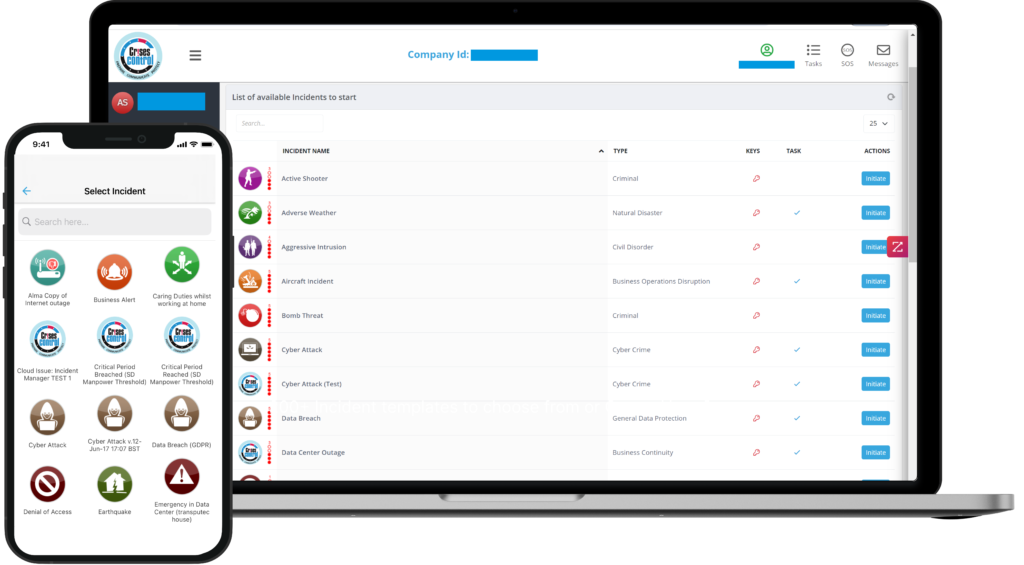
Interested in our Incident Management Software?
Customise your Crisis Incident Management Software to meet your specific needs with our flexible tools & stay connected and informed during the crisis and incident management process.
The Rise of AI-Specific Incidents
One assumption many organisations continue to make is that AI only affects how incidents are managed.
Increasingly, AI itself is becoming a source of incidents.
As organisations deploy large language models, AI assistants, intelligent agents, and machine learning systems, they introduce new categories of operational risk.
Examples include:
- Prompt injection attacks
- Model poisoning
- AI-generated misinformation
- Data leakage through AI systems
- Unauthorised agent actions
- Hallucinated outputs influencing business decisions
These risks require organisations to expand existing crisis management frameworks.
Traditional cyber incident playbooks may not adequately address AI-related events.
Response teams need clear guidance regarding:
- AI system containment
- Model validation
- Data integrity verification
- Regulatory notification requirements
- Communication strategies for AI-related failures
As AI adoption increases, AI-specific incident response planning will become a standard component of organisational resilience programmes.
Why Human Oversight Remains Essential
A common assumption is that AI will eventually automate incident management entirely.
This assumption misunderstands the nature of crisis management.
The most critical decisions during an incident often involve uncertainty, competing priorities, legal considerations, reputational risks, and organisational context.
AI can analyse information.
AI can recommend actions.
AI can draft communications.
AI cannot assume accountability.
Human leaders remain responsible for:
- Severity classification
- Executive escalation
- Regulatory reporting
- Public communications
- Recovery validation
- Incident closure
The organisations seeing the best results from AI incident management are not removing humans from the process.
They are removing delays from the process.
This distinction is likely to define successful implementations throughout 2026 and beyond.
The Compliance and Audit Challenge
Regulatory scrutiny continues to increase across multiple sectors and jurisdictions.
Frameworks such as ISO 22301, ISO 22320, DORA, NIS2, and GDPR place greater emphasis on accountability, governance, and documented response processes.
This creates an important challenge for AI-enabled incident response.
If AI contributes to decisions, organisations must understand:
- What recommendations were made
- Which information informed those recommendations
- Who approved actions
- When decisions were taken
- How communications were generated
Auditability is becoming just as important as automation.
Organisations cannot simply adopt AI capabilities and assume compliance requirements will be satisfied automatically.
Any AI incident management capability must operate within a transparent governance framework that supports investigation, reporting, and regulatory review.
A Common Misconception About AI Crisis Management
One of the biggest misconceptions is that faster response automatically produces better outcomes.
Speed matters.
However, accuracy, accountability, and coordination matter just as much.
An organisation that sends inaccurate information quickly can create more damage than one that communicates slightly later with verified facts.
The most mature organisations recognise that AI should accelerate evidence gathering and information processing while preserving human validation at key decision points.
Effective incident response is not a race between humans and machines.
It is a partnership between the two.
Five Questions to Ask When Evaluating AI-Powered Incident Response Software
As AI capabilities become increasingly common, decision-makers should evaluate vendors carefully.
Key questions include:
1. Where Does AI Support the Response Process?
Understand exactly which activities are assisted by AI and which remain under human control.
2. How Is AI Governance Managed?
Review policies regarding approvals, accountability, and auditability.
3. Can Communications Be Reviewed Before Distribution?
Human approval should remain available for stakeholder communications.
4. How Are AI Actions Logged?
Every recommendation, action, and approval should be documented.
5. Does the Platform Support AI-Specific Incident Scenarios?
Future incident management platforms should address emerging AI risks alongside traditional operational and cyber incidents.
How Crises Control Supports AI-Enabled Incident Management
As organisations modernise their incident response capabilities, they increasingly require platforms that combine automation with accountability.
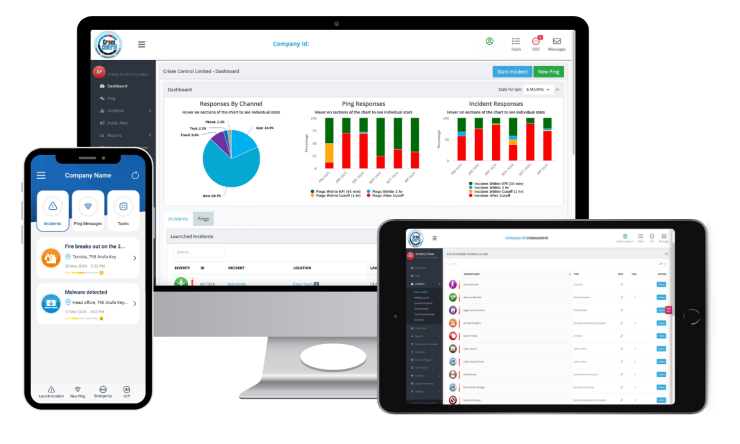
Crises Control supports this approach by helping organisations digitalise response plans, automate workflows, coordinate role-based actions, and deliver reliable communications through multiple channels.
The platform enables organisations to maintain situational awareness, improve response coordination, and communicate effectively during incidents while ensuring human oversight remains central to decision-making.
This balance between automation and accountability is becoming increasingly important as AI capabilities continue to evolve.
Final Thoughts
AI is changing incident response software and real-time crisis communication in 2026 through several major operational shifts. Organisations can now identify incidents faster, process larger volumes of information, streamline coordination activities, and communicate more effectively across diverse stakeholder groups.
At the same time, new risks are emerging. AI-related incidents, increasing regulatory expectations, and growing demands for transparency mean organisations must approach AI adoption carefully.
The most successful organisations will not be those that automate the most. They will be those that use AI to strengthen human decision-making, improve operational resilience, and support more effective crisis management.
As incident response continues to evolve, the question is no longer whether AI will play a role. The question is how organisations will implement it responsibly, govern it effectively, and integrate it into their broader resilience strategy.
Learn how Crises Control helps organisations modernise incident response and crisis communication while maintaining accountability and control.
FAQs
1. What is AI incident management?
AI incident management is the use of artificial intelligence to help organisations detect, assess, coordinate, and respond to operational disruptions more efficiently. AI can analyse large volumes of data, identify patterns, prioritise incidents, and support decision-making, helping response teams reduce delays while maintaining human oversight.
2. How does AI improve incident response software?
AI improves incident response software by automating time-consuming tasks such as alert correlation, incident classification, workflow orchestration, and communication drafting. This enables organisations to achieve faster situational awareness, streamline response activities, and improve overall incident management effectiveness.
3. Can AI automate crisis communication during an incident?
AI can assist with crisis communication by drafting updates, summarising technical information, translating messages, and identifying communication gaps. However, organisations should maintain human review and approval processes to ensure accuracy, accountability, and compliance before information is distributed to stakeholders.
4. What are the risks of using AI in incident management?
While AI can improve operational efficiency, it also introduces new risks such as prompt injection attacks, model poisoning, AI-generated misinformation, data leakage, and inaccurate outputs. Organisations should implement governance frameworks, monitoring processes, and human oversight to manage these risks effectively.
5. Why is human oversight important in AI-powered incident response?
Human oversight remains essential because critical incident decisions often involve legal, regulatory, reputational, and operational considerations that require judgement and accountability. AI can support decision-making and accelerate information processing, but human leaders are responsible for escalation decisions, public communications, regulatory reporting, and incident resolution.