Financial institutions face a growing number of disruptions. Cyberattacks, IT outages, third-party failures, regulatory incidents, and operational disruptions can all affect customers, revenue, and reputation.
Many organisations invest in operational resilience software to improve preparedness. As regulatory expectations increase, operational resilience software has become a critical investment for financial institutions seeking to strengthen incident response and business continuity. However, technology alone does not guarantee resilience. The real differentiator is how effectively people coordinate during an incident.
That is where incident coordination becomes essential.
Operational resilience is not just about preventing disruptions. It is about detecting incidents quickly, coordinating a response efficiently, and restoring critical services before significant harm occurs.
What Is Operational Resilience?
Operational resilience is an organisation’s ability to prevent, respond to, recover from, and learn from disruptions while continuing to deliver important business services.
In financial services, operational resilience has become a strategic priority due to increasing regulatory expectations, including the EU’s Digital Operational Resilience Act (DORA). Many organisations use operational resilience software to help identify critical services, manage risks, and improve disruption response capabilities.
Resilient organisations can:
- Maintain critical customer services during disruptions
- Reduce downtime
- Protect data and systems
- Coordinate cross-functional response teams
- Meet regulatory obligations
- Recover faster from major incidents
What Is Incident Coordination?
Incident coordination is the process of organizing people, communication, decisions, and actions during an incident.
It ensures that the right teams know:
- What happened
- Who is responsible
- What actions are required
- What the current status is
- What decisions have been made
- When escalation is necessary
Without coordination, Organisations often experience:
- Duplicate work
- Conflicting decisions
- Communication delays
- Missed escalations
- Longer outages
- Regulatory reporting issues
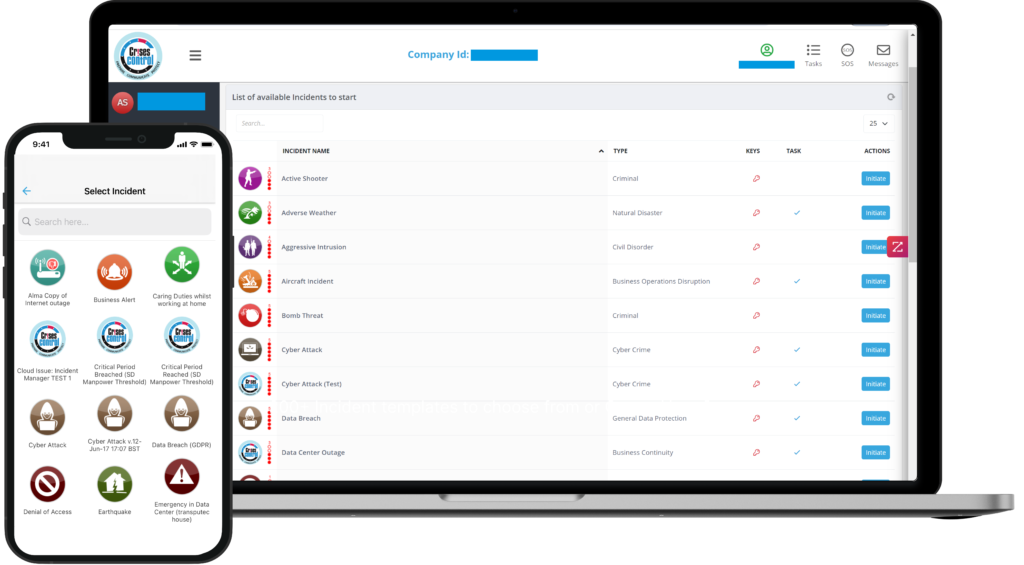
Interested in our Incident Management Software?
Flexible Incident Management Software to keep you connected and in control.
The Direct Link Between Incident Coordination and Operational Resilience
Operational resilience depends on an Organisation’s ability to manage disruptions effectively. Incident coordination is the mechanism that makes that possible.
Better Incident Coordination = Stronger Operational Resilience
Why Coordination Matters During Major Incidents
1. Faster Incident Detection and Escalation
When teams coordinate through a centralized process, incidents are identified and escalated more quickly.
For example, a payment processing outage may involve:
- IT operations
- Cybersecurity
- Customer support
- Risk management
- Compliance
- Executive leadership
Coordinated workflows ensure that all stakeholders receive timely information and can act immediately.
2. Clear Ownership and Accountability
One of the biggest challenges during crises is uncertainty about who is responsible for what.
Strong incident coordination assigns:
- Incident commanders
- Technical leads
- Communication owners
- Decision makers
- Regulatory reporting owners
This reduces confusion and accelerates recovery.
3. Consistent Communication
Operational resilience requires reliable communication across the Organisation.
Coordinated incident management helps teams:
- Share a common operating picture
- Avoid conflicting updates
- Keep executives informed
- Provide accurate customer communications
- Support regulatory notifications
4. Faster Recovery Times
The ultimate goal of operational resilience is to restore critical services quickly.
Coordinated response teams can:
- Prioritize critical systems
- Allocate resources efficiently
- Remove bottlenecks
- Track recovery progress
- Reduce Mean Time to Resolution (MTTR)
How Operational Resilience Software Supports Incident Coordination
Modern operational resilience software helps Organisations coordinate incidents at scale.
Key capabilities often include:
Capability | Resilience Benefit |
Incident management | Faster response |
Mass notification | Rapid stakeholder communication |
Task coordination | Clear accountability |
Escalation workflows | Timely decision-making |
Situation dashboards | Shared visibility |
Audit trails | Regulatory compliance |
Post-incident reviews | Continuous improvement |
The Financial Services Perspective
Banks, insurers, payment providers, and investment firms operate under strict resilience expectations.
Regulators increasingly expect Organisations to demonstrate:
- Effective incident response
- Clear governance
- Communication procedures
- Third-party risk management
- Recovery capabilities
- Evidence of testing and improvement
Incident coordination helps financial institutions meet these expectations while minimizing customer impact during disruptions.
A Practical Example
A major banking platform experiences an unexpected outage.
Without coordinated response:
- Teams work in silos
- Executives receive inconsistent updates
- Customers receive delayed communications
- Recovery takes hours longer
With coordinated response:
- Incident leaders are assigned immediately
- Technical teams collaborate in real time
- Stakeholders receive consistent updates
- Recovery priorities are clear
- Regulatory notifications are tracked
- Services are restored faster
Final Thoughts
Operational resilience is often discussed in terms of technology, regulations, and risk management frameworks. However, when an incident occurs, resilience ultimately depends on how effectively people, teams, and stakeholders work together.
This is where incident coordination becomes critical.
Without clear coordination, even well-prepared Organisations can experience delayed responses, communication breakdowns, and prolonged disruptions. With effective coordination, teams can act quickly, maintain visibility, and restore critical services with greater confidence.
For financial institutions facing increasing operational, cyber, and regulatory pressures, incident coordination is not simply a response capability, it is a core component of operational resilience.
Organisations that invest in both operational resilience software and coordinated incident management are better positioned to protect customers, maintain compliance, and recover quickly when disruptions occur.
How Crises Control Helps Strengthen Operational Resilience
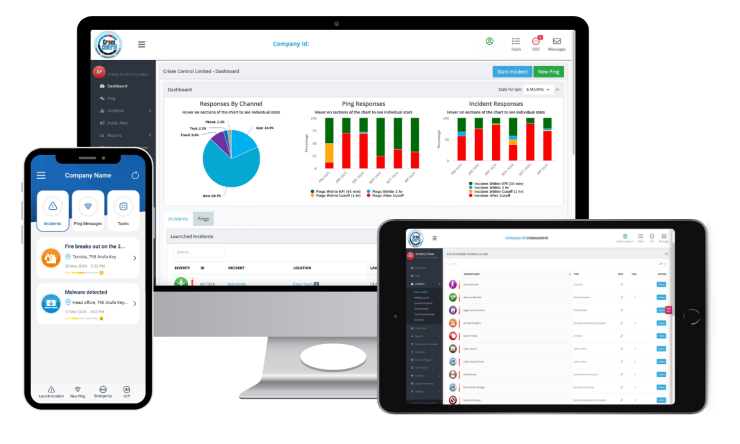
Crises Control helps financial institutions improve operational resilience by enabling rapid incident coordination, automated communications, and real-time response management from a single platform.
With Crises Control, Organisations can:
- Mobilize response teams instantly
- Automate incident notifications and escalations
- Coordinate actions across departments
- Maintain a clear audit trail for compliance
- Improve accountability during critical incidents
- Reduce downtime and recovery times
- Support operational resilience and business continuity objectives
Whether responding to cyber incidents, technology outages, operational disruptions, or third-party failures, Crises Control helps Organisations coordinate effectively and recover faster.
Discover how Crises Control can help your Organisation improve incident coordination, accelerate response times, and build greater operational resilience.
Book a free demo today and see Crises Control in action.
FAQs
1. What is incident coordination?
Incident coordination is the process of organizing people, communication, decisions, and actions during an incident to ensure an effective response and recovery.
2. How does incident coordination improve operational resilience?
It improves visibility, accountability, communication, and recovery speed, all of which strengthen an Organisation’s ability to withstand disruptions.
3. Why is incident coordination important for financial services?
Financial institutions face strict regulatory requirements and must maintain critical services during disruptions. Coordinated response helps reduce operational and compliance risks.
4. What role does operational resilience software play?
Operational resilience software helps Organisations manage incidents, communicate with stakeholders, track actions, document decisions, and support recovery efforts.
5. Is incident coordination part of DORA compliance?
Yes. Effective incident management, communication, governance, and recovery capabilities are important components of demonstrating operational resilience under DORA.