Operational resilience software has become one of the defining priorities for financial institutions worldwide.
Regulators are increasing scrutiny, customers expect uninterrupted access to services, and organisations face a growing range of threats, from cyberattacks and technology failures to third-party disruptions and operational incidents. In this environment, resilience is no longer measured solely by an organisation’s ability to prevent disruption. Instead, it is measured by how effectively an organisation uses operational resilience to respond, recover, and continue delivering critical services when disruption occurs.
While many financial institutions have invested heavily in operational resilience programmes, one critical factor is often overlooked: incident accountability.
When an incident occurs, accountability determines whether teams can respond quickly, make informed decisions, coordinate effectively, and learn from the event. Without clear ownership and responsibility, even the most advanced operational resilience strategies can fail when they are needed most.
For financial institutions seeking to strengthen resilience capabilities, accountability is not simply a governance requirement. It is the foundation upon which effective incident management, crisis response, and operational risk management are built.
Why Operational Resilience Software Matters in Financial Services
Financial services organisations operate within highly interconnected ecosystems. Banks, insurers, investment firms, payment providers, and financial market infrastructures rely on complex networks of technology platforms, third-party providers, cloud services, and internal business processes.
A disruption affecting one component can quickly impact multiple services and stakeholders.
A payment processing outage can delay transactions. A cyberattack can affect customer access to online banking. A cloud provider failure can disrupt critical applications. In each case, customers, regulators, investors, and employees expect organisations to respond effectively while minimising disruption.
This growing focus on resilience is reflected in regulatory frameworks across the financial sector. Regulators increasingly expect firms to demonstrate their ability to prevent, adapt to, respond to, and recover from operational disruptions using resilience plans and structured governance frameworks.
Operational resilience software is therefore no longer an IT tool or a business continuity exercise. It is a business-wide capability that requires effective governance, communication, incident management, and accountability.
The Missing Link: Incident Accountability
Many organisations have documented incident response procedures, escalation paths, and business continuity plans.
However, during a major incident, one question often becomes difficult to answer:
Who is responsible?
Without clear accountability, organisations frequently encounter challenges such as:
- Delayed decision-making
- Conflicting priorities between teams
- Unclear ownership of actions
- Communication breakdowns
- Inconsistent reporting
- Slower recovery times
Incident accountability ensures that every stage of the response process has clearly defined ownership, enabling operational resilience software to function as intended. It establishes who is responsible for identifying incidents, escalating issues, coordinating response activities, communicating with stakeholders, and overseeing recovery efforts.
Accountability Is More Than Assigning Blame
One of the biggest misconceptions is that accountability exists to assign fault.
In reality, operational resilience strategies rely on accountability for ownership, transparency, and continuous improvement.
Financial institutions operate in complex environments where incidents often result from multiple contributing factors rather than a single failure. Technology dependencies, supplier relationships, process breakdowns, and human error all play a role.
The objective is not to blame. The objective is:
- Understanding what happened
- Assigning responsibility within workflows
- Ensuring corrective actions are taken
- Strengthening future resilience
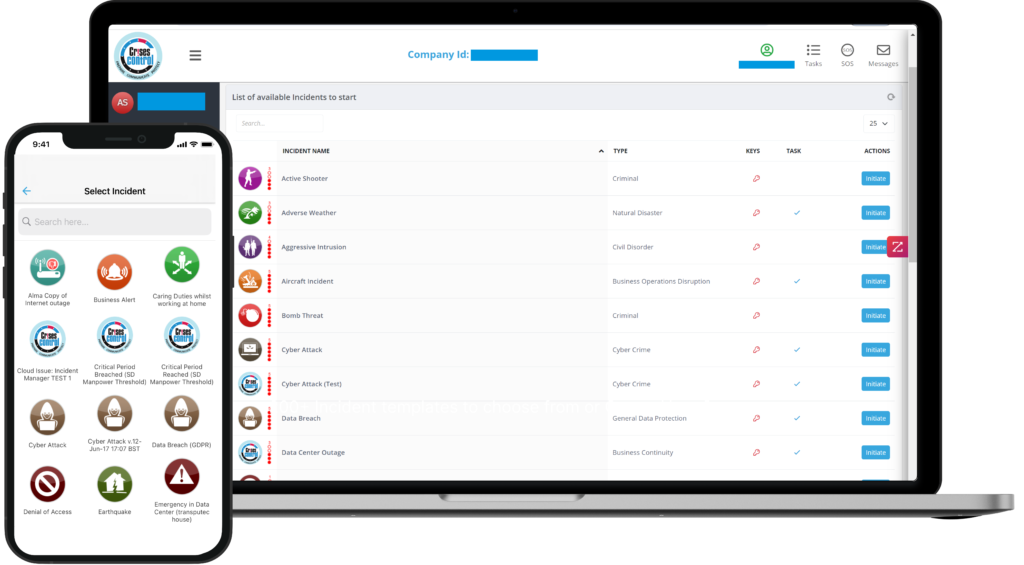
Interested in our Incident Management Software?
Flexible Incident Management Software to keep you connected and in control.
The Relationship Between Operational Resilience Software and Accountability
Faster Incident Response
Clear ownership enables teams to act immediately within operational resilience software workflows, reducing delays and escalation gaps.
Improved Decision-Making
Operational resilience software provides visibility, but accountability ensures decisions are made by the right stakeholders.
Better Regulatory Compliance
Regulators expect financial institutions to demonstrate both operational resilience software capability and clear incident ownership structures.
Stronger Communication
Operational resilience software ensures communication flows to the right people, but accountability ensures messages are accurate and timely.
Continuous Improvement
Post-incident reviews become more effective when operational resilience software tracks actions, ownership, and outcomes.
Common Accountability Gaps in Financial Institutions
Even with operational resilience software in place, many organisations still face gaps:
Siloed Teams
Different departments operate independently, reducing the effectiveness of operational resilience software coordination.
Manual Processes
Spreadsheets and email chains weaken operational resilience software visibility.
Unclear Escalation Paths
Without defined workflows, operational resilience software cannot trigger the right response at the right time.
Lack of Real-Time Visibility
Without integrated operational resilience software dashboards, accountability breaks down under pressure.
Why Accountability Is Becoming a Regulatory Priority
Regulators now expect financial institutions to prove that their operational resilience software is supported by strong governance and accountability.
Frameworks such as DORA and FCA operational resilience requirements place increasing emphasis on:
- Incident reporting
- Decision-making transparency
- Governance structures
- Operational risk management
Operational resilience software is now central to demonstrating compliance in real-world scenarios, not just documentation.
How Technology Strengthens Operational Resilience Software
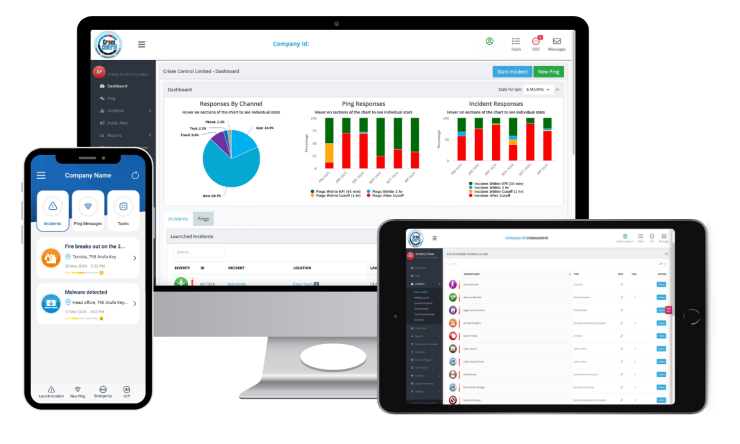
Modern operational resilience software enables:
- Automated escalation workflows
- Task assignment and tracking
- Real-time incident visibility
- Audit trails and reporting
- Stakeholder communication tools
- Centralised coordination
- Accountability tracking
This ensures that operational resilience software is not just passive infrastructure but an active incident response system.
How Crises Control Supports Operational Resilience Software
Crises Control provides operational resilience capabilities that help financial institutions manage disruption effectively.
It enables:
- Structured incident management
- Automated escalations
- Crisis communication
- Real-time coordination
- Accountability tracking
- Audit-ready reporting
By embedding accountability into operational resilience software workflows, organisations can reduce confusion, accelerate decision-making, and improve resilience outcomes.
Final Thoughts
Operational resilience is often discussed in terms of technology and compliance.
However, resilience ultimately depends on people and accountability.
When incidents occur, organisations need clear ownership, defined responsibilities, and coordinated decision-making. Without accountability, even the most advanced systems struggle under pressure.
Crises Control helps financial institutions improve incident management, crisis communication, and operational coordination through powerful operational resilience software.
Book a personalised demo today to see how operational resilience software can strengthen accountability, compliance, and resilience across your organisation.
FAQs
1. What is operational resilience software?
Operational resilience software helps organisations prepare for, respond to, recover from, and learn from operational disruptions. It provides a centralised platform for incident management, crisis communication, escalation workflows, task tracking, reporting, and governance. For financial institutions, operational resilience software supports business continuity, regulatory compliance, and the ability to maintain critical services during cyberattacks, outages, and other operational incidents.
2. Why is incident accountability important in financial services?
Incident accountability ensures that every task, decision, and communication during an incident has a clearly assigned owner. In financial services, where disruptions can affect customers, regulators, and critical business operations, accountability reduces confusion, accelerates response times, improves decision-making, and helps organisations meet regulatory requirements. Without clear ownership, incidents can escalate unnecessarily, increasing operational and reputational risk.
3. How does operational resilience software improve incident response?
Operational resilience software improves incident response by automating notifications, assigning responsibilities, tracking actions, and providing real-time visibility into incident status. Instead of relying on manual processes such as emails, phone calls, or spreadsheets, organisations can coordinate response efforts through a single platform. This helps teams respond faster, maintain situational awareness, and ensure that critical actions are completed on time.
4. How does operational resilience software support DORA compliance?
The Digital Operational Resilience Act (DORA) requires financial institutions to strengthen ICT risk management, incident response, resilience testing, third-party risk management, and reporting capabilities. Operational resilience software supports these requirements by providing structured workflows, automated escalation, audit trails, communication tools, and incident tracking. These capabilities help organisations demonstrate resilience and maintain compliance with evolving regulatory expectations.
5. What features should financial institutions look for in operational resilience software?
Financial institutions should look for operational resilience software that includes incident management, automated escalation workflows, mass notification capabilities, crisis communication tools, task management, audit trails, reporting dashboards, and regulatory compliance support. The platform should also provide real-time visibility across teams and integrate with existing systems to ensure effective coordination during incidents and disruptions.