No organisation is immune to disruption. Cyberattacks, IT outages, supply chain failures, natural disasters, regulatory incidents, and reputational crises can emerge with little warning and escalate rapidly. While the specific nature of these events varies, one factor consistently influences how effectively organisations respond: communication.
When communication breaks down, the consequences can be severe. Delayed updates, inconsistent messaging and poor coordination often amplify the impact of an incident, creating confusion, damaging trust and prolonging recovery efforts. Organisational resilience is not simply about preventing disruptions. It is about maintaining critical operations, protecting stakeholders, and recovering effectively when disruptions occur.
Strong crisis communication plays a central role in achieving these outcomes. In this article, we explore five essential crisis communication strategies that can help organisations strengthen resilience, improve incident response, and navigate uncertainty with greater confidence.
Why Crisis Communication Matters for Organisational Resilience
Resilience depends on an organisation’s ability to adapt and respond under pressure. While technology, processes, and contingency plans are important, communication serves as the mechanism that connects all these elements.
Consider a cyberattack affecting critical systems. Technical teams may be working to contain the threat, but if employees are unaware of alternative procedures, customers receive conflicting information, and leadership lacks visibility into response progress, recovery efforts become significantly more difficult.
Research consistently shows that stakeholder trust is heavily influenced by communication quality during crises. Organisations that communicate transparently and proactively are often viewed more favourably than those that remain silent or provide inconsistent updates.
The following strategies help build a communication framework that supports resilience before, during, and after a crisis.
1. Establish a Comprehensive Crisis Communication Plan
One of the most common communication failures occurs before a crisis even begins.
Many organisations have incident response plans, business continuity strategies, and disaster recovery procedures, yet lack a dedicated crisis communication plan. As a result, communication decisions are often improvised during high-pressure situations when speed and clarity are essential.
A crisis communication plan should clearly define:
Roles and Responsibilities
Everyone involved in crisis communications should understand their role before an incident occurs.
This includes:
- Executive leadership
- Incident response teams
- Communications departments
- Human resources teams
- Legal and compliance personnel
- External spokespersons
Defining responsibilities in advance reduces uncertainty and prevents conflicting communications.
Stakeholder Mapping
Different stakeholder groups require different information.
Employees may need operational instructions, while customers require service updates, and regulators expect compliance-related reporting. Understanding stakeholder needs allows organisations to tailor communications appropriately.
Message Templates
Pre-approved templates allow organisations to communicate quickly without sacrificing accuracy or governance.
Templates can be prepared for:
- Cyber incidents
- IT outages
- Severe weather events
- Facility closures
- Supply chain disruptions
- Health and safety emergencies
A well-developed communication plan creates a foundation for faster, more consistent responses during crises.
2. Prioritise Internal Communication Before External Messaging
Employees are often overlooked in crisis communication strategies, yet they represent one of the most critical stakeholder groups.
When employees learn about an incident through social media, news outlets, or customer enquiries rather than internal channels, confidence in leadership can decline rapidly.
Effective internal communication provides employees with:
- Situational awareness
- Clear instructions
- Safety information
- Operational updates
- Expected next steps
The Risks of Poor Internal Communication
Without timely updates, employees may:
- Spread inaccurate information
- Duplicate efforts
- Make uninformed decisions
- Provide inconsistent responses to customers
- Experience increased anxiety and uncertainty
These issues can significantly hinder response effectiveness.
Building a Culture of Communication
Resilient organisations foster communication before crises occur.
This involves creating channels where employees are accustomed to receiving operational updates and leadership communications. Familiarity with communication tools increases engagement during emergencies.
Supporting Remote and Distributed Workforces
Modern organisations often operate across multiple locations and time zones. Communication systems should support:
- Mobile workers
- Hybrid teams
- Remote employees
- Field personnel
- Contractors and third-party partners
Reaching stakeholders wherever they are is essential for maintaining operational continuity.
By prioritising internal communication, organisations create alignment and improve their ability to execute response plans effectively.
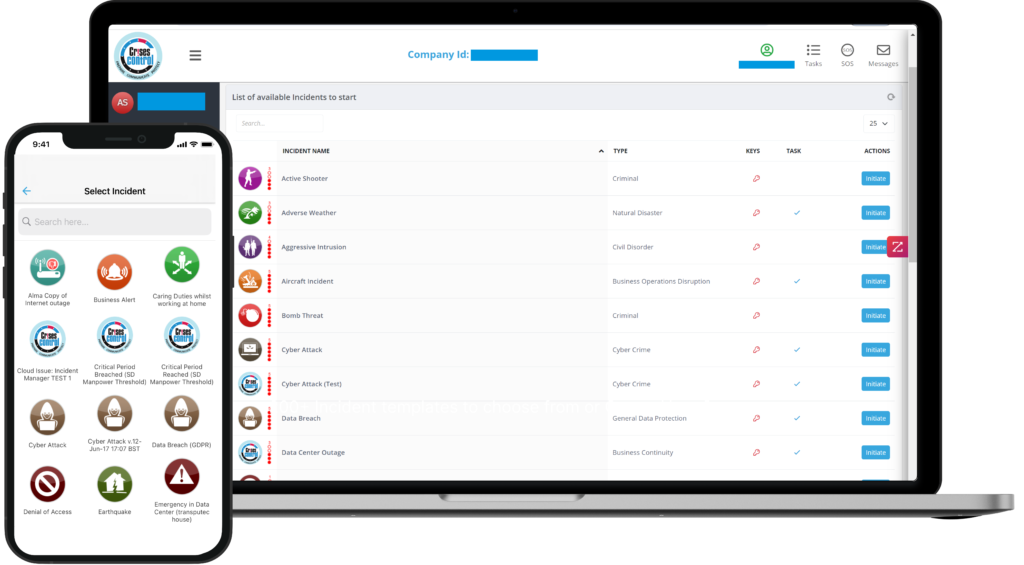
Interested in our Incident Management Software?
Flexible Incident Management Software to keep you connected and in control.
3. Deliver Consistent, Transparent, and Timely Messaging
Trust becomes one of the most valuable assets during a crisis. Stakeholders understand that organisations may not immediately have all the answers. However, they expect honesty, transparency, and regular updates. A lack of communication often creates an information vacuum that becomes filled with speculation and misinformation.
Consistency Matters
When different departments communicate conflicting information, stakeholders lose confidence in the organisation’s ability to manage the situation. Creating a single source of truth helps ensure all communications remain aligned. This may include:
- Centralised incident updates
- Approved messaging frameworks
- Designated spokespersons
- Regular status reports
Transparency Builds Credibility
Transparency does not require disclosing every detail immediately. It means openly communicating what is known, what remains under investigation, and what actions are being taken.
Regular communication reassures everyone involved that the situation remains under active and organised management.
Stakeholders generally respond more positively to honest updates than to delayed communications designed to present a more complete picture.
Organisations that communicate consistently and transparently are often able to preserve trust even during significant disruptions.
4. Leverage Technology to Accelerate Crisis Communications
The speed of modern crises requires organisations to move beyond manual communication processes.
Whether responding to a ransomware attack, service outage, or operational disruption, delays in communication can increase confusion and hinder response efforts.
Technology plays a critical role in enabling rapid, coordinated communication.
Benefits of Automated Crisis Communication
Modern crisis communication platforms allow organisations to:
- Notify thousands of stakeholders simultaneously
- Automate escalation procedures
- Track acknowledgements
- Coordinate response teams
- Centralise incident updates
- Maintain communication records
Automation eliminates many of the bottlenecks associated with manual communication workflows.
Supporting Informed Decision-Making
Communication technology provides leaders with visibility into message delivery, stakeholder engagement, and response progress.
This enables more informed decision-making throughout the incident lifecycle.
Improving Communication Resilience
Crises often affect the very systems organisations rely upon for communication.
Dedicated crisis communication platforms provide alternative channels that remain available when primary systems fail.
This ensures organisations can continue coordinating response activities during challenging conditions.
Technology alone cannot guarantee effective communication, but it significantly enhances an organisation’s ability to communicate quickly, consistently, and at scale.
5. Continuously Test, Measure, and Improve Communication Capabilities
A crisis communication plan should never be treated as a static document.
Organisations evolve. Risks change. Technologies advance. Communication strategies must adapt accordingly.
Regular testing helps identify weaknesses before they become operational failures.
Conduct Regular Exercises
Exercises help teams practise communication processes under realistic conditions. Examples include:
- Tabletop exercises
- Cyberattack simulations
- Business continuity drills
- Executive response exercises
- Notification testing
These activities reveal gaps in communication workflows and improve preparedness.
Measure Performance
Organisations should establish metrics to evaluate communication effectiveness. Common measures include:
- Message delivery rates
- Response times
- Acknowledgement rates
- Stakeholder feedback
- Escalation effectiveness
Monitoring these metrics helps organisations identify opportunities for improvement.
Learn from Every Incident
Every disruption provides valuable lessons. Post-incident reviews should examine:
- What communication processes worked well
- Where delays occurred
- Whether stakeholders received appropriate information
- How communication affected response outcomes
Continuous improvement strengthens resilience over time and ensures communication capabilities remain aligned with organisational needs.
Common Crisis Communication Mistakes to Avoid
Even organisations with established plans can encounter communication challenges. Some of the most common mistakes include:
- Waiting too long before communicating
- Providing inconsistent information across channels
- Failing to communicate with employees first
- Over-relying on a single communication channel
- Neglecting communication testing and exercises
- Providing overly technical or complex messages
- Lacking clear ownership and accountability
Avoiding these pitfalls can significantly improve crisis response effectiveness and stakeholder confidence.
Building a More Resilient Organisation Through Communication
Resilience is ultimately about maintaining confidence and control during uncertainty.
Communication enables organisations to coordinate actions, align stakeholders, and sustain trust throughout disruptive events. Without effective communication, even the most sophisticated incident response plans can struggle to achieve their intended outcomes.
The organisations that recover fastest from crises are often those that communicate most effectively. They prepare in advance, communicate transparently, leverage technology, and continuously improve their capabilities.
By implementing these five crisis communication strategies, organisations can strengthen resilience, improve response coordination, and reduce the operational impact of future disruptions.
How Crises Control Helps
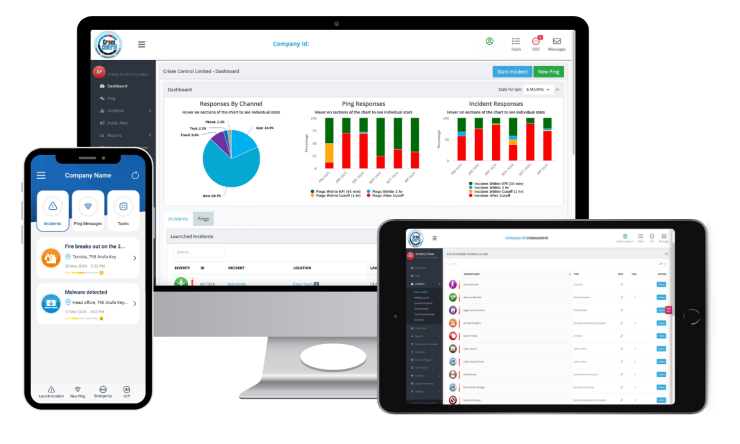
Crises Control provides organisations with a comprehensive platform for managing critical communications, incident response, and business continuity activities from a single location.
With capabilities including mass notifications, multi-channel communications, incident management, task coordination, escalation workflows, and real-time reporting, Crises Control helps organisations communicate faster and respond more effectively when disruptions occur.
Whether facing a cyber incident, operational outage, severe weather event, or supply chain disruption, organisations can use Crises Control to ensure stakeholders receive timely information and response teams remain aligned throughout the incident lifecycle.
In a world where communication speed and accuracy can determine the success of a crisis response, Crises Control provides the tools needed to build resilience, protect stakeholder trust, and strengthen operational continuity.
Ready to improve your crisis communication strategy? Contact Crises Control today to schedule a personalised demonstration and discover how our platform can help your organisation communicate with confidence during any crisis.
FAQs
1. What is crisis communication?
Crisis communication is the process of delivering timely, accurate, and consistent information before, during, and after a disruptive event. It helps organisations manage incidents effectively, keep stakeholders informed, and maintain trust throughout the response and recovery process.
2. Why is crisis communication important for organisational resilience?
Effective crisis communication enables organisations to coordinate response efforts, reduce confusion, support informed decision-making, and maintain stakeholder confidence during disruptions. Strong communication is a key component of organisational resilience because it helps businesses adapt and recover more quickly.
3. What are the key elements of a crisis communication plan?
A crisis communication plan should include clearly defined roles and responsibilities, stakeholder communication strategies, escalation procedures, approved message templates, designated communication channels, and processes for monitoring and updating information during an incident.
4. Who should receive crisis communications during an incident?
Crisis communications should be tailored to different stakeholder groups, including employees, customers, suppliers, business partners, regulators, investors, and the media. Each audience may require different information depending on their relationship to the organisation and the nature of the incident.
5. Why should organisations prioritise internal communication during a crisis?
Employees play a critical role in crisis response. Keeping employees informed ensures they understand the situation, know what actions to take, and can provide accurate information to customers and other stakeholders. Effective internal communication also helps minimise misinformation and uncertainty.