
Digital resilience is no longer viewed as a cybersecurity objective alone. It has become a regulatory requirement, a board-level responsibility, and a critical component of operational continuity.
The Digital Operational Resilience Act (DORA) entered full application on 17 January 2025, creating a unified framework for managing Information and Communication Technology (ICT) risks across the European financial sector. In 2026, regulators have shifted their focus from implementation planning to active supervision and enforcement, making this the year organisations must demonstrate not only compliance on paper but resilience in practice.
For many organisations, the challenge extends beyond meeting regulatory requirements. DORA demands a fundamental change in how institutions identify, manage, test, and respond to digital risks. Cyberattacks, third-party outages, technology failures, and operational disruptions are now treated as resilience issues that require coordinated governance, communication, and response capabilities.
This article explores what DORA means in 2026, who must comply, the key requirements organisations need to address, and how businesses can strengthen their operational resilience while meeting regulatory expectations.
What Is DORA?
The Digital Operational Resilience Act, formally known as Regulation (EU) 2022/2554, was introduced to strengthen the resilience of the European financial system against ICT-related disruptions and cyber threats.
Before DORA, financial institutions operated under a patchwork of national regulations and sector-specific guidance. While many organisations had cybersecurity and risk management programmes in place, regulatory expectations varied significantly across jurisdictions.
DORA addresses this challenge by establishing a single harmonised framework for digital operational resilience across the European Union. The regulation requires financial entities to ensure they can withstand, respond to, recover from, and learn from ICT-related incidents, regardless of whether they originate internally or through third-party providers.
The regulation reflects a growing recognition that financial stability increasingly depends on technology resilience. A significant technology outage, cloud provider failure, ransomware attack, or supply chain compromise can have systemic consequences that extend far beyond a single organisation.
Why DORA Matters More in 2026
Many organisations spent 2023 and 2024 preparing for DORA’s implementation. During 2025, supervisory authorities largely focused on readiness assessments, gap analyses, and initial compliance reviews.
In 2026, the environment has changed.
Regulators are increasingly looking for evidence that organisations have embedded resilience into daily operations. Rather than reviewing policies alone, supervisory bodies are examining how organisations manage incidents, oversee third-party providers, conduct resilience testing, and maintain business continuity under real-world conditions.
This shift reflects a broader trend across the regulatory landscape. Financial institutions are expected to move beyond compliance exercises and demonstrate operational effectiveness.
Questions supervisors increasingly ask include:
- Can the organisation continue delivering critical services during a major ICT disruption?
- Are incident response procedures tested regularly?
- Does leadership actively oversee ICT risks?
- Can the organisation identify vulnerabilities within critical third-party relationships?
- Are communication processes effective during crises?
- Is resilience measurable and continuously improving?
For many organisations, these requirements represent a significant operational challenge.
Who Must Comply with DORA?
One of DORA’s defining characteristics is its broad scope.
The regulation applies to a wide range of financial entities, including:
- Banks and credit institutions
- Payment service providers
- Electronic money institutions
- Investment firms
- Insurance and reinsurance organisations
- Asset managers
- Trading venues
- Central securities depositories
- Crypto-asset service providers
- Crowdfunding platforms
Importantly, DORA also extends regulatory oversight to certain ICT third-party providers that support financial institutions. This reflects growing concern about concentration risk and dependence on a relatively small number of technology providers across the financial sector.
Even organisations that are not directly regulated under DORA may feel its impact through contractual obligations imposed by customers and partners operating within the financial sector.
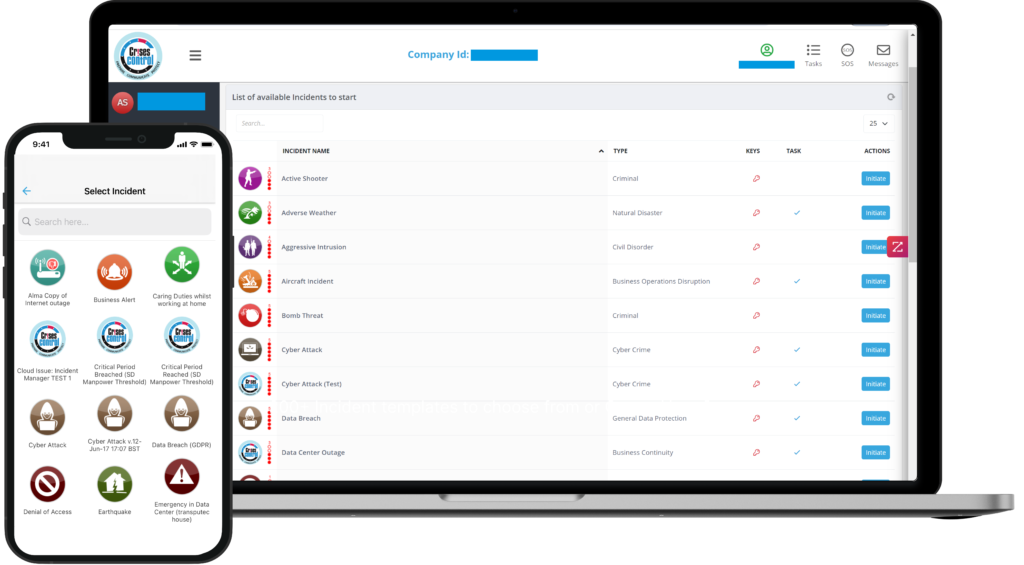
Interested in our Incident Management Software?
Flexible Incident Management Software to keep you connected and in control.
The Five Pillars of DORA Compliance
DORA is built around five interconnected pillars that collectively define an organisation’s digital operational resilience obligations.
1. ICT Risk Management
At the heart of DORA is the requirement to establish a comprehensive ICT risk management framework.
Organisations must implement processes for:
- Identifying ICT risks
- Protecting critical assets
- Detecting threats and vulnerabilities
- Responding to incidents
- Recovering from disruptions
- Continuously improving resilience capabilities
Management bodies are expected to take direct responsibility for overseeing these activities rather than delegating accountability solely to technical teams. Governance and resilience are now firmly board-level concerns.
2. ICT Incident Management and Reporting
DORA places significant emphasis on incident detection, classification, management, and reporting.
Financial entities must establish structured processes for:
- Identifying ICT-related incidents
- Assessing severity and impact
- Escalating incidents appropriately
- Reporting major incidents to regulators
- Communicating with affected stakeholders
This requirement highlights the importance of incident management platforms and communication systems that enable organisations to coordinate responses effectively during disruptions.
3. Digital Operational Resilience Testing
DORA requires organisations to regularly test their resilience capabilities.
Testing activities may include:
- Vulnerability assessments
- Security reviews
- Scenario-based exercises
- Penetration testing
- Threat-led penetration testing (TLPT)
The goal is not simply to identify technical vulnerabilities but to assess whether organisations can continue operating effectively under adverse conditions. Testing helps validate assumptions, identify weaknesses, and improve preparedness before real incidents occur.
4. ICT Third-Party Risk Management
Third-party risk management has emerged as one of the most challenging aspects of DORA compliance.
Financial institutions must understand and manage risks associated with external technology providers throughout the entire supplier lifecycle.
This includes:
- Due diligence processes
- Contractual requirements
- Performance monitoring
- Exit planning
- Supply chain visibility
Regulators recognise that organisations are increasingly dependent on cloud providers, software vendors, managed service providers, and outsourced technology functions. As a result, resilience must extend beyond organisational boundaries.
5. Information Sharing
DORA encourages organisations to participate in information-sharing arrangements that strengthen collective resilience across the financial sector.
By sharing threat intelligence, vulnerability information, and lessons learned, organisations can improve their ability to anticipate and respond to emerging risks.
While often receiving less attention than other pillars, information sharing plays an important role in strengthening sector-wide resilience.
Common Challenges Organisations Face in 2026
Although many organisations have made substantial progress toward compliance, several challenges continue to emerge.
Visibility Across Complex Technology Environments
Modern financial institutions operate highly interconnected technology ecosystems spanning on-premises infrastructure, cloud services, third-party platforms, and remote work environments.
Maintaining visibility across these environments remains difficult.
Without accurate visibility, organisations struggle to assess risk, identify dependencies, and understand the operational impact of disruptions.
Third-Party Risk Complexity
Many institutions rely on hundreds or even thousands of suppliers.
Understanding how these relationships support critical business services and identifying concentration risks requires significant effort.
The challenge becomes even greater when fourth-party and subcontractor dependencies are considered.
Incident Response Maturity
Having an incident response plan is no longer sufficient.
Regulators increasingly expect organisations to demonstrate that plans are tested, understood by employees, and capable of supporting coordinated responses under pressure.
Board-Level Engagement
DORA places responsibility for resilience firmly on senior leadership.
Many organisations are still working to ensure boards possess the necessary visibility, reporting structures, and understanding to fulfil these responsibilities effectively.
DORA and Business Continuity: The Missing Link
One of the most important lessons emerging from DORA implementation is that compliance and resilience are inseparable.
Many organisations initially approached DORA as a cybersecurity project.
In reality, DORA aligns closely with business continuity, crisis management, operational resilience, and incident response disciplines.
Compliance requires organisations to answer questions such as the following:
- How will critical services continue during an ICT disruption?
- Who coordinates response activities?
- How are stakeholders informed?
- What happens if primary systems become unavailable?
- How quickly can operations recover?
These are business continuity questions as much as technology questions.
As a result, organisations increasingly recognise the need for integrated resilience programmes that bring together cybersecurity, risk management, crisis management, and operational continuity teams.
Practical Steps to Strengthen DORA Compliance
For organisations seeking to strengthen compliance in 2026, several priorities stand out.
Conduct Regular Resilience Exercises
Tabletop exercises and simulation scenarios help organisations validate response plans and identify gaps before real incidents occur.
Improve Incident Communication
Clear communication is essential during ICT disruptions.
Employees, customers, regulators, and partners all require timely and accurate information. Organisations should establish communication procedures that support rapid stakeholder engagement during incidents.
Review Third-Party Dependencies
Organisations should maintain up-to-date inventories of critical suppliers and understand how disruptions could affect business services.
Strengthen Governance
Boards and executive teams should receive regular reporting on resilience performance, incident trends, testing outcomes, and emerging risks.
Invest in Integrated Resilience Technology
Fragmented tools often create operational silos that hinder effective response coordination.
Integrated platforms can improve visibility, communication, accountability, and decision-making during incidents.
Looking Beyond Compliance
While DORA is a regulatory framework, its broader objective is to improve resilience across the financial ecosystem.
Organisations that view DORA solely as a compliance exercise may satisfy minimum requirements but miss opportunities to strengthen operations.
Those that embrace resilience as a strategic capability can realise broader benefits, including:
- Faster incident response
- Reduced operational disruption
- Stronger stakeholder confidence
- Improved regulatory relationships
- Better business continuity outcomes
- Enhanced competitive advantage
In an increasingly digital economy, resilience is becoming a differentiator rather than simply a compliance obligation.
How Crises Control Helps Organisations Meet DORA Requirements
Many of DORA’s requirements depend on an organisation’s ability to communicate effectively, coordinate response activities, and maintain operational continuity during disruptions.
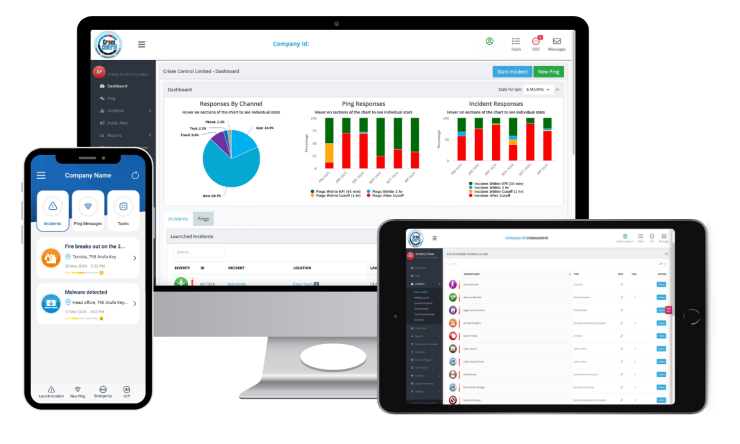
Crises Control helps organisations strengthen these capabilities through a single integrated platform designed for incident management, crisis communication, business continuity, and operational resilience.
With features including:
- Mass notifications
- Incident management workflows
- Escalation automation
- Task management
- Real-time reporting
- Stakeholder communications
- Crisis coordination tools
Crises Control enables organisations to respond faster, improve visibility, and maintain control during ICT incidents and operational disruptions.
As DORA supervision intensifies throughout 2026, organisations need more than policies and documentation. They need practical tools that support resilience in real-world situations.
By combining incident management, communication, and operational coordination capabilities, Crises Control helps organisations strengthen resilience, improve compliance readiness, and protect critical services when disruptions occur.
Final Thoughts
DORA represents one of the most significant regulatory developments in the European financial sector in recent years.
In 2026, compliance is no longer about preparation. It is about demonstrating resilience in practice.
Organisations that invest in governance, incident management, communication, testing, and operational continuity will be better positioned to meet regulatory expectations and withstand future disruptions.
The ultimate goal of DORA is not compliance for its own sake. It is ensuring that financial institutions can continue delivering critical services when technology failures, cyberattacks, and operational crises inevitably occur.
Prepare for DORA with confidence.
Meeting DORA requirements requires more than policies and documentation. It demands the ability to respond, communicate, and recover effectively when disruptions occur. Discover how Crises Control can help your organisation build a more resilient and compliant operational framework.
FAQs
1. What is DORA?
The Digital Operational Resilience Act (DORA) is an EU regulation designed to strengthen the digital operational resilience of financial entities. It establishes a harmonised framework for managing ICT risks, responding to incidents, testing resilience capabilities, and overseeing third-party technology providers.
2. When did DORA come into effect?
DORA entered the full application on 17 January 2025. In 2026, regulators are focusing on supervision and enforcement, requiring organisations to demonstrate that resilience measures are embedded into daily operations rather than existing solely as documented policies.
3. Who needs to comply with DORA?
DORA applies to a broad range of financial entities, including banks, payment service providers, insurance companies, investment firms, asset managers, trading venues, crypto-asset service providers, and other regulated financial organisations operating within the European Union. Certain ICT third-party providers may also be subject to oversight under the regulation.
4. What are the five pillars of DORA?
DORA is built around five key pillars:
- ICT Risk Management
- ICT Incident Management and Reporting
- Digital Operational Resilience Testing
- ICT Third-Party Risk Management
- Information Sharing
Together, these pillars help organisations strengthen their ability to withstand, respond to, and recover from ICT-related disruptions.
5. Why is DORA important in 2026?
In 2026, regulatory focus has shifted from implementation planning to demonstrating operational effectiveness. Supervisors increasingly expect organisations to provide evidence that resilience measures are tested, governed effectively, and capable of supporting critical services during real-world disruptions.