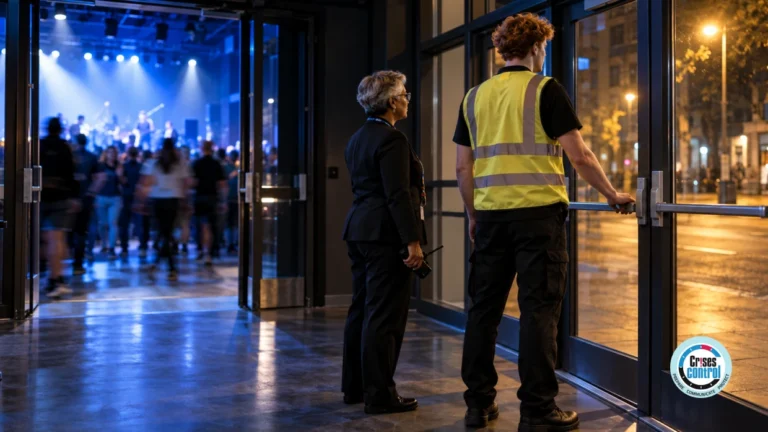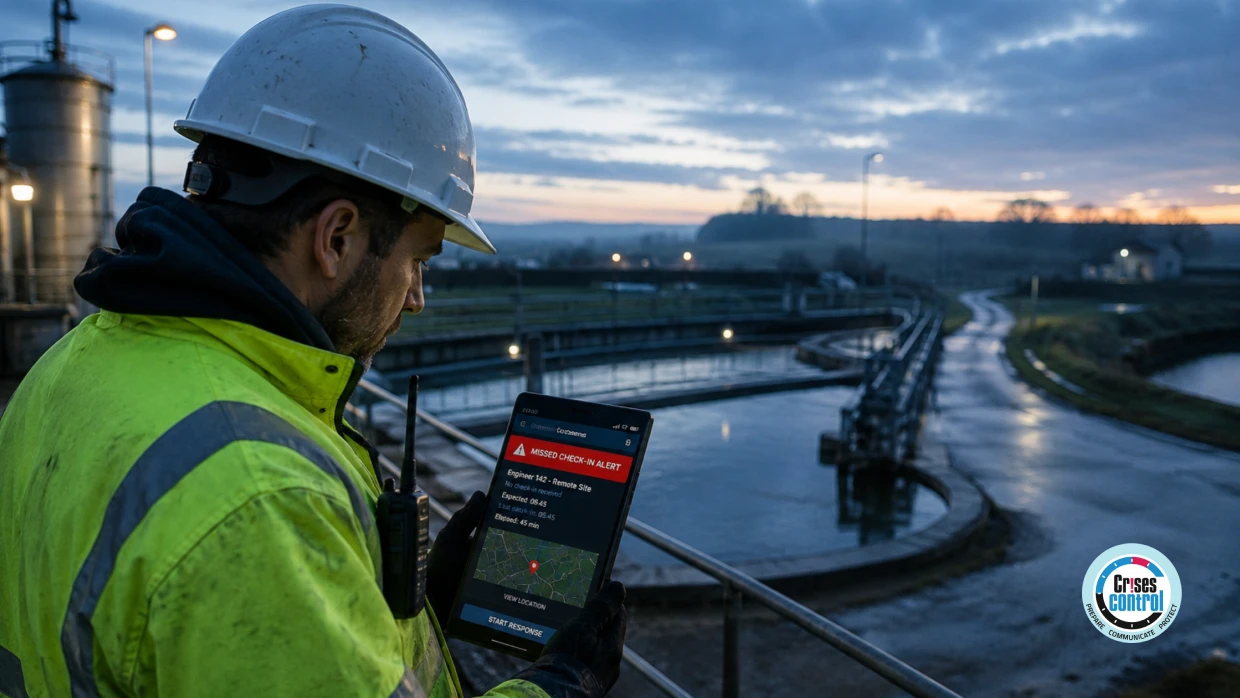
For organisations operating across the energy, utilities and industrial sectors, this is one of the biggest challenges in protecting lone workers. Engineers regularly work at remote substations, pumping stations, water treatment works, gas distribution sites and other isolated locations where immediate supervision isn’t possible. They may be working around high-voltage equipment, confined spaces, pressurised systems or hazardous machinery, often many miles from the nearest colleague.
When an incident occurs, delays in recognising that a worker needs assistance can have serious consequences for both the individual and the organisation. Relying on scheduled phone calls or manual check-ins may provide reassurance, but these processes only confirm that someone was safe at a particular point in time. They do not identify when circumstances change unexpectedly or ensure that help is mobilised quickly.
Worker Safety Incident Management Software provides the operational layer between the lone worker and the organisation. It enables employers to monitor the safety of field teams in real time, trigger automatic alerts when a worker raises an SOS or fails to check in, coordinate a structured response and maintain a complete record of every action taken. Rather than relying solely on manual supervision, organisations gain a faster, more consistent way to detect potential incidents and coordinate the appropriate response.
The Health and Safety Executive (HSE) makes it clear that employers have a legal duty to assess the risks faced by lone workers and implement appropriate control measures to protect them. For organisations operating critical infrastructure, effective lone worker protection is therefore more than a safety initiative. It forms part of a broader operational resilience strategy that helps safeguard employees, demonstrate compliance and ensure that assistance reaches those who need it without unnecessary delay.
The Scale Of Worker Safety Risk In Energy And Utilities
Energy, utilities and industrial organisations operate in some of the most challenging working environments in the UK. Field engineers routinely work at remote substations, water treatment works, pumping stations and gas distribution sites, often without direct supervision and sometimes many miles from their nearest colleague. While these roles are essential to keeping critical infrastructure running, they also expose workers to a range of well-known operational hazards.
According to the Health and Safety Executive (HSE), 138 workers lost their lives in work-related incidents across Great Britain during 2023/24. The statistics highlight the continued importance of effective risk management, safe systems of work and appropriate supervision in hazardous industries (HSE 2024).
The risks faced by utilities field teams are well understood. They include high-voltage electrical systems, pressurised pipework, confined spaces, working at height, hazardous substances, isolated locations and environments where mobile phone coverage may be unreliable. Yet many organisations still rely on manual supervision methods that were never designed to provide continuous oversight of workers operating alone.
Most utilities organisations have documented lone worker procedures, often based on scheduled phone calls or agreed check-in times. While these processes provide a level of reassurance, they only confirm that a worker was safe when they last made contact. If an engineer becomes incapacitated shortly afterwards, colleagues may not realise anything is wrong until the next scheduled check-in is missed. In high-risk environments, that delay can significantly affect how quickly assistance reaches the worker.
A manual check-in procedure answers one question: was the worker contactable at the scheduled time? Worker Safety Incident Management Software answers a different one: is the worker safe right now? That distinction can significantly reduce the time between an incident occurring and the organisation beginning its response.
Interested in our Incident Management Software?
Flexible Incident Management Software to keep you connected and in control.
What Manual Lone Worker Systems Cannot Provide
Many organisations already have lone worker procedures in place. Scheduled phone calls, text messages and agreed check-in times help supervisors maintain regular contact with employees working in remote or hazardous locations. These processes play an important role in supporting worker safety, but they have limitations when conditions change unexpectedly.
Continuous Visibility
A manual check-in only confirms that a worker was safe when they last made contact. It does not provide visibility between scheduled check-ins.
If a field engineer experiences a medical emergency, is exposed to hazardous gas or is injured shortly after checking in, colleagues may not realise that assistance is needed until the next scheduled contact is missed. The longer the interval between check-ins, the longer it may take for the organisation to recognise that something is wrong.
Accurate Location Information
Knowing where a worker was assigned to work is not always the same as knowing where they are when an incident occurs.
Large utility sites, electrical substations, water treatment works and pipeline networks often cover significant areas. If a worker cannot communicate their location, supervisors may need additional time to determine where they are before internal response teams or emergency services can be deployed.
Structured Incident Records
Following a serious workplace incident, organisations may need to demonstrate how they monitored the worker, when concerns were identified and what actions were taken in response.
Manual processes often rely on phone records, text messages or handwritten notes. While these can provide useful information, producing a complete, chronological record of the response can be time-consuming and may require information from multiple sources.
Managing Larger Field Teams
Manual supervision becomes more challenging as organisations grow. Monitoring a small number of lone workers through scheduled check-ins may be practical, but overseeing dozens of engineers working across multiple sites, shifts and geographic locations increases the administrative burden on supervisors and makes maintaining consistent oversight more difficult.
This is where Worker Safety Incident Management Software provides additional value. Rather than relying solely on scheduled contact, it helps organisations maintain greater visibility of lone workers, automate escalation when a check-in is missed or an SOS alert is triggered, and coordinate a structured response while automatically recording the actions taken.
The difference is not simply one of technology. It is the difference between knowing a worker was safe at their last scheduled check-in and having greater visibility of their safety throughout the working day.
Under the Health and Safety at Work etc. Act 1974 and the Management of Health and Safety at Work Regulations 1999, employers have a legal duty to assess the risks faced by lone workers and implement appropriate measures to protect them. HSE guidance makes it clear that organisations should have suitable arrangements for supervising lone workers, maintaining communication and responding in an emergency. Where those arrangements are found to be inadequate following a serious incident, organisations may face enforcement action, prosecution and civil claims, depending on the circumstances.
Worker Safety Incident Management Software: What Effective Lone Worker Protection Looks Like
Effective lone worker protection begins long before an incident occurs. It starts with giving organisations continuous visibility of workers operating in remote or hazardous environments, ensuring that if something goes wrong, the right people are notified immediately and the response begins without unnecessary delay.
Rather than relying solely on scheduled phone calls or manual check-ins, Worker Safety Incident Management Software provides a structured approach to monitoring worker safety throughout the working day. Employees can confirm their status using a mobile application, raise an SOS alert if they require immediate assistance and, where supported, benefit from features such as automatic man-down detection or inactivity monitoring. If a worker fails to check in or an alert is triggered, the platform automatically initiates the next stage of the response.
From that point, the focus shifts from monitoring to coordination. Designated supervisors and response teams receive immediate notifications through their preferred communication channels, while location information helps them identify where assistance may be required. Automated escalation ensures that if the primary contact does not respond within a predefined timeframe, the alert is passed to the next appropriate person, reducing the risk of delays during a potentially time-critical situation.
Effective response also depends on maintaining a clear operational picture. As the incident develops, organisations need to know who has acknowledged the alert, which actions have been assigned, what tasks have been completed and whether additional support or emergency services are required. Instead of relying on phone calls and individual updates, everyone involved works from the same real-time information.
Every stage of the response is recorded automatically, creating a chronological timeline of notifications, acknowledgements, decisions and actions. This information supports post-incident reviews, helps organisations demonstrate how the incident was managed and provides valuable evidence for internal investigations, regulatory enquiries and insurance processes.
The value of Worker Safety Incident Management Software is not simply that it helps organisations detect when something is wrong. It enables them to recognise incidents sooner, coordinate a faster and more structured response, and maintain a complete record of what happened from the first alert through to resolution.
How Crises Control Supports Worker Safety in Energy and Utilities
Protecting lone workers requires more than the ability to send an alert. Once a worker raises an SOS, misses a scheduled check-in or an automated alert is triggered, organisations need a structured way to coordinate the response, communicate with the right people and maintain visibility until the incident has been resolved.
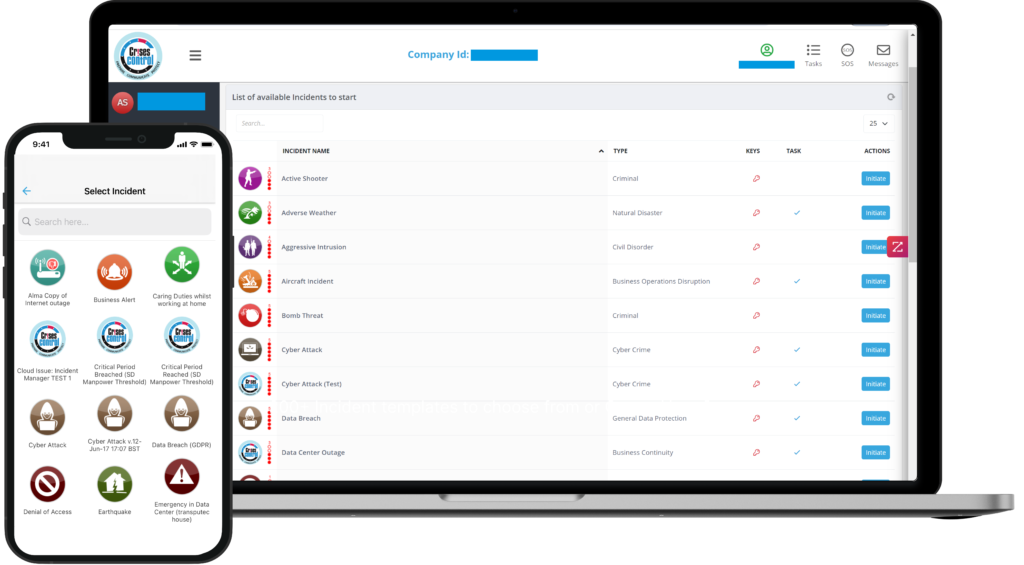
Crises Control combines lone worker protection with operational incident management in a single platform. Through the SOS module, field workers can raise an emergency alert with a single tap, share their location and, where configured, benefit from capabilities such as man-down detection and automated welfare monitoring. If an alert is triggered, the platform immediately begins a structured response by notifying designated responders, escalating the incident where required and providing real-time visibility of the situation as it develops.
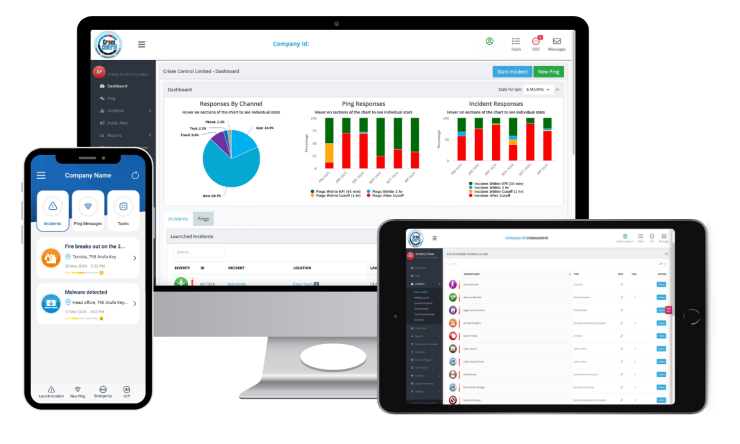
From there, Incident Manager and Task Manager help coordinate every stage of the response. Responsibilities can be assigned to named individuals, actions tracked in real time and progress monitored through a shared operational dashboard. Instead of relying on phone calls, text messages or individual updates, everyone involved works from the same operational picture, enabling faster decisions and more effective coordination.
Every notification, acknowledgement, task update and decision is automatically recorded, creating a complete chronological timeline of the incident. This information supports post-incident reviews and provides valuable evidence for internal investigations, regulatory enquiries and insurance processes.
For organisations operating across the energy, utilities and industrial sectors, Crises Control helps reduce the time between recognising that a worker needs assistance and coordinating a structured response. It provides the operational visibility, task management and documentation needed to protect lone workers while strengthening compliance and organisational resilience.
Learn More
If your organisation is reviewing how it protects lone workers or manages field safety incidents, now is the time to assess whether your current processes provide the visibility and coordination needed when every minute counts.
Explore how Crises Control helps energy and utilities organisations protect lone workers, coordinate emergency responses and maintain a complete audit trail.
Request a free personalised demo to see how Crises Control can support your operational resilience strategy.
FAQs
1. What is Worker Safety Incident Management Software?
Worker Safety Incident Management Software helps organisations monitor the safety of lone workers and field teams, coordinate emergency responses and maintain a complete record of incidents as they occur. Unlike manual check-in procedures, it provides greater operational visibility, automated escalation and structured incident management, helping organisations recognise potential incidents sooner and respond more effectively.
2. How is Worker Safety Incident Management Software different from a lone worker app?
A lone worker app is typically designed to help an individual worker confirm their welfare or raise an emergency alert. Worker Safety Incident Management Software goes further by helping organisations coordinate what happens next. It supports structured escalation, real-time operational visibility, task management and incident documentation, ensuring that alerts become managed responses rather than isolated notifications.
3. What are an employer's legal responsibilities for protecting lone workers?
Under the Health and Safety at Work etc. Act 1974 and the Management of Health and Safety at Work Regulations 1999, employers must assess the risks faced by lone workers and implement appropriate measures to protect them. HSE guidance also recommends suitable arrangements for supervision, communication and emergency response. While software alone does not ensure legal compliance, Worker Safety Incident Management Software can support these arrangements by improving visibility, coordinating responses and creating records that assist with post-incident reviews.
4. How does Worker Safety Incident Management Software support incident response?
Modern worker safety platforms can integrate lone worker protection with broader operational incident management. If a worker raises an SOS alert, misses a scheduled check-in or an automated alert is triggered, the platform can notify designated responders, escalate the incident where required, assign tasks and provide a shared operational view of the response. This enables organisations to manage worker safety incidents using the same structured processes applied to wider operational disruptions.
5. What information should organisations record following a lone worker incident?
Following a serious workplace incident, organisations should be able to demonstrate what happened, when concerns were identified, how the response was coordinated and what actions were taken. Worker Safety Incident Management Software automatically records notifications, acknowledgements, task updates, key decisions and incident timelines, creating a chronological record that supports internal investigations, regulatory enquiries and insurance processes.