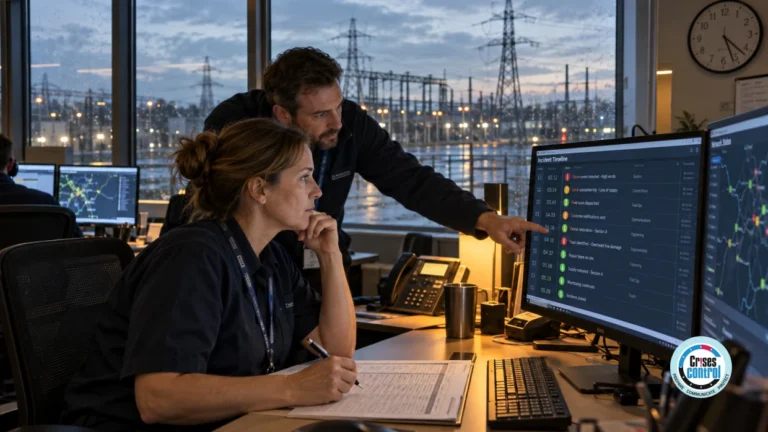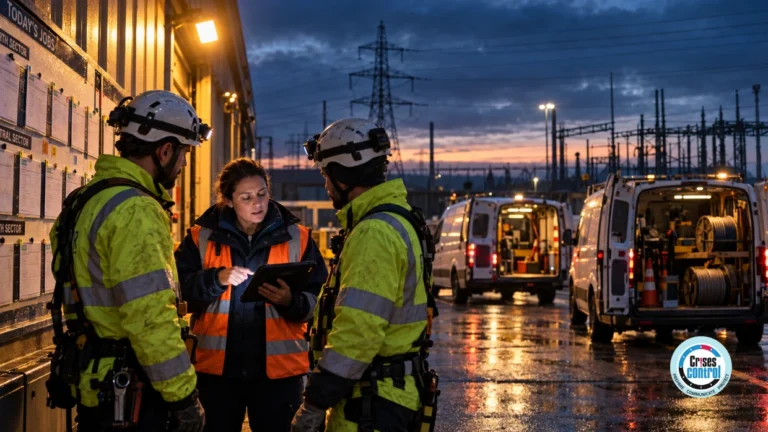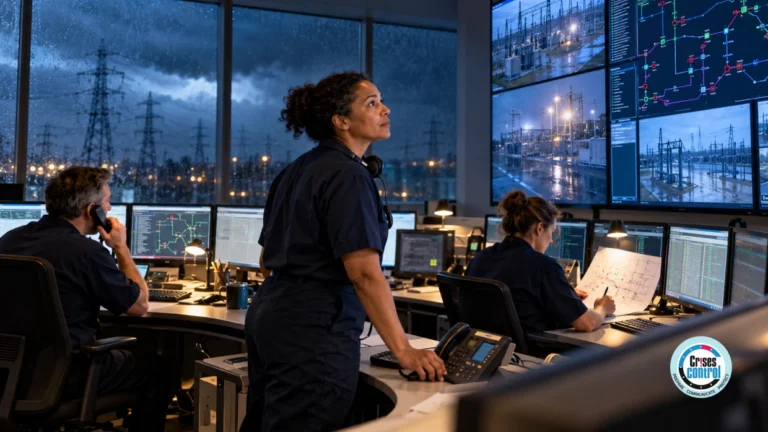
AI in critical event management is the use of AI to support detection, decision-making, communication, and coordination during operational incidents, ranging from cyberattacks and supply chain failures to physical safety events and infrastructure outages. It is not autonomous decision-making. It is structured assistance that reduces cognitive load, accelerates information flow, and captures the audit trail that regulators and boards now require.
The conversation around AI in critical event management has become noisy. Some vendors promise autonomous responses. Some procurement teams treat it as a checkbox. Some operational leaders dismiss it as marketing. None of these positions helps organisations make better decisions when something actually goes wrong. The global average cost of a data breach reached 4.44 million US dollars in 2025 (IBM 2025), and faster detection and containment, partly enabled by AI, was the largest factor in keeping that figure from rising further.
What does AI in critical event management actually do?
AI in critical event management consolidates fragmented incident data, accelerates threat detection, drafts notifications and templates against approved policies, recommends next actions from playbooks, and produces a continuous audit trail. It runs inside the response workflow, not outside it. Human accountability for decisions remains. AI carries the load humans cannot.
It is 02:14 on a Tuesday. A monitoring tool flags an anomalous data flow from a finance system to an external IP. The on-call security analyst checks the alert, opens three other dashboards, scrolls back through 90 minutes of log entries, and tries to reach the head of information security on the night-shift WhatsApp group with 41 unread messages. Twenty-three minutes pass before anyone with authority sees the alert. The breach has been active for over an hour.
AI in critical event management does not solve the incident. It removes the 23-minute gap. It consolidates the three dashboards into a single timestamped record. It drafts the holding statement against the approved template. It identifies the deputy when the primary contact is unreachable. It logs every action against the timestamp, so the post-incident review writes itself. The human still decides. The platform makes the decision possible in five minutes instead of twenty-three.
AI in critical event management is not about removing humans from the loop. It is about removing the friction between the signal and the structured response.
Why the myths around AI in critical event management matter
Misconceptions about AI in critical event management slow down adoption, distort procurement criteria, and lead organisations to either over-trust autonomous systems or under-invest in capability they actually need. Both failures cost money when an incident hits. The 10 myths below come from real procurement conversations, real audit findings, and real post-incident reviews across UK and EMEA critical event management deployments. Each one is followed by what the operational reality actually is.
Cyberattacks have increased by 47% year-over-year (Check Point Research Q1 2025), and global supply chain disruptions are up 88% since 2020 (Resilinc 2024).
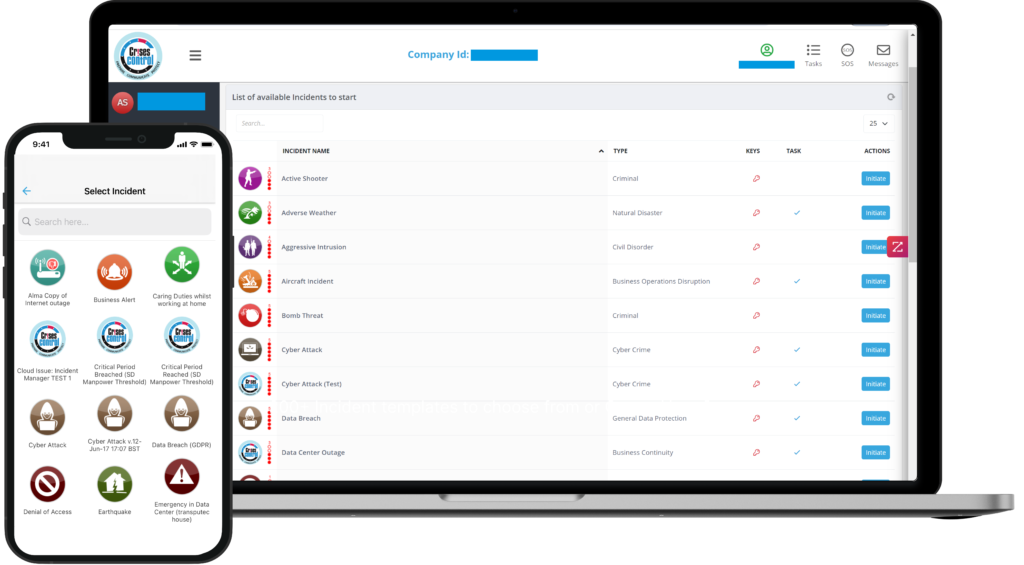
Interested in our Incident Management Software?
Flexible Incident Management Software to keep you connected and in control.
10 myths about AI in critical event management, with the reality
Myth 1: AI removes human control over the incident
MYTH: If we put AI in the response workflow, leadership loses authority. The platform will make decisions for us.
REALITY: AI in critical event management is structured assistance, not autonomous command. It consolidates information, drafts options, and surfaces next actions, but the decision to escalate, hold, recall, or stand down remains with named human owners. Leadership authority is not reduced. The cognitive load on leadership is reduced, which means decisions get made on better information rather than under more pressure.
Myth 2: AI cannot help with decisions in a real crisis
MYTH: Every incident is unique. AI is trained on past data, so it cannot help when something truly novel happens.
REALITY: Most incidents are novel in detail and familiar in shape. A new cyberattack still triggers the same notification workstreams as the last one. A new supply chain failure still requires the same regulator notification windows. AI accelerates the familiar parts of the response so human attention can be spent on the parts that are genuinely novel. The novelty is where the value of human judgement lives. AI clears the runway so leaders can use that judgment.
Myth 3: AI in critical event management is just hype
MYTH: This is the same vendor marketing wave we saw five years ago with predictive analytics. Nothing has actually changed.
REALITY: The shift in the last 24 months is concrete. AI-assisted detection now contributes measurably to faster containment of data breaches. IBM’s 2025 Cost of a Data Breach report found that organisations using AI and automation in their security operations contained breaches significantly faster than those not using them, with cost savings averaging in the millions per incident. That is not hype. That is a measurable operational outcome.
Myth 4: AI in critical event management is too complex and expensive to implement
MYTH: We do not have data scientists. We cannot deploy this without a major IT project.
REALITY: Modern AI in critical event management is delivered as a capability inside the platform you already use. There are no models to train, no data lakes to build, and no data scientists required for normal operation. The platform comes pre-aligned to standards like ISO 22301 and integrates with existing notification, ticketing, and HR systems. Deployment timelines are typically weeks, not quarters.
Myth 5: AI in critical event management is just about speed
MYTH: Faster alerts do not help if they are still the wrong alerts.
REALITY: Speed is the easiest thing to measure, but it is not the main benefit. The main benefit is precision and consistency. Pre-built templates draft messages against approved policy rather than under pressure. Named owners are surfaced rather than searched for. Audit trails are captured rather than reconstructed. The compound effect is fewer wrong messages and fewer reconstructed timelines, which matters far more than shaving seconds off a notification.
Speed is the easiest thing to measure, but it is not the main benefit of AI in critical event management. Consistency is.
Myth 6: Organisations that rarely have major incidents do not need AI
MYTH: We have not had a serious incident in years. The investment cannot be justified.
REALITY: This argument has not aged well. Cyberattacks have increased by 47% year-over-year. Supply chain disruptions are up 88% since 2020. The cost of a single major incident now routinely exceeds the multi-year cost of the platform that would have prevented it from becoming major. Most organisations that say they have had no serious incidents in years are about to have one. Investing during the quiet is the only point at which the investment can be made calmly.
Myth 7: Crisis response can still be handled manually with the right people
MYTH: Our team is experienced. We have run this manually for years. We do not need new tools.
REALITY: Experienced teams running incidents manually still lose time to the same friction every time: locating the current plan, finding the right contact, reaching the deputy when the primary is unreachable, drafting the holding statement under pressure, logging actions while running the response. These are not skill problems. They are friction problems. The most experienced team in the world cannot remove that friction without tooling. AI in critical event management removes it.
Myth 8: Only tech and finance need AI in critical event management
MYTH: This is for banks and tech firms. We are a manufacturer / a retailer / a hospital / a council.
REALITY: The sectors with the highest exposure to operational disruption are not banks and tech firms. They are manufacturing, healthcare, logistics, food and beverage, and the public sector. Unexpected manufacturing downtime alone costs an estimated 50 billion US dollars per year globally (Forbes / Deloitte). UK food businesses issued 1,386 product recalls and withdrawals between 2019 and 2023 (Food Standards Agency 2024). Every sector that runs operations has critical events. Every sector benefits from a structured response.
The global average data breach cost reached 4.44 million US dollars in 2025, with AI and automation in security operations being the largest factor in reducing it (IBM 2025).
Myth 9: All AI in critical event management is essentially same
MYTH: Notification platforms, planning tools, and execution platforms all add AI now. The differences do not matter.
REALITY: The differences matter enormously under audit. Notification platforms with AI draft messages, but do not run the workstreams that follow. Planning tools with AI generate documents, but do not coordinate live response. Execution platforms with AI run the response end-to-end, with named owners, timestamped decisions, and a continuous audit trail. The Crises Control execution layer sits in the third category. Most competitors sit in the first two. Procurement that does not understand this distinction buys the wrong category and discovers it during the first real incident.
Myth 10: AI in critical event management is still a future concept
MYTH: Once the standards catch up and the tech matures, we will look at it. Not yet.
REALITY: AI in critical event management is already in production across UK and EMEA deployments today. CRAiG, the Crisis Resolution AI Guide inside the Crises Control mobile app, helps responders access plans, draft notifications, and align with organisational procedures in plain language during live incidents. AI-drafted notifications, AI-surfaced playbooks, AI-generated post-incident analysis, and AI-assisted business continuity planning are operational capabilities, not roadmap items. Waiting for the technology to mature means waiting for competitors to lock in operational advantage.
What working AI in critical event management actually looks like
Working AI in a critical event management platform is not a feature bolted on after the fact. It is a capability woven into every phase of the incident lifecycle, from detection through recovery.
Detection and consolidation
AI consolidates alerts from multiple monitoring sources into a single incident record. Duplicate signals are merged. Related events are grouped. The on-call responder sees one timeline, not seven dashboards. Cognitive load drops from minute one.
Notification and template drafting
AI drafts notifications against pre-approved templates by audience and channel, customised to the specific incident. The Crises Control mass notification system delivers them across SMS, voice, email, push, and app with two-way confirmation. Human review and approval remain in the loop. Drafting time drops from minutes to seconds.
Playbook surfacing and next-action guidance
AI surfaces the relevant playbook for the incident type, with named owners, deputies, escalation paths, and pre-built actions. The Crises Control incident manager turns those playbooks into live workflows. Responders are guided through approved actions rather than searching for documents.
Audit trail and post-incident analysis
Every alert, acknowledgement, decision, and task is captured automatically in the Crises Control audit trail. AI generates a post-incident analysis from the captured data, highlighting where delays occurred, which actions worked, and what to change in the playbook. Aligned to ISO 22301 business continuity requirements.
How Crises Control delivers AI in critical event management
Most competitors either notify people or document plans. Crises Control executes the response. Built for real incidents, not demos.
Mass notification platforms with AI handle the alerting layer. Planning platforms with AI handle the documentation layer. Neither runs the response itself. Crises Control runs the execution layer across detection, notification, coordination, task ownership, and audit trail, with AI woven into every phase. The platform itself holds ISO 22301 accreditation, so the standard is built into the product rather than bolted on after.
Inside the platform, CRAiG, the Crisis Resolution AI Guide, supports responders in plain language during live incidents. It answers procedural questions, drafts notifications, and aligns responses with the organisation’s own procedures. It works inside the workflow, not outside it. AI within the workflow supports action. AI without workflow creates noise.
If your current platform’s AI sits outside the response workflow rather than inside it, you have notification AI, not critical event management AI. Book a demo to see the difference.
What working AI in critical event management looks like in practice
A working setup consolidates alerts, drafts notifications against approved templates, surfaces the right playbook, names the right owners, and captures the audit trail automatically. It does this from the first minute of the incident, not at the post-mortem two weeks later. It supports human decision-making rather than replacing it. It produces evidence as a by-product of running the response, not as a separate documentation effort.
Organisations that adopt this approach do not eliminate incidents. They turn incidents into controlled events. The disruption still happens. The response is faster, cleaner, more defensible, and more honest about what worked and what did not.
If your current approach to AI in critical event management is still on the procurement backlog, the next incident is the one that proves the cost of waiting. Book a demo of the platform.
FAQs
1. What is AI in critical event management?
AI in critical event management is the use of artificial intelligence to support detection, communication, coordination, and audit during operational incidents. It consolidates information, drafts notifications and templates, surfaces playbooks, recommends next actions, and captures a continuous audit trail. Human decision-making and accountability remain. AI removes friction between the signal and the structured response.
2. Does AI in critical event management replace human responders?
No. Autonomous decision-making in safety-critical and regulated environments is neither responsible nor compliant. AI in critical event management supports human responders by removing cognitive load, accelerating drafting and notification, and capturing the audit trail. Decisions to escalate, hold, recall, or stand down remain with named human owners. The accountability question stays where it has to stay.
3. How quickly can AI in critical event management be deployed?
Platforms with AI built in as a native capability typically deploy in weeks, not quarters. There are no models to train, no data lakes to build, and no data scientists required for normal operation. The platform integrates with existing notification, ticketing, and HR systems, and comes pre-aligned to standards like ISO 22301. Deployment timelines depend more on internal change management than on the technology itself.
4. Does AI in critical event management require special compliance approvals?
It depends on the use case and the sector. In regulated industries such as financial services, healthcare, and food manufacturing, AI use in incident response should be reviewed against the organisation’s own AI governance policy and against sector-specific guidance from bodies like the FCA, FSA, or NCSC. The standard rule is that AI assists and humans decide. As long as accountability is clear and the audit trail is intact, AI in critical event management aligns with most existing compliance frameworks.
5. What is the difference between AI in critical event management and AI in cybersecurity?
AI in cybersecurity focuses on detecting and containing threats within IT systems. AI in critical event management focuses on running the response that follows once a threat or incident has been confirmed, across notification, coordination, decision-making, and audit. The two are complementary. AI in cybersecurity detects the breach. AI in critical event management runs the cross-functional response. Many organisations need both, and the best deployments connect them through shared incident records.