When a large-scale outage occurs, utility providers face immediate pressure to restore services, coordinate
response teams, communicate with stakeholders, and maintain public trust. Whether the disruption is
caused by severe weather, equipment failure, cyber incidents, or infrastructure damage, the challenge
extends far beyond repairing the affected assets.
The ability to manage information, coordinate decisions, and communicate effectively often determines how quickly an organisation can recover.
This is why incident management software has become an increasingly important component of operational resilience within the utilities sector. Modern utility providers operate across vast and interconnected networks where a single disruption can affect thousands of customers, multiple field teams, external contractors, regulators, and executive stakeholders simultaneously.
Managing that level of complexity requires more than spreadsheets, phone calls, and email chains. It requires a structured approach to critical incident management that supports faster decision-making and more coordinated response efforts.
When a Localised Problem Becomes a Large-Scale Incident
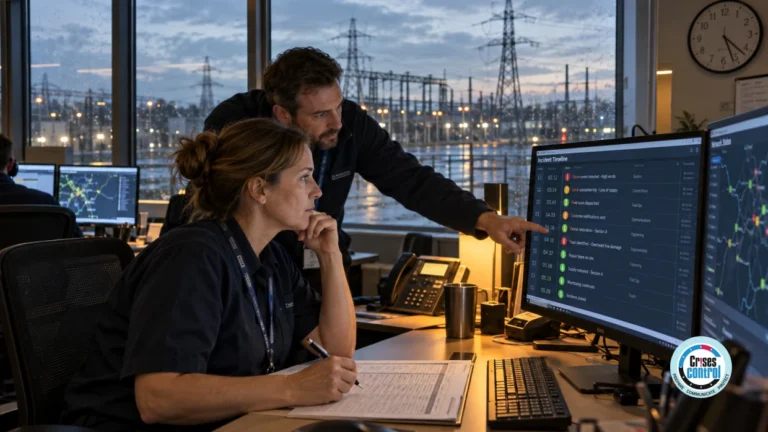
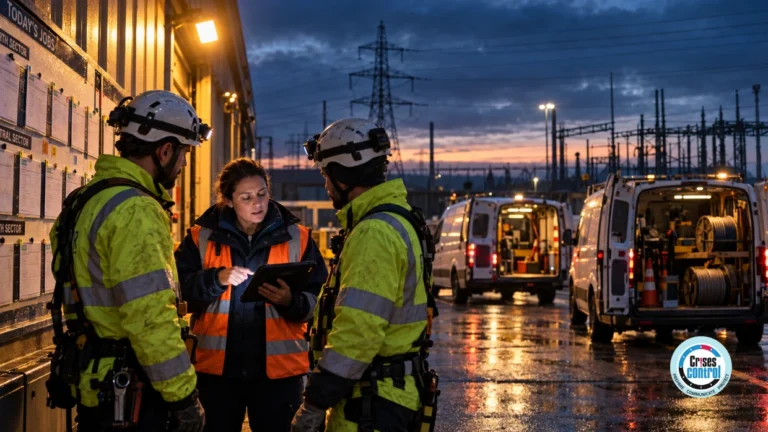
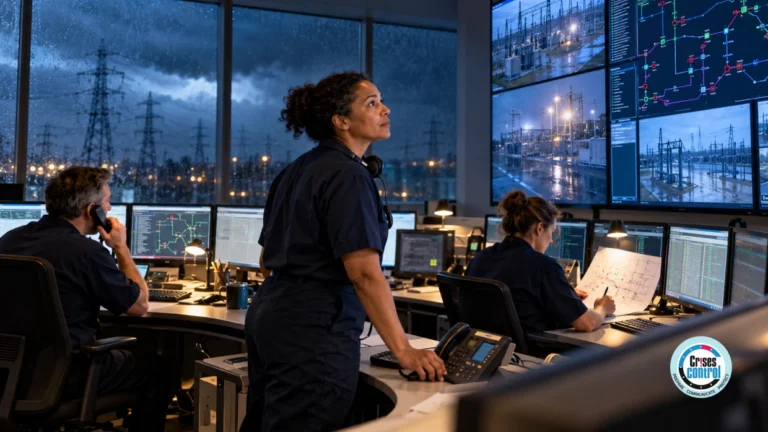
Imagine a severe storm system moving through a region overnight. High winds damage transmission infrastructure, substations experience faults, and power outages begin affecting multiple communities. As customer reports increase and monitoring systems generate alerts, the situation quickly escalates from an operational issue into a large-scale incident requiring a coordinated response.
Within a short period of time, operations teams need answers to critical questions. Which areas are affected? What infrastructure has been damaged? Which field teams need to be deployed? What information should be communicated to customers? How should leadership teams be updated as the situation evolves?
The challenge is that these questions often emerge simultaneously while conditions continue to change. New outages may occur, restoration estimates may shift, and additional resources may need to be mobilised. In these situations, maintaining situational awareness becomes just as important as carrying out the technical recovery itself.
Why Communication Becomes a Critical Response Function
Large-scale outages are often viewed as infrastructure problems, but they quickly become communication challenges as well. Customers want accurate restoration estimates, field teams need operational updates, executives require visibility into response activities, and regulators may expect timely reporting depending on the nature of the disruption.
Without a structured communication process, information can become fragmented across multiple channels. Teams may operate using different versions of events, updates may be delayed, and critical decisions can be slowed by a lack of visibility.
The larger the incident becomes, the more difficult it is to maintain a common operating picture.
Utilities that respond effectively to outages recognise that communication is not a separate activity from incident response. It is a core component of the response itself. Accurate information helps teams prioritise resources, supports stakeholder confidence, and enables leadership to make informed decisions throughout the incident lifecycle.
How Incident Management Software Improves Response Coordination
One of the biggest challenges during a large-scale outage is coordinating activities across multiple teams and locations. Field engineers, operations centres, contractors, customer service teams, communications personnel, and leadership groups all play different roles during the response effort.
Incident management software provides a centralised platform where information can be shared, tracked, and updated in real time.
Rather than relying on disconnected systems and manual coordination, organisations can maintain visibility into ongoing activities, assign responsibilities, track progress, and document key decisions as the incident unfolds.
This structured approach helps reduce confusion and improves accountability.
Teams spend less time gathering information and more time focusing on response and recovery activities. Decision-makers gain a clearer understanding of the situation, while response teams can adapt more quickly as conditions change.
The Growing Importance of Real-Time Incident Alerts
Speed plays an important role during outage response, but timely awareness is often even more important. Delays in identifying incidents, escalating issues, or communicating developments can significantly increase operational impacts.
Real-time incident alerts help organisations identify and respond to changing conditions more quickly.
Alerts can be triggered by monitoring systems, operational thresholds, field reports, or predefined incident procedures, ensuring that relevant stakeholders receive information when action is required.
For utility providers managing geographically dispersed infrastructure, this capability is particularly valuable. Teams operating in different locations can receive consistent updates while leadership maintains visibility into the broader response effort.
This helps create a more coordinated approach to incident management and reduces the risk of important information being overlooked.
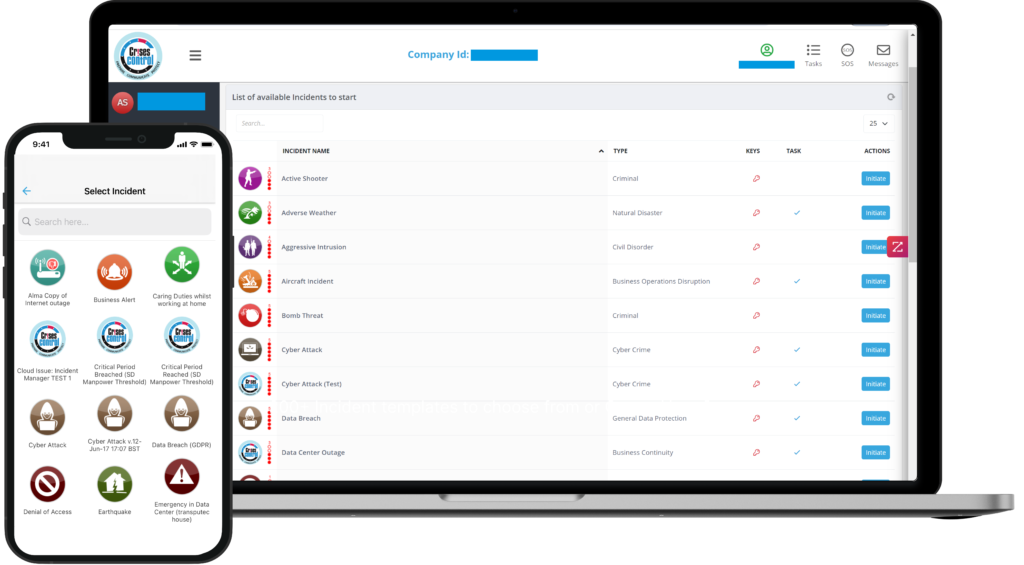
Interested in our Incident Management Software?
Flexible incident management to keep teams informed and coordinated.
Why Traditional Approaches Struggle During Major Outages
Many utilities have invested heavily in operational technology and monitoring systems. However, communication and coordination processes often remain dependent on manual workflows.
During smaller incidents, these approaches may appear sufficient. During large-scale outages, however, their limitations become increasingly visible.
Email chains become difficult to manage, phone-based coordination creates bottlenecks, and information shared through multiple communication tools can become fragmented.
As outage response efforts expand, teams often spend valuable time searching for updates, confirming responsibilities, and reconciling conflicting information. These delays can affect restoration efforts, increase stakeholder frustration, and reduce overall response effectiveness.
Incident management software helps address these challenges by creating a structured environment for communication, coordination, and decision-making throughout the incident lifecycle.
A Common Misconception About Utility Incident Response
One assumption often made during major outages is that restoration activities are the most important aspect of the response. While technical recovery is clearly essential, successful outcomes depend on much more than repairing infrastructure.
Customers judge organisations based on communication as well as restoration speed.
Leadership teams require accurate information to allocate resources effectively.
Regulators may evaluate how incidents were managed and documented.
Employees need clear direction regarding priorities and responsibilities.
In many cases, organisations that communicate effectively during an outage maintain greater stakeholder confidence even when restoration efforts take time.
Effective incident management is not simply about resolving technical issues. It is about managing the broader operational response in a coordinated and transparent manner.
What Utility Providers Can Learn from Major Outages
Every major outage highlights the importance of preparation. Organisations that perform well during disruptions are rarely creating response processes from scratch. They have established procedures, defined roles and responsibilities, identified escalation paths, and implemented tools that support coordination under pressure.
Incident management software helps reinforce these capabilities by digitalising response plans and providing teams with a structured framework for managing incidents. Instead of relying on institutional knowledge or manual processes, organisations can follow predefined workflows while maintaining the flexibility required to adapt to changing conditions.
As utility infrastructure becomes increasingly interconnected and stakeholder expectations continue to rise, this level of preparedness is becoming increasingly important.
Supporting Operational Resilience Through Better Incident Management
Operational resilience depends on an organisation’s ability to anticipate, respond to, and recover from disruption. For utility providers, large-scale outages represent some of the most demanding tests of those capabilities.
Technology alone cannot eliminate disruption, but it can significantly improve how organisations manage response efforts. Incident management software, real-time incident alerts, and structured communication processes help create greater visibility, accountability, and coordination during critical events.
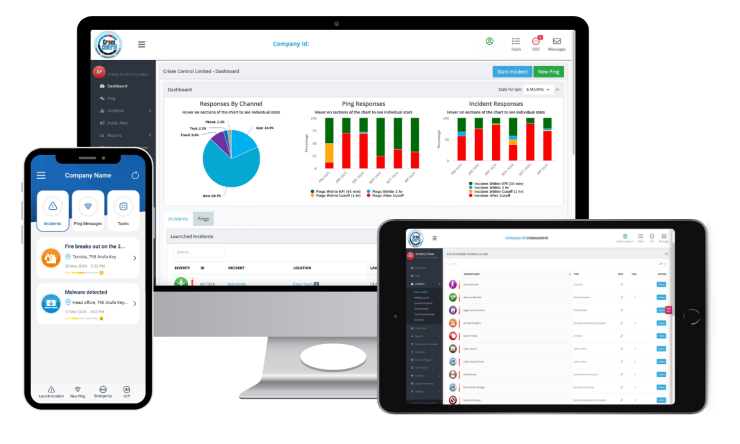
Crises Control supports this approach by helping organisations digitalise response plans, coordinate role-based actions, automate escalation processes, and communicate reliably across multiple channels. This enables teams to respond more effectively while maintaining control and situational awareness throughout the incident lifecycle.
Final Thoughts
Large-scale outages will always present significant operational challenges for utility providers. However, the effectiveness of the response is often determined by how well organisations manage information, coordinate stakeholders, and communicate throughout the incident.
Incident management software has become an important tool for achieving these objectives. By providing a structured approach to critical incident management and supporting real-time incident alerts, organisations can improve response coordination, maintain situational awareness, and strengthen operational resilience during some of their most challenging moments.
As infrastructure networks become more complex and stakeholder expectations continue to increase, organisations that invest in more effective incident management capabilities will be better positioned to respond to future disruptions with confidence.
Learn how Crises Control helps organisations improve incident response, communication, and operational resilience during critical events.
FAQs
1. What is incident management software and how does it help utilities during outages?
Incident management software helps utilities coordinate response activities, track incidents, assign responsibilities, and maintain visibility during large-scale outages. By centralising information and communication, utilities can respond more efficiently, reduce delays, and improve decision-making throughout the incident lifecycle.
2. Why are real-time incident alerts important during large-scale outages?
Real-time incident alerts ensure critical information reaches the right people as soon as conditions change. This enables utility providers to escalate issues faster, coordinate field teams more effectively, and maintain situational awareness during complex outage response efforts.
3. How can utilities improve communication during power outages?
Utilities can improve communication by using structured communication processes and digital platforms that deliver timely updates to employees, contractors, executives, customers, and other stakeholders. Consistent communication helps reduce confusion and supports a more coordinated response.
4. What challenges do utilities face when responding to major outages?
Major outages often create challenges related to resource coordination, stakeholder communication, situational awareness, and decision-making under pressure. As incidents grow in scale, maintaining accurate information and coordinating multiple response teams becomes increasingly difficult without the right tools and processes.
5. How does incident management software support operational resilience?
Incident management software supports operational resilience by helping organisations prepare for, respond to, and recover from disruptions more effectively. It provides greater visibility into incidents, improves response coordination, and enables teams to follow structured workflows during critical events.