Educational institutions face a unique challenge during emergencies. They must protect students, reassure parents, coordinate staff, and communicate with emergency services, often within minutes. A school crisis communication plan supported by mass notification software provides the structure and speed required to manage these situations effectively.
When a critical incident occurs, delayed or inconsistent communication can quickly create confusion, increase risk, and undermine trust. Schools that integrate mass notification software into their emergency planning can communicate faster, coordinate responses more effectively, and maintain operational control during high-pressure situations.
A Realistic School Emergency Scenario
Imagine a secondary school on a normal weekday morning.
During the first lesson of the day, a member of staff notices smoke emerging from an electrical room adjacent to a classroom block. Although the fire alarm activates promptly, uncertainty spreads quickly.
Some teachers begin evacuating students immediately.
Others wait for confirmation.
Office staff receive calls from concerned parents who have already seen social media posts about the incident.
Senior leaders attempt to contact key personnel using mobile phones and email while emergency services are en route.
Within minutes, communication becomes fragmented.
No one is certain whether all students have been accounted for, whether after-school activities should be cancelled, or what message should be sent to parents.
This scenario highlights a common reality. The physical emergency may be managed effectively, but communication often becomes the most difficult aspect of the response.
Why Schools Need a Dedicated Crisis Communication Plan
A school crisis communication plan establishes how information flows before, during, and after an incident.
It defines:
- Roles and responsibilities
- Communication channels
- Escalation procedures
- Approval processes
- Stakeholder messaging requirements
- Recovery communications
Without a structured plan, schools frequently rely on improvised decisions during moments of extreme pressure.
This creates several risks:
- Delayed emergency notifications
- Contradictory instructions
- Incomplete accountability checks
- Increased parental concern
- Regulatory scrutiny
- Reputational damage
A crisis communication plan is not separate from operational safety planning. It forms a critical component of broader crisis management software and emergency response capabilities.
The Communication Challenges Schools Face During Emergencies
Schools communicate with multiple audiences simultaneously.
Each audience requires different information.
1. Students
Students need clear instructions focused on immediate safety actions.
2. Teachers and Staff
Staff require operational guidance regarding:
- Evacuation procedures
- Shelter-in-place instructions
- Student accountability
- Escalation responsibilities
3. Parents and Guardians
Parents expect timely updates and reassurance regarding student welfare.
Failure to communicate quickly can result in overwhelming inbound enquiries that distract administrators from managing the incident itself.
4. Emergency Responders
Police, fire services, and medical personnel require accurate information about the situation, affected areas, and resource needs.
Coordinating all these communications manually is challenging even during relatively minor incidents.
Where Traditional Communication Methods Fall Short
Many schools still depend on a combination of:
- Phone trees
- Email lists
- Manual contact databases
- Public address systems
- Messaging applications
While these tools have value, they create limitations during fast-moving emergencies.
1. Phone Trees Are Slow
A chain-based communication approach depends on individuals being available and responding promptly.
One missed call can disrupt the entire process.
2. Email Is Not Designed for Emergencies
Email delivery delays, inbox overload, and low visibility make it unsuitable as a primary emergency communication channel.
3. Public Address Systems Have Limited Reach
Announcements can only reach people physically present on campus.
Parents, governors, transport providers, and remote staff remain uninformed.
4. Manual Processes Create Human Error
Under pressure, people make mistakes.
Critical messages may be delayed, forgotten, or sent to incorrect recipients.
These challenges explain why schools increasingly evaluate dedicated mass notification software for schools as part of their emergency preparedness strategy.
What Mass Notification Software for Schools Actually Does
Mass notification software enables schools to distribute urgent communications across multiple channels simultaneously.
Rather than relying on separate tools, schools can activate a single response workflow that reaches the right people immediately.
Typical communication channels include:
- SMS
- Voice calls
- Mobile app notifications
- Desktop alerts
- Digital signage
- Web portals
This allows schools to communicate with thousands of recipients within minutes while maintaining message consistency.
Most importantly, communication becomes structured rather than reactive.
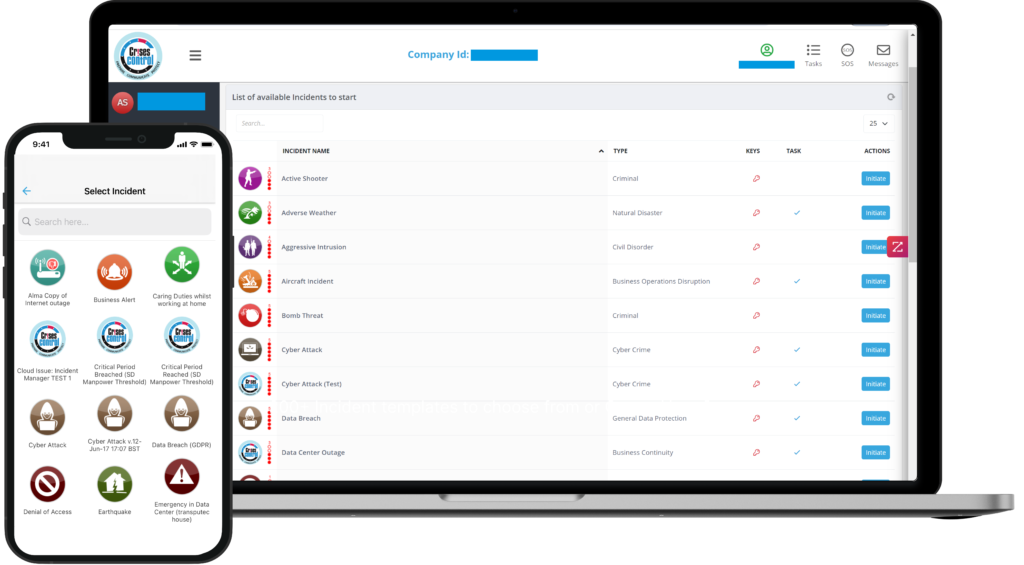
Interested in our Mass Notification Software?
Flexible Mass Notification Software to keep you connected and in control.
Building a School Crisis Communication Plan with Mass Notification Software
Technology alone does not create resilience.
Schools must integrate communication technology into a broader response framework.
1. Identify Potential Incident Types
Every school should assess likely scenarios.
Examples include:
- Fire incidents
- Severe weather
- Security threats
- Medical emergencies
- Utility failures
- Transport disruptions
- Cyber incidents
- Missing students
Different incidents require different communication strategies.
Planning for each scenario improves response quality and emergency preparedness.
2. Define Communication Roles
One of the most important elements of the emergency plan is clear ownership.
Responsibilities should be assigned for:
- Incident leadership
- Message approval
- Parent communications
- Staff communications
- Media enquiries
- Recovery updates
Role clarity reduces confusion during emergencies.
3. Create Pre-Approved Message Templates
One common question organisations ask is: which is the first step in response planning?
While risk assessment is essential, communication preparation should occur before any incident happens.
Pre-approved templates allow schools to send accurate messages quickly without drafting content under pressure.
Templates may cover:
- Evacuation instructions
- Lockdown notifications
- School closures
- Parent updates
- All-clear notifications
4. Establish Escalation Procedures
Not every incident requires a full emergency response.
Schools should define escalation thresholds.
Level 1: Minor operational disruption
Level 2: Significant safety concern requiring wider communication
Level 3: Major incident involving emergency services and external stakeholders
Mass notification software can automate escalation workflows and trigger appropriate communication actions.
5. Conduct Regular Testing
Plans should be tested regularly.
Exercises help identify:
- Outdated contact information
- Communication gaps
- Process weaknesses
- Training requirements
Testing also improves staff confidence during real incidents.
Understanding the Purpose of an Emergency Response Plan
Many school leaders ask about the purpose of an emergency response plan.
The objective extends beyond compliance.
An effective plan aims to:
- Protect life and safety
- Reduce operational disruption
- Improve decision-making
- Maintain stakeholder confidence
- Support faster recovery
Communication sits at the centre of all these objectives.
Without reliable communication, even well-designed emergency procedures become difficult to execute.
Challenging a Common Assumption: Communication Is Not Just About Parents
Many schools focus heavily on parent notifications.
While parent communication is important, it is only one component of a broader communication ecosystem.
A common assumption is that if parents receive updates quickly, communication has been successful.
In reality, communication effectiveness should be measured across multiple groups:
- Students
- Staff
- Leadership teams
- Emergency responders
- Transport providers
- Governors
- Parents
Failure in any one area can compromise the overall response.
A comprehensive school crisis communication plan addresses all stakeholder groups simultaneously.
Crisis Management and Emergency Response Must Work Together
Schools sometimes treat crisis management and emergency response as separate activities.
In practice, they are closely connected.
Emergency response focuses on immediate actions.
Examples include:
- Evacuation
- Lockdown
- Medical assistance
- Site security
Crisis management focuses on broader coordination.
Examples include:
- Strategic decisions
- Stakeholder management
- Business continuity
- Reputation protection
- Recovery planning
Mass notification software supports both functions by creating a consistent communication framework throughout the incident lifecycle.
Digital Versus Manual Communication Approaches
The difference between manual and digital communication becomes most apparent during complex incidents.
|
Manual Approach |
Digital Approach |
|
Multiple disconnected tools |
Centralised platform |
|
Slow message distribution |
Rapid multi-channel alerts |
|
Limited visibility |
Real-time delivery tracking |
|
Manual escalation |
Automated workflows |
|
Difficult accountability |
Response monitoring |
|
Greater human error risk |
Consistent communication |
For schools managing hundreds or thousands of stakeholders, the operational advantages become significant.
Aligning Communication Planning with Good Practice
Although every educational institution has unique requirements, recognised emergency management principles consistently emphasise:
- Defined command structures
- Clear communication processes
- Situational awareness
- Accountability
- Regular testing
- Continuous improvement
Schools should ensure their communication plans support these principles.
A plan that exists only as a document is unlikely to perform effectively during a real emergency.
Digital access, role-based workflows, and cloud availability help ensure plans remain actionable when needed most.
How Crises Control Supports School Crisis Communication
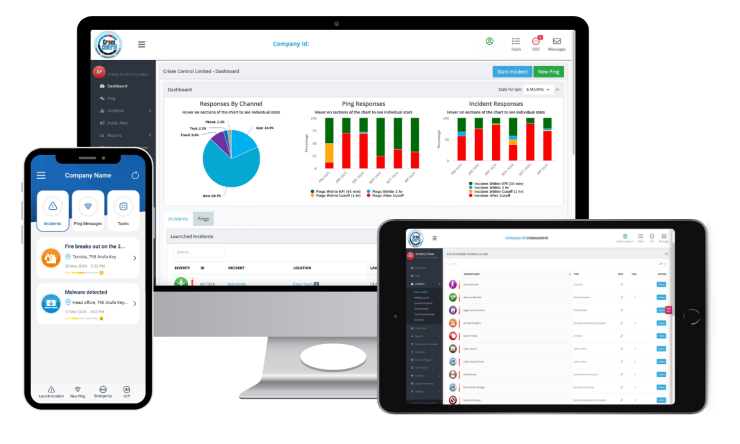
Modern platforms such as Crises Control help schools move from static emergency plans to operational response systems.
This includes:
- Digitalised crisis communication plans
- Role-based response workflows
- Multi-channel notifications
- Cloud-based access
- Incident escalation management
- Real-time communication tracking
The goal is not simply faster messaging.
The goal is enabling schools to coordinate people, decisions, and communications through a structured response process.
Final Thoughts
Building a school crisis communication plan is no longer just a best practice. It has become a critical component of safeguarding, operational resilience, and emergency preparedness.
Schools face increasing pressure to communicate rapidly, accurately, and consistently during emergencies. Traditional communication methods often struggle to meet these demands, particularly when incidents escalate quickly.
Mass notification software for schools provides the communication infrastructure needed to support effective emergency response, improve coordination, and protect students and staff when it matters most.
For educational institutions reviewing their current emergency response plan in safety, now is the right time to assess whether communication processes are truly prepared for real-world incidents.
Learn how Crises Control can support your school’s crisis communication and emergency response capabilities.
FAQs
1. What is mass notification software for schools?
Mass notification software for schools is a communication platform that enables educational institutions to send urgent alerts through multiple channels, including SMS, email, voice calls, mobile app notifications, and desktop alerts. It helps schools communicate quickly with students, staff, parents, and emergency responders during critical incidents.
2. How does mass notification software improve school safety?
Mass notification software improves school safety by delivering timely and consistent emergency communications. During incidents such as fires, lockdowns, severe weather events, or medical emergencies, schools can rapidly notify stakeholders, coordinate response efforts, and provide clear instructions that help protect students and staff.
3. Why is a school crisis communication plan important?
A school crisis communication plan establishes how information will be shared before, during, and after an emergency. It defines communication roles, approval processes, escalation procedures, and stakeholder messaging requirements, helping schools reduce confusion and respond more effectively during high-pressure situations.
4. What should be included in a school crisis communication plan?
An effective school crisis communication plan should include communication roles and responsibilities, emergency notification procedures, escalation workflows, stakeholder contact lists, pre-approved message templates, recovery communications, and regular testing protocols to ensure readiness.
5. What is the difference between traditional communication methods and a mass notification system?
Traditional communication methods such as phone trees, manual call lists, and email chains can be slow and difficult to manage during emergencies. A mass notification system centralises communication, automates workflows, provides real-time delivery tracking, and enables schools to send alerts across multiple channels simultaneously.