Few industries operate under greater pressure than aviation. Every day, thousands of flights, airport operations, ground handling services, security teams, maintenance crews, regulators, and emergency responders work together to keep passengers and cargo moving safely.
When disruption occurs, whether caused by severe weather, technical failures, cyber incidents, staffing shortages, or air traffic restrictions, the challenge extends far beyond managing the event itself. Success depends on how effectively organizations coordinate people, information, and decisions across multiple teams.
This is where Incident Coordination Software plays a critical role.
While technology alone cannot prevent disruption, it enables organizations to respond with greater speed, clarity, and consistency. The aviation sector offers valuable lessons for any organization seeking to strengthen its approach to Critical Event Management, particularly as operational environments become increasingly complex and interconnected.
Aviation Demonstrates That Every Incident Is Connected
One delayed aircraft can quickly trigger a chain reaction.
A maintenance issue may delay departure, causing crews to exceed legal working hours. Gates become unavailable for arriving flights. Passengers miss connections. Ground operations are rescheduled. Customer service teams experience higher demand. Airlines, airports, suppliers, and emergency services all need accurate, up-to-date information.
These cascading effects illustrate an important reality:
Operational disruptions rarely remain isolated.
The organizations that recover most effectively are those that recognize incidents as shared operational challenges rather than departmental problems. Coordination, not simply communication, becomes the defining capability.
Critical Event Management Requires More Than Crisis Plans
Traditional crisis management often focuses on responding after a significant event has already escalated.
Modern Critical Event Management (CEM) takes a broader approach. It emphasizes continuous monitoring, coordinated decision-making, structured response processes, and organizational resilience before, during, and after disruptive events.
This shift reflects a growing understanding that resilience is built through repeatable operational practices rather than reactive decision-making.
For aviation organizations, effective Critical Event Management means:
- Maintaining real-time situational awareness
- Coordinating multiple operational teams
- Establishing clear ownership of response actions
- Delivering consistent communications
- Capturing lessons learned for future improvements
These same principles apply across transportation, government, healthcare, utilities, manufacturing, and other sectors where operational continuity is essential.
Why Incident Coordination Software Has Become Essential
As organizations become more distributed, manual coordination becomes increasingly difficult.
Phone calls, emails, spreadsheets, and messaging applications may work during routine operations, but they often struggle under the pressure of fast-moving incidents involving multiple stakeholders.
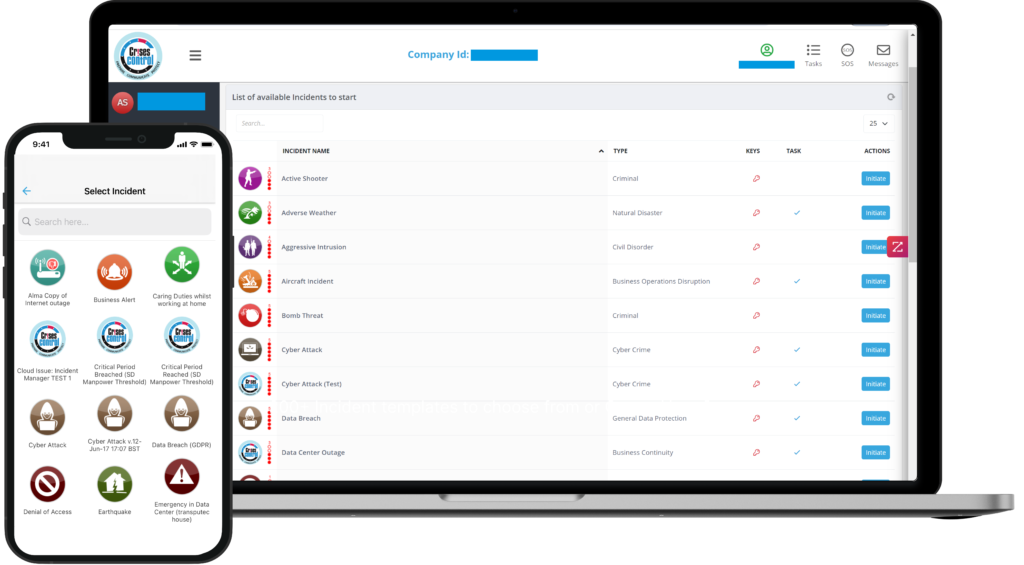
Incident Coordination Software provides a centralized operational environment where organizations can:
- Detect and assess incidents quickly
- Mobilize response teams automatically
- Assign responsibilities with accountability
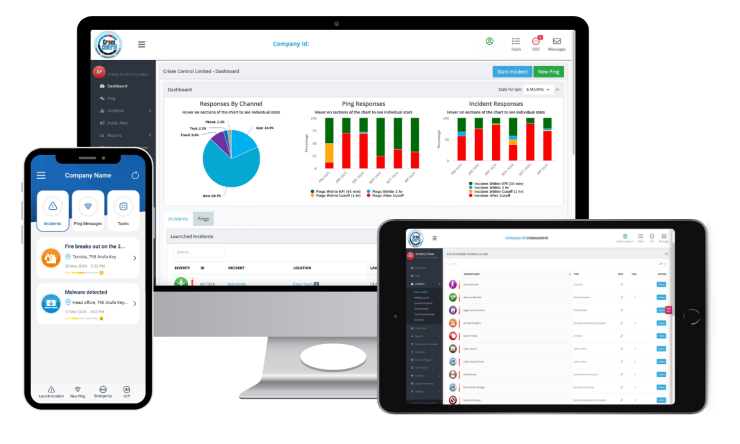
- Track actions in real time
- Share verified information across departments
- Maintain a common operational picture
- Document decisions for compliance and post-incident reviews
Rather than replacing human judgment, the software enables better decision-making by ensuring leaders work from the same trusted information.
Situational Awareness Is a Strategic Advantage
One of the greatest challenges during aviation disruptions is maintaining a shared understanding of what is happening.
Different departments often have different priorities.
Operations may focus on aircraft movements. Customer service prioritizes passenger communications. Security monitors safety implications. Engineering assesses technical issues. Executive leadership needs a strategic overview.
Without a unified view, teams risk making decisions based on incomplete or outdated information.
Incident Coordination Software improves situational awareness by bringing operational updates, incident status, resource availability, communications, and response activities into a single platform.
The result is faster, more informed decision-making and fewer coordination gaps.
Interested in our Incident Management Software?
Flexible Incident Management Software to keep you connected and in control.
Coordination Builds Confidence Across the Organization
During disruption, uncertainty often spreads faster than facts.
Employees may receive conflicting updates. External partners may operate with different assumptions. Leadership teams may struggle to understand the current operational picture.
Effective coordination reduces this uncertainty.
Structured workflows, predefined escalation paths, and standardized communication processes help organizations maintain consistency, even when incidents evolve rapidly.
This consistency builds confidence not only within response teams but also among executives, regulators, customers, and external partners.
Aviation Shows the Importance of Cross-Organizational Collaboration
Major aviation disruptions rarely involve a single organization.
An airport incident may require coordination between:
- Airlines
- Airport operators
- Ground handling companies
- Air traffic control
- Security agencies
- Emergency services
- Maintenance providers
- Government authorities
Each organization has its own responsibilities, yet all depend on timely information sharing and coordinated action.
This illustrates an increasingly important lesson for every industry:
Operational resilience depends on collaboration beyond organizational boundaries.
Incident Coordination Software supports this by providing controlled information sharing, coordinated workflows, and a single source of operational truth across multiple stakeholders.
From Reactive Response to Organizational Resilience
Organizations often evaluate incident response by asking one question:
“How quickly did we recover?”
A more valuable question is:
“How well were we prepared to respond?”
This distinction reflects the evolution from reactive crisis management to proactive operational resilience.
Organizations that consistently perform well during disruptions tend to have common characteristics:
- Clearly defined response plans
- Regular exercises and training
- Automated notification processes
- Real-time visibility across operations
- Consistent documentation
- Continuous improvement based on lessons learned
Incident Coordination Software supports each of these capabilities, helping organizations establish repeatable processes rather than relying on improvisation during high-pressure situations.
The Future of Critical Event Management
As aviation continues to evolve through digital transformation, increasing passenger expectations, climate-related disruptions, and growing cybersecurity risks, operational complexity will only increase.
The future of Critical Event Management is unlikely to be defined by more technology alone. Instead, it will depend on how effectively organizations integrate people, processes, and technology into coordinated response frameworks.
Incident Coordination Software will continue to play an important role by connecting operational data, automating routine tasks, and enabling faster collaboration across increasingly complex ecosystems.
Ultimately, resilience will become less about avoiding disruption and more about responding to it with confidence and coordination.
Conclusion
Aviation reminds us that no organization operates in isolation. Every disruption creates a network of operational, commercial, and human impacts that require coordinated action.
The lessons extend well beyond airports and airlines. Whether supporting public services, transportation networks, healthcare providers, utilities, or private enterprises, organizations face similar challenges when incidents escalate across departments and stakeholders.
Incident Coordination Software provides the operational foundation needed to improve situational awareness, strengthen collaboration, and support more effective Critical Event Management.
Organizations that invest in coordinated response capabilities today will be better positioned to navigate tomorrow’s disruptions with resilience rather than reaction.
Book a demo to discover how Crises Control helps organizations improve incident coordination, strengthen Critical Event Management, and build greater operational resilience.
FAQs
1. What is Incident Coordination Software?
Incident Coordination Software helps organizations coordinate response activities, communicate with stakeholders, assign tasks, and maintain situational awareness during operational disruptions.
2. Why is Incident Coordination Software important in aviation?
Airports and airlines operate highly interconnected systems where even small disruptions can have widespread consequences. Incident Coordination Software helps teams respond quickly and consistently.
3. How does Critical Event Management differ from incident management?
Incident management focuses on responding to individual incidents, while Critical Event Management provides a broader framework for preparing for, coordinating, and recovering from major operational disruptions.
4. Can Incident Coordination Software improve operational resilience?
Yes. By automating communications, providing real-time visibility, and standardizing response workflows, organizations can reduce disruption and recover more efficiently.
5. Which industries benefit from Incident Coordination Software?
Although widely used in aviation, Incident Coordination Software also supports transportation, government, healthcare, utilities, manufacturing, education, and financial services.