Public safety organisations operate in an environment where every second counts. Whether responding to severe weather, flooding, infrastructure failures, cyber incidents or major public events, government agencies must make informed decisions quickly while coordinating multiple teams and communicating with the public.
The challenge is no longer simply responding to emergencies. It is managing increasingly complex incidents involving numerous stakeholders, evolving information and heightened public expectations. Traditional communication methods such as phone calls, emails and manual reporting often struggle to keep pace with fast-moving situations.
This is where Emergency Response Management Software plays a vital role.
Rather than replacing emergency plans or experienced personnel, Emergency Response Management Software provides a central platform that helps organisations coordinate response efforts, improve situational awareness and deliver timely crisis communication. The result is faster decision-making, stronger collaboration and ultimately better outcomes for communities.
The Growing Complexity of Public Sector Emergency Response
Today’s emergencies rarely affect a single organisation.
A major flooding event, for example, may require coordination between local authorities, emergency services, transport operators, utility companies, healthcare providers and central government. Each organisation has different responsibilities, yet they all rely on accurate information and effective communication.
Without a coordinated system, common challenges include:
- Information becoming fragmented across multiple channels
- Delays in escalating incidents
- Duplicate or conflicting tasks
- Difficulty tracking actions
- Limited visibility of operational progress
- Inconsistent communication with the public
These challenges can slow response efforts at precisely the moment when speed matters most.
What is Emergency Response Management Software?
Emergency Response Management Software is a digital platform designed to help organisations manage every stage of an emergency.
It combines incident management, communication, task coordination and reporting into a single system, allowing emergency teams to work from a shared operational picture.
Typical capabilities include:
- Incident logging and tracking
- Multi-channel emergency notifications
- Role-based task management
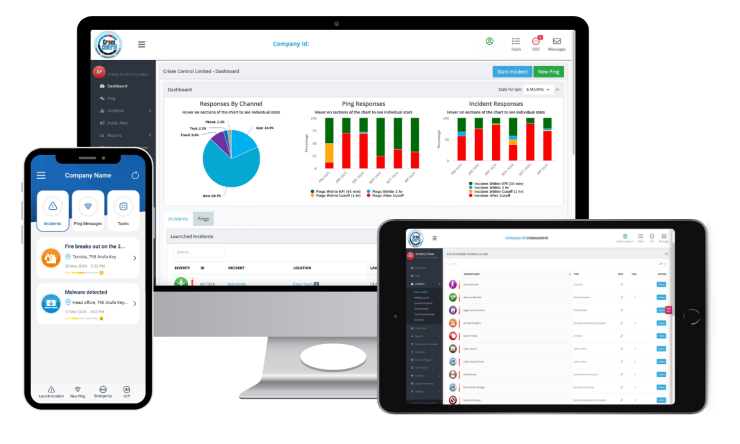
- Real-time dashboards
- Situation reporting
- Escalation workflows
- Team collaboration
- Document and plan management
- Audit trails for compliance and post-incident reviews
Instead of relying on disconnected tools, organisations gain a structured environment that supports coordinated emergency response.
Improving Situational Awareness
One of the greatest advantages of Emergency Response Management Software is improved situational awareness.
Decision-makers need accurate information as incidents evolve. Waiting for manual updates or searching through multiple communication channels wastes valuable time.
Modern emergency management platforms provide a single operational view where authorised users can monitor:
- Incident status
- Team activity
- Resource deployment
- Emerging risks
- Completed actions
- Outstanding tasks
- Escalations
Having access to reliable, real-time information allows leaders to identify priorities, allocate resources effectively and adapt response strategies as conditions change.
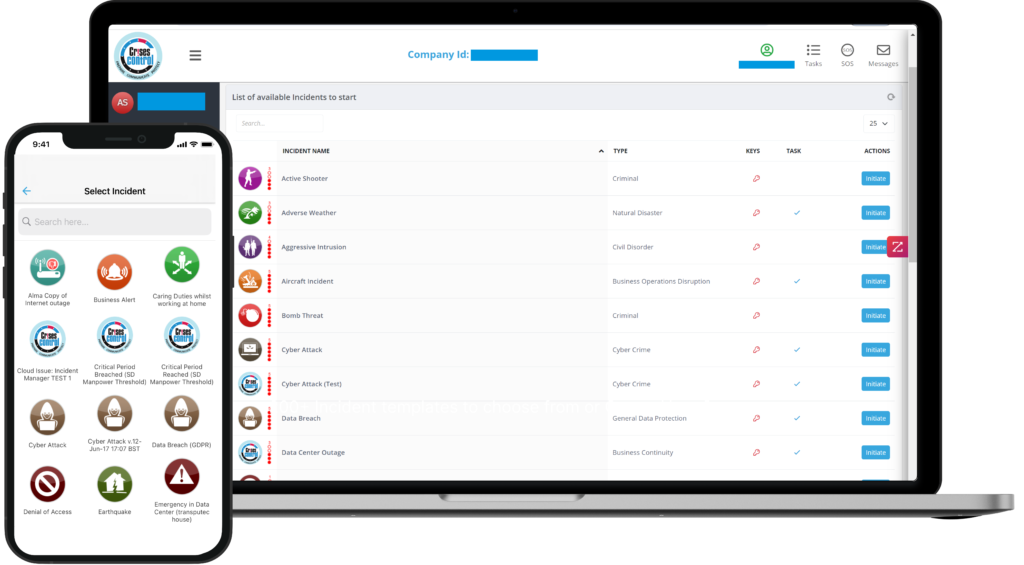
Interested in our Incident Management Software?
Flexible Incident Management Software to keep you connected and in control.
Strengthening Crisis Communication
Communication is one of the defining factors of an effective emergency response.
During a crisis, information must reach the right people quickly, whether that involves emergency responders, senior leadership, partner agencies or members of the public.
Emergency Response Management Software supports crisis communication by enabling organisations to:
Deliver Rapid Notifications
Automated alerts can notify predefined groups within seconds through multiple communication channels, ensuring key personnel receive critical information immediately.
Reduce Information Gaps
By maintaining a central source of incident information, organisations minimise conflicting updates and ensure everyone works from the same information.
Improve Multi-Agency Coordination
Public sector emergencies often require collaboration across numerous organisations.
A shared communication platform enables agencies to exchange updates, assign responsibilities and coordinate activities more efficiently.
Maintain Consistent Public Messaging
Accurate public information reduces confusion and helps communities make informed decisions during emergencies.
Having approved communication templates and structured workflows helps ensure messaging remains clear and consistent.
Supporting Faster Decision-Making
Emergency response is built on decision-making under pressure.
Leaders often face rapidly changing situations where incomplete information can delay action.
Emergency Response Management Software supports faster decisions by:
- Presenting real-time operational data
- Tracking incident progression
- Highlighting outstanding actions
- Automating escalation processes
- Providing instant access to emergency plans
Rather than spending valuable time gathering information, decision-makers can focus on managing the incident itself.
Coordinating Response Across Multiple Teams
Government organisations rarely respond alone.
Large incidents often involve:
- Police
- Fire and Rescue Services
- Ambulance Services
- Local authorities
- Public health organisations
- Transport operators
- Utility providers
- National agencies
Without a shared platform, coordination becomes increasingly difficult as more organisations become involved.
Emergency Response Management Software enables agencies to assign responsibilities, monitor progress and maintain accountability across all responding teams.
Everyone understands what actions are underway, what remains outstanding and who is responsible.
Building Organisational Resilience
Emergency response does not begin when an incident occurs.
Preparation is equally important.
Emergency Response Management Software supports resilience by helping organisations:
- Maintain emergency plans
- Schedule exercises
- Conduct training
- Store response procedures
- Review lessons learned
- Improve future planning
Following an incident, detailed audit logs and reporting allow organisations to identify strengths, address weaknesses and continually improve emergency preparedness.
Supporting Compliance and Accountability
Government organisations operate within strict regulatory and governance requirements.
Maintaining accurate records throughout an incident is essential for transparency, reporting and post-incident reviews.
Emergency Response Management Software automatically records:
- Decision timelines
- Communication history
- Task completion
- Escalation records
- User activity
- Situation reports
This comprehensive audit trail simplifies investigations, supports compliance obligations and provides valuable evidence for continuous improvement.
Looking Beyond Technology
While technology plays an important role, effective emergency management ultimately depends on people, planning and leadership.
Emergency Response Management Software should support, not replace, well-developed emergency procedures and trained personnel.
When combined with regular exercises, clear governance and strong leadership, the software becomes a force multiplier that enables organisations to respond with greater confidence and coordination.
Conclusion
Public sector organisations face increasingly complex emergencies that demand rapid coordination, informed decision-making and effective communication.
Emergency Response Management Software helps address these challenges by bringing together incident management, communication, task coordination and situational awareness within a single platform.
Rather than relying on fragmented processes and disconnected systems, organisations can establish a common operating picture that supports faster responses, stronger collaboration and improved public safety.
As emergencies continue to evolve in scale and complexity, investing in coordinated emergency management capabilities is becoming an essential part of building resilient public services. By improving crisis communication and enabling more effective collaboration across agencies, Emergency Response Management Software equips government organisations to protect communities when it matters most.
Discover how Crises Control’s Emergency Response Management Software helps government and public sector organisations improve crisis communication, coordinate emergency response and strengthen operational resilience. Book a free demo today.
FAQs
1.What is Emergency Response Management Software?
Emergency Response Management Software is a digital platform that helps organisations prepare for, respond to and recover from emergencies by coordinating communication, managing incidents, assigning tasks and providing real-time situational awareness.
2. How does Emergency Response Management Software improve public safety?
It enables emergency teams to share information quickly, coordinate multiple agencies, automate notifications, monitor incidents in real time and ensure decisions are based on accurate information.
3. Who uses Emergency Response Management Software?
Government departments, local authorities, emergency services, healthcare organisations, transport providers, utilities and other public sector organisations use Emergency Response Management Software to manage critical incidents.
4. Why is crisis communication important during emergencies?
Effective crisis communication ensures responders, decision-makers and the public receive timely, accurate information, reducing confusion and enabling faster, more coordinated responses.
5. How does Emergency Response Management Software support multi-agency collaboration?
Emergency Response Management Software provides a central platform where emergency services, local authorities, healthcare providers and other responding organisations can share real-time information, coordinate tasks and maintain a common operating picture. This helps reduce communication gaps, improves accountability and enables a faster, more coordinated response during complex incidents.