Operational resilience software helps financial institutions identify disruptions, coordinate response activities, maintain critical services, and recover more effectively when incidents occur. As regulatory expectations continue to evolve and operational risks become increasingly interconnected, resilience is no longer a standalone compliance exercise. It has become a strategic business requirement.
In 2026, financial institutions face growing pressure to demonstrate that they can continue delivering important business services during cyberattacks, technology failures, third-party disruptions, and other operational incidents. Operational resilience software provides the tools needed to move from static resilience documentation to active resilience management.
A Realistic Scenario: When a Technology Outage Becomes a Business Services Crisis
Imagine a mid-sized financial institution operating across multiple countries.
On a Monday morning, customers begin reporting problems accessing mobile banking services. What initially appears to be a routine technical issue quickly escalates as payment processing delays begin affecting thousands of transactions.
The technology team identifies a failure involving a critical third-party cloud service provider. As the disruption continues, customer service teams become overwhelmed with enquiries, senior leadership requests situation updates, and regulatory reporting obligations begin to emerge.
The organisation has business continuity plans. It has incident response procedures. It has risk registers.
Yet teams struggle to answer several critical questions:
- Which important business services are affected?
- Which customers face the greatest impact?
- Who is responsible for coordinating response activities?
- What communications should be sent internally and externally?
- When does the disruption exceed established impact tolerances?
As the outage enters its fourth hour, the institution discovers that the biggest challenge is not the technical issue itself. The challenge is coordinating people, decisions, communications, and recovery activities across multiple departments.
This is precisely where operational resilience software delivers value.
Why Operational Resilience Has Become a Strategic Priority
Historically, many financial institutions approached resilience through separate operational disciplines, with each function focusing on its own area of responsibility. Business continuity teams concentrated on recovery planning, risk teams managed operational risk assessments, technology teams focused on system availability and cybersecurity, and crisis management teams prepared for major incidents.
While these activities remain important, regulators increasingly expect organisations to take a more integrated approach to resilience. Rather than managing risks and disruptions in isolation, financial institutions are now expected to understand how operational, technological, and third-party dependencies affect their ability to deliver critical business services.
As a result, the objective of operational resilience is no longer simply to prevent disruption. Instead, organisations must demonstrate that they can continue delivering important services within acceptable levels, even when significant disruptions occur.
This shift reflects a growing recognition that incidents such as cyberattacks, technology failures, supply chain disruptions, and third-party outages cannot always be avoided.
What matters most is how effectively an organisation responds when those events happen. The ability to coordinate teams, make informed decisions, minimise customer impact, and recover quickly is what increasingly distinguishes resilient financial institutions from those that remain vulnerable to operational disruption.
What Is Operational Resilience Software?
Operational resilience software is a technology platform designed to help organisations prepare for, respond to, and recover from operational disruptions while maintaining critical business services.
Unlike traditional business continuity tools that often focus primarily on documentation, operational resilience software helps organisations actively manage resilience activities across the entire incident lifecycle.
Core capabilities often include:
- Incident management
- Crisis management workflows
- Business continuity planning
- Operational risk visibility
- Communication and notification tools
- Third-party risk coordination
- Service dependency mapping
- Impact tolerance monitoring
- Regulatory reporting support
The goal is to provide a single operational framework that enables organisations to coordinate resilience activities during periods of disruption.
Why Financial Institutions Need Operational Resilience Software in 2026
Financial institutions operate within highly interconnected ecosystems.
A disruption affecting one component can rapidly impact multiple services.
Examples include:
- Cybersecurity incidents
- Cloud service outages
- Third-party supplier failures
- Telecommunications disruptions
- Payment processing failures
- Data centre outages
- Insider threats
- Regulatory events
These incidents often affect multiple business functions simultaneously.
Managing such events through spreadsheets, email chains, and disconnected systems creates significant operational challenges.
Operational resilience software helps organisations improve visibility, coordination, and decision-making during complex incidents.
The Growing Importance of DORA Compliance
One of the most significant drivers of resilience investment is the implementation of DORA compliance requirements.
The Digital Operational Resilience Act requires financial entities operating within the European Union to strengthen their ability to withstand, respond to, and recover from ICT-related disruptions.
Although compliance requirements vary depending on the organisation, several common themes emerge:
- ICT risk management
- Incident management
- Operational resilience testing
- Third-party risk management
- Regulatory reporting
- Governance and accountability
Meeting these requirements requires more than documentation.
Organisations need operational processes, governance structures, and supporting technologies capable of demonstrating resilience in practice.
This is one reason why operational resilience software has become a priority investment area for financial institutions.
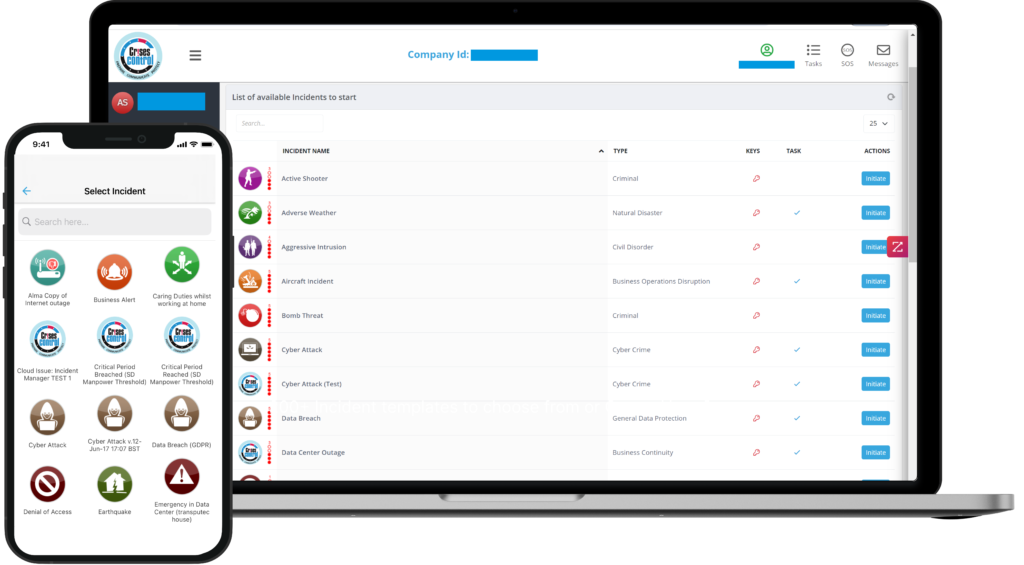
Interested in our Incident Management Software?
Flexible Incident Management Software to keep you connected and in control.
Common Challenges Financial Institutions Face
Many organisations have resilience programmes in place but still encounter operational challenges during real incidents.
Siloed Response Teams
Risk, compliance, cybersecurity, operations, and business continuity teams often operate independently.
During a disruption, this can create fragmented decision-making and delayed responses.
Limited Visibility Across Critical Services
Organisations frequently understand individual systems but struggle to understand how disruptions affect end-to-end business services.
Manual Crisis Coordination
Conference calls, email chains, and spreadsheets often become the primary coordination tools during incidents.
These methods can quickly become difficult to manage under pressure.
Communication Delays
Internal stakeholders, executives, regulators, and customers all require timely information.
Without structured communication workflows, messaging often becomes inconsistent.
Difficulty Demonstrating Resilience
Regulators increasingly expect organisations to provide evidence of resilience planning, testing, and response effectiveness.
Manual processes make this more difficult.
What Capabilities Should Operational Resilience Software Include?
Not all resilience platforms are designed for the same purpose.
Financial institutions should evaluate solutions based on operational requirements rather than marketing claims.
Key capabilities typically include:
Incident Management
The ability to identify, track, escalate, and manage incidents from detection through resolution.
Crisis Management Workflows
Structured processes that help coordinate response activities across multiple teams.
Mass Notification and Communication
Rapid communication with employees, executives, suppliers, and other stakeholders.
Business Continuity Integration
Direct links between incident response and continuity plans.
Audit and Reporting Capabilities
Documentation that supports regulatory reviews and internal governance requirements.
Cloud-Based Accessibility
Access to response tools even when primary systems are disrupted.
Challenging a Common Assumption: Operational Resilience Is Not Just a Compliance Exercise
A common misconception is that operational resilience exists primarily to satisfy regulators.
While regulatory compliance is important, resilience programmes deliver value far beyond compliance requirements.
Operational resilience directly supports:
- Customer trust
- Revenue protection
- Service availability
- Reputation management
- Operational efficiency
- Strategic decision-making
The institutions that treat resilience solely as a regulatory obligation often struggle to realise its broader business value.
The most mature organisations view resilience as an operational capability that supports long-term business performance.
From Documentation to Active Resilience Management
Many financial institutions still rely heavily on static documentation.
Business continuity plans are stored in shared folders.
Incident response procedures exist in PDF documents.
Contact lists are maintained manually.
While documentation remains important, resilience cannot depend on documents alone.
When incidents occur, organisations need the ability to:
- Activate response teams immediately
- Notify stakeholders quickly
- Track actions in real time
- Monitor incident progression
- Escalate decisions appropriately
- Maintain situational awareness
Operational resilience software helps organisations bridge the gap between planning and execution.
How Crises Control Supports Operational Resilience
Modern resilience programmes require more than incident records and policy documents.
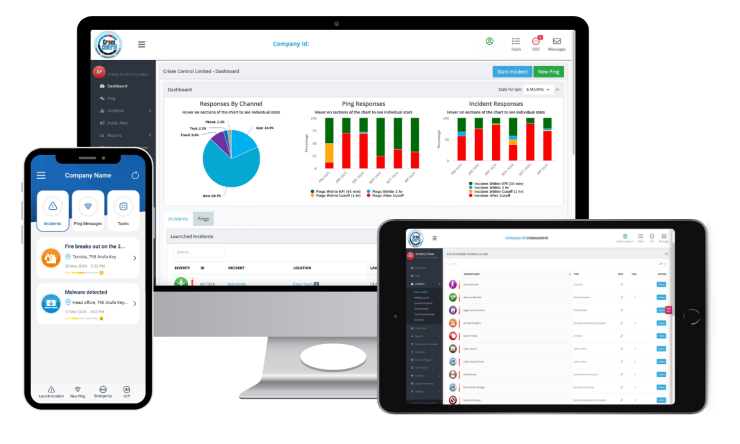
Crises Control helps organisations operationalise resilience by connecting incident management, communication, escalation, and response coordination within a single platform.
Capabilities include:
- Digital incident response workflows
- Role-based response management
- Multi-channel notifications
- Real-time situation management
- Cloud-based accessibility
- Escalation and accountability tracking
These capabilities help financial institutions move from static plans to coordinated operational response.
Looking Ahead: Operational Resilience in 2026 and Beyond
The resilience landscape continues to evolve.
Financial institutions face increasing operational complexity driven by:
- Expanding digital services
- Growing third-party dependencies
- Sophisticated cyber threats
- Regulatory scrutiny
- Customer expectations for uninterrupted service
As a result, resilience programmes must become increasingly proactive, integrated, and technology-enabled.
Operational resilience software will play a central role in helping organisations navigate these challenges while maintaining confidence among customers, regulators, and stakeholders.
Conclusion
Operational resilience software has become an essential component of resilience strategies across the financial services sector. As organisations face growing regulatory expectations, increased operational complexity, and heightened disruption risks, traditional approaches are no longer sufficient.
Financial institutions need the ability to coordinate response activities, communicate effectively, manage disruptions, and maintain critical services under pressure. Operational resilience software provides the framework that makes this possible.
For organisations building resilience in 2026, the focus should not simply be on creating plans. The focus should be on creating the operational capabilities needed to execute those plans when disruption occurs.
Learn how Crises Control supports operational resilience, incident management, and crisis response for financial institutions.
FAQs
1. What is operational resilience software?
Operational resilience software is a platform that helps organisations prepare for, manage, and recover from operational disruptions while maintaining critical business services. It integrates incident management, crisis communication, and business continuity processes into a single coordinated system.
2. How does operational resilience software support financial institutions?
For financial institutions, operational resilience software helps ensure critical services remain operational during disruptions such as cyberattacks, system outages, or third-party failures. It supports faster incident response, improves communication, and helps organisations meet regulatory expectations such as DORA compliance.
3. What is the difference between operational resilience and risk management?
Risk management focuses on identifying and assessing potential threats before they occur, while operational resilience focuses on how an organisation continues delivering critical services during and after a disruption. Both work together, but resilience is concerned with real-time response and recovery.
4. How does operational resilience software help with DORA compliance?
Operational resilience software supports DORA compliance by enabling structured incident management, real-time reporting, third-party risk visibility, and coordinated response workflows. It helps financial institutions demonstrate their ability to respond to ICT-related disruptions effectively.
5. Why is communication important in operational resilience?
Communication is critical in operational resilience because delays or inconsistent messaging can increase the impact of an incident. Operational resilience software ensures timely, accurate, and coordinated communication across internal teams, executives, regulators, and customers during disruptions.