Financial institutions have always operated in a highly regulated environment, but the Digital Operational Resilience Act (DORA) represents a significant shift in how regulators view operational resilience software and digital risk management.
Historically, organisations focused heavily on preventing disruptions. Cybersecurity programmes aimed to stop attacks before they happened. Risk management frameworks attempted to identify vulnerabilities before they became incidents. Business continuity plans outlined recovery procedures if systems failed.
While these remain essential, DORA reflects a critical reality: disruption is inevitable.
Cyberattacks, cloud outages, software failures, supply chain disruptions, and third-party incidents can affect even the most mature financial institutions. The real measure of success is no longer prevention alone, but how effectively organisations use operational resilience software and processes to respond, recover, and continue delivering critical services.
This is the foundation of DORA compliance.
Rather than treating resilience as a checklist, DORA requires financial institutions to demonstrate they can withstand, respond to, recover from, and adapt to ICT-related disruptions while maintaining critical business services. This has made operational resilience software a core enabler of compliance, governance, and incident response.
What Is DORA?
The Digital Operational Resilience Act (DORA) is a European Union regulation designed to strengthen digital resilience across financial services using structured governance and operational resilience software capabilities.
It applies to:
- Banks
- Insurance companies
- Investment firms
- Payment institutions
- Crypto-asset service providers
- Other regulated financial entities
DORA was introduced because modern financial systems rely heavily on ICT infrastructure, cloud platforms, third-party vendors, and interconnected digital services.
While these systems improve efficiency, they also increase systemic risk. A failure in one provider can cascade across multiple institutions.
DORA addresses this by requiring organisations to implement stronger governance, monitoring, incident management, and operational resilience software frameworks that ensure continuity during disruption.
Why Operational Resilience Matters More Than Ever
Operational resilience software has become essential because financial institutions are expected to maintain continuous service delivery under all conditions.
Customers expect:
- Always-on banking services
- Instant payments and transactions
- Continuous access to accounts
- Reliable digital platforms
Regulators expect:
- Demonstrable resilience capabilities
- Structured incident response
- Controlled ICT risk management
But today’s financial ecosystem is highly interconnected.
A cloud outage can disrupt banking apps. A cyberattack can impact payment systems. A supplier failure can halt onboarding processes. Without operational resilience software, these incidents become harder to manage, coordinate, and recover from.
The Five Core Pillars of DORA Compliance
1. ICT Risk Management
DORA requires financial institutions to implement structured ICT risk management supported by operational resilience software that provides visibility across systems, risks, and dependencies.
2. ICT Incident Management and Reporting
Organisations must detect, classify, manage, and report ICT incidents quickly.
This is where operational resilience software plays a critical role by enabling:
- Automated escalation
- Incident tracking
- Real-time coordination
- Regulatory reporting support
3. Digital Operational Resilience Testing
Institutions must continuously test resilience capabilities.
Operational resilience software supports simulations, scenario testing, and validation of incident response readiness.
4. ICT Third-Party Risk Management
Financial firms rely heavily on external vendors.
Operational resilience software helps map dependencies and monitor third-party risks that could impact critical services.
5. Information Sharing
DORA encourages sharing threat intelligence across financial networks.
Modern operational resilience software platforms help centralise communication and improve situational awareness.
Common DORA Compliance Challenges
Even with strong governance, many financial institutions struggle due to:
Lack of Visibility
Without operational resilience software, organisations often cannot map how systems connect to critical services.
Organisational Silos
Risk, IT, cybersecurity, and operations teams often operate separately, reducing coordination during incidents.
Manual Processes
Spreadsheets, email chains, and disconnected tools slow down response times.
Third-Party Complexity
Multiple vendors and cloud providers make it difficult to maintain real-time oversight.
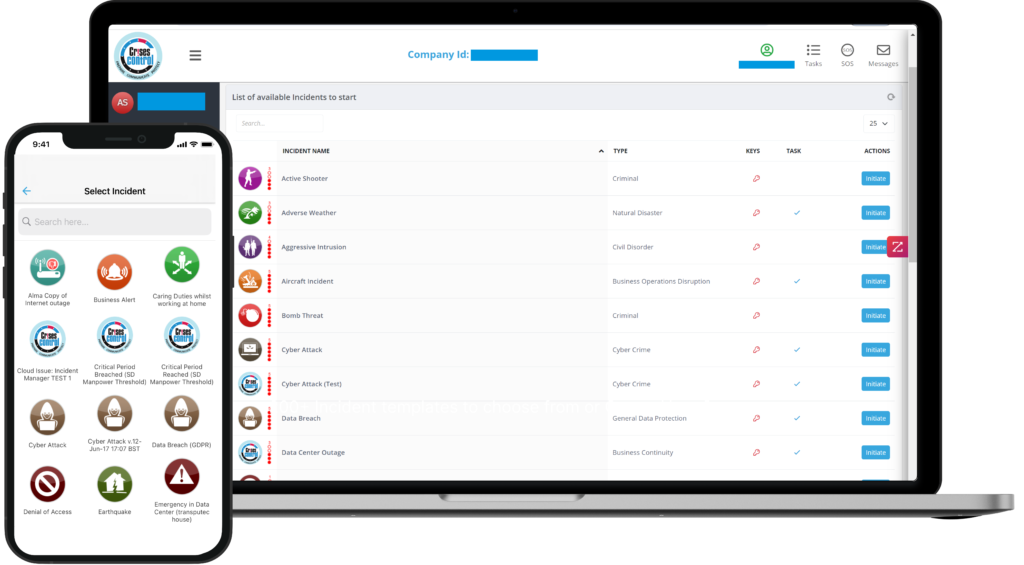
Interested in our Incident Management Software?
Flexible Incident Management Software to keep you connected and in control.
Why Incident Management Depends on Operational Resilience
DORA compliance is not just about documentation, it is about execution.
During a major incident:
- Systems fail
- Customers are impacted
- Regulators require updates
- Leadership demands visibility
Without operational resilience software, organisations struggle to coordinate actions, assign responsibility, and maintain situational awareness.
With it, financial institutions gain:
- Centralised incident control
- Clear ownership and accountability
- Faster escalation
- Real-time visibility across teams
Communication Is a Core Function of Operational Resilience Software
Communication is often the weakest point in resilience strategies.
During disruptions, stakeholders include:
- Employees
- IT and security teams
- Executives
- Customers
- Regulators
- Third-party vendors
Operational resilience software ensures communication is:
- Centralised
- Consistent
- Real-time
- Auditable
This significantly reduces confusion and improves recovery speed.
Moving Beyond Documentation with Operational Resilience Software
Many organisations already have:
- Business continuity plans
- Incident response procedures
- Disaster recovery frameworks
However, these documents alone are not enough.
Under pressure, organisations need operational resilience software to:
- Execute workflows
- Assign responsibilities
- Track actions
- Maintain visibility
- Coordinate response efforts
DORA reinforces this shift from planning to execution.
How Technology Enables DORA Compliance
Modern operational resilience software platforms help financial institutions:
- Coordinate incident response
- Automate escalation workflows
- Improve stakeholder communication
- Maintain audit trails
- Support regulatory reporting
- Strengthen accountability
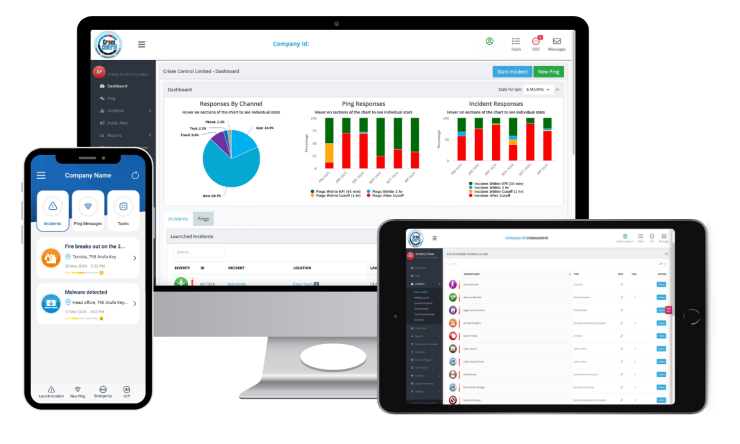
- Provide real-time dashboards
This transforms resilience from a manual process into a structured operational capability.
How Crises Control Supports Operational Requirements
Meeting DORA requirements requires more than policy. It requires execution.
Crises Control provides software capabilities that help financial institutions:
- Manage incidents in real time
- Automate escalation workflows
- Communicate during crises
- Track actions and responsibilities
- Maintain regulatory audit trails
Whether responding to cyber incidents, system outages, or third-party disruptions, Crises Control ensures organisations can maintain control and continuity.
Final Thoughts
DORA is reshaping financial services by making operational resilience software a core requirement, not an optional enhancement.
The regulation pushes organisations to move beyond prevention and focus on execution: how effectively they can respond, recover, and maintain critical services during disruption.
Financial institutions that invest in operational resilience software will be better positioned to:
- Meet regulatory expectations
- Reduce operational risk
- Improve incident response
- Maintain customer trust
- Strengthen long-term resilience
Ready to Strengthen Operational Capabilities?
Crises Control helps financial institutions improve incident management, crisis communication, and operational coordination through powerful operational resilience software.
Book a personalised demo today to see how you can strengthen resilience and simplify DORA compliance.
FAQs
1. What is operational resilience software in financial services?
It is a digital platform that helps financial institutions detect, manage, respond to, and recover from disruptions while maintaining critical business services. It supports incident coordination, communication, and regulatory compliance such as DORA.
2. Why is operational resilience software important for banks?
It is essential for banks because it enables them to maintain service continuity during cyberattacks, system outages, or third-party failures. It ensures faster response times, better coordination, and improved regulatory compliance.
3. How does operational resilience software support DORA compliance?
It helps financial institutions comply with DORA by enabling structured incident management, automated reporting, ICT risk monitoring, and real-time coordination across teams during disruptions.
4. What features should financial institutions look for in operational resilience software?
Key features include incident management, automated escalation workflows, real-time communication tools, business service mapping, audit trails, and regulatory reporting capabilities to support DORA compliance.
5. How does operational resilience software improve incident response?
It improves incident response by centralizing communication, assigning clear ownership, tracking actions in real time, and ensuring all stakeholders are aligned during disruptions, reducing delays and confusion.